Part 3 - Preliminary Design for CHP Systems in RETScreen Expert
Detailed Analysis of Combined Power Eating and Cooling Feasibility
This section delves into the feasibility analysis of combining power generation, heating, and cooling systems using the RETScreen Expert software. The focus is on integrating a cooling load, selecting appropriate cooling equipment, proposing a new fuel type, and evaluating the overall efficiency and financial viability of the project.
Adding Cooling Equipment to Power System
- The demo begins with incorporating cooling equipment into the combined power generation system.
- An absorption chiller utilizing thermal energy from heat recovery is suggested for cooling.
- Modifying system selection to include cooling reveals that electricity generated powers the cooling system by default.
- The software completes eating load sections based on climate data and building characteristics.
Estimating Cooling Load
- Defining a single building with space cooling only, entering cooled floor area (45,000 sq meters), and selecting electricity as the fuel type for base case cooling system.
- Estimating seasonal coefficient of performance for conventional compressor-based cooling load.
- Model calculates peak load in kW and annual energy consumption in MWh for cooling.
Adjusting Cooling Load Calculation
- Users can adjust calculated cooling load based on utility bills to match actual consumption.
- Modifying monthly average loads to include both power and cooling loads in calculations.
Impact Assessment of Absorption Chiller
- Software prompts completion of missing information related to defined cooling equipment before proceeding with calculations.
Two-Stage Absorption Chiller Analysis
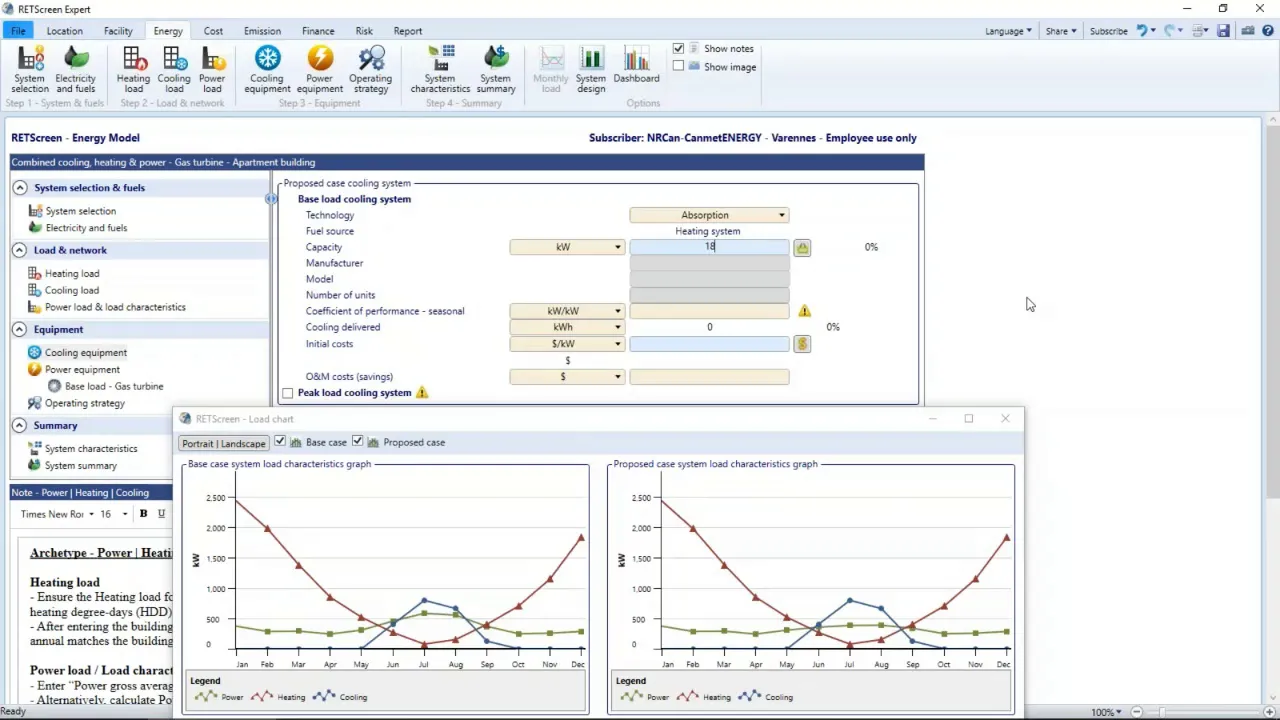
In this section, the speaker discusses the analysis of a two-stage absorption chiller and its impact on the load characteristic graph.
Load Characteristic Graph Discrepancy
- The proposed case shows a different load profile compared to the base case scenario, with a flatter power load indicating the cooling season.
Cost Evaluation and Cooling Energy
- Absorption chiller cost evaluation is done using the class database without needing a peak load cooling system due to 100% cooling energy from base case equipment.
Efficiency Improvement and Peak Shaving
- Power load for cooling becomes zero in the proposed case, achieving peak shaving and increasing overall efficiency from 67.7% to 72%.
System Design Optimization
This section delves into system characteristics optimization, addressing issues related to peak eating load capacity and system efficiency improvements.
Peak Eating Load Capacity Verification
- A warning message highlights that peak eating load capacity needs verification, suggesting it should match gas turbine eating capacity due to turbine availability considerations.
System Efficiency Enhancement
- Adding cooling raises overall efficiency but impacts financial viability negatively with long payback periods, negative internal rate of return, and net present value.
Integration of Cleaner Fuel Sources
Exploring options for cleaner fuel integration like biogas to mitigate greenhouse gas emissions and enhance sustainability.
Biogas Integration Strategy
- Proposing cleaner fuels like biogas from biomass or agricultural waste near Thunder Bay for cost-effective acquisition.
Fuel Comparison and System Modification
- Comparing biogas with natural gas values in the database while considering incremental costs for new cooling systems installation.
Operating Strategy Selection
In this section, the user is able to select the base load and intermediate load systems along with one of three proposed operating strategies. However, regardless of the chosen strategy, the model assumes full capacity operation for the base load system.
Selecting Operating Strategies
- The user can choose between different operating strategies by utilizing two drop-down lists at the bottom of the operating strategy section.
- Options include selecting which system serves as the base load and which one operates as the intermediate load.
- It is important to note that irrespective of the selected operating strategy, the model always assumes full capacity operation for the base load system.
Financial Information Access
This part focuses on accessing financial information related to different operating strategies and their impact on profitability.
Observing Financial Data
- Clicking on the dashboard in the ribbon allows access to financial information.
- The model currently only displays results for intermediate load operation without considering initial project costs, O&M costs, or financing.
- To view financial viability and cumulative cash flow based on different strategies, select "financial viability table" and "cumulative cash flow graph" in vertical view.
Project Viability Assessment
Evaluating project viability based on financial data obtained from different operating strategies.
Financial Viability Analysis
- Despite all options appearing financially viable, full power capacity seems to be most financially feasible.
- It is crucial to consider varying fuel costs to determine a sustainable financial profile.
- The assumption of zero cost for agricultural waste should be revisited for a more comprehensive analysis.
Greenhouse Gas Analysis
Exploring greenhouse gas implications within various operational scenarios.
Environmental Impact Consideration
- Analyzing greenhouse gas emissions under new scenarios reveals potential environmental benefits.