How To Lose Stubborn Belly Fat In 3 Steps (And How Long It Will Take You)
How to Lose Stubborn Belly Fat
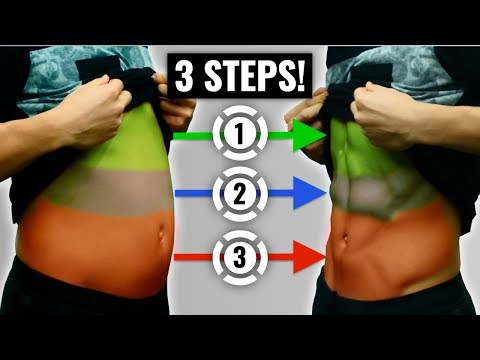
In this video, the speaker explains how to lose stubborn belly fat by following a three-step protocol. The first step is creating a calorie deficit through diet and weightlifting. The second step is mobilizing belly fat by adhering to the calorie deficit for long enough. The third step is speeding up the process of losing belly fat.
Determining How Long It Will Take You to Lose Belly Fat
- Find out which one of six photos best represents your current body fat percentage.
- Use optimal rate of fat loss to estimate how long it will take you to reach 10% body fat.
Why Belly Fat Is So Difficult to Lose
- Belly fat consists of a greater amount of resistant fat cells and receives less blood flow than other parts of the body.
- Losing belly fat is not impossible but requires consistency with the right approach.
Step 1 - Creating a Calorie Deficit
- Eating at a calorie deficit and combining it with regular weightlifting is crucial for losing any type of fat.
- Follow links in description box for setting up your calorie deficit and free workouts.
Step 2 - Mobilizing Belly Fat
- Adhering to step 1 for long enough until fat loss starts coming off from your belly is crucial.
- Most people fail because they don't stick to the plan long enough for the fat loss to have a chance of reaching their belly.
Step 3 - Speeding Up Process of Losing Belly Fat
- Incorporating high-intensity interval training (HIIT) and reducing stress can help speed up the process of losing belly fat.
- Consistency is key to seeing results.
How to Lose Belly Fat
In this section, the speaker explains how to lose belly fat and why it is important to stick to a calorie deficit for long enough.
Importance of Sticking to a Calorie Deficit
- Although there may not have been much change in Dylan's belly fat, if you look closely at other regions like his chest, arms, and face, you can clearly see fat loss occurring in those areas.
- You need to ride out the calorie deficit for long enough such that your body has stripped off enough fat from other areas and now needs to rely more on burning off your belly fat for fuel.
- As you gradually strip off more and more fat from other areas of your body and get leaner, your body will actually start redirecting more and more blood flow to your belly fat so that it can start prioritizing and using that for energy.
Tips for Losing Belly Fat
- Ensure that you regularly perform ABS exercises and get stronger with them over time because although we know based on a quick look at the research that this isn't going to directly reduce your belly fat what it can do is actually build up your abs such that they become more visible even at a higher body fat percentage.
- Exercise the muscles surrounding that specific region (belly area) first increase the blood flow there. Then follow this up with low-intensity cardio which predominantly uses fat for fuel to then burn off the mobilized fats from that area.
Spot Reduction
- A recent 2017 paper has suggested that spot reduction may indeed be possible. The theory was tested by having two groups perform either an upper-body workout or lower-body workout followed by thirty minutes of low-intensity cycling for three days per week for 12 weeks. What they found is that although both groups ended up losing the same amount of total fat, the upper body group lost significantly more upper body fat and the opposite was true for the lower body group.
Training and Nutrition Program
In this section, the speaker talks about a step-by-step program that can help individuals train and eat properly to lose fat quickly.
Step-by-Step Program
- The speaker recommends a step-by-step program that can help individuals train and eat properly to lose fat quickly.
- Interested individuals can head over to buildwithscience.com and take the analysis quiz to discover which program is best for them.
- The speaker encourages viewers to show their support by liking the video, leaving comments, subscribing to the channel, and turning on notifications.
Introduction
In this section, the speaker introduces himself and welcomes viewers to his channel.
Speaker Introduction
- The speaker introduces himself as Jeff Nippard.
- He welcomes viewers to his channel and provides an overview of what they can expect from his videos.
Benefits of High-Frequency Training
In this section, the speaker discusses the benefits of high-frequency training.
Benefits of High-Frequency Training
- High-frequency training involves working out each muscle group multiple times per week.
- This type of training has been shown to be more effective than traditional bodybuilding splits for building muscle mass.
- High-frequency training also allows for greater frequency of practice with technical lifts such as squats and deadlifts.
How to Implement High-Frequency Training
In this section, the speaker provides tips on how to implement high-frequency training.
Tips for Implementing High-Frequency Training
- The speaker recommends starting with a full-body workout three times per week.
- As individuals progress, they can increase the frequency of their workouts and split them into upper and lower body days.
- It is important to prioritize compound lifts such as squats, deadlifts, and bench press in high-frequency training programs.
Nutrition for Fat Loss
In this section, the speaker discusses nutrition strategies for fat loss.
Nutrition Strategies for Fat Loss
- To lose fat, individuals need to be in a calorie deficit.
- The speaker recommends tracking macronutrient intake (protein, carbohydrates, and fats).
- Eating high-volume foods such as fruits and vegetables can help individuals feel fuller while consuming fewer calories.
Conclusion
In this section, the speaker concludes the video and encourages viewers to show their support.
Conclusion
- Viewers can head over to buildwithscience.com to find a step-by-step program that can help them train and eat properly to lose fat quickly.
- The speaker encourages viewers to show their support by liking the video, leaving comments, subscribing to the channel, and turning on notifications.