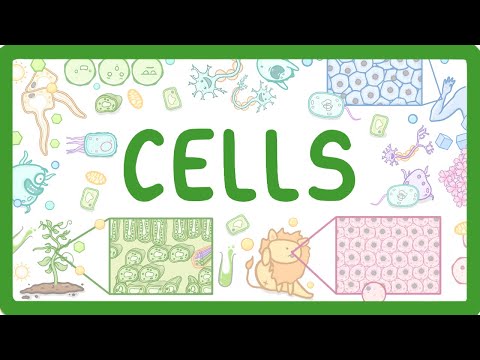
GCSE Biology - Cell Types and Cell Structure (2026/27 exams)
Cells: Understanding the Basics
In this section, the video introduces cells as the fundamental units of life, discussing their structure and function in animal, plant, and bacterial cells.
What Are Cells?
- Cells are the basic building blocks of life that can replicate independently.
- They divide to form new cells.
- Animal and plant cells are multicellular, containing various cell types.
- Animals and plants grow or replace dead cells through division.
Cell Structure Comparison
- Both animal and plant cells have cell membranes controlling substance passage.
- Nucleus in both stores genetic material (DNA).
- Mitochondria provide energy for cell functions through aerobic respiration.
- Ribosomes in both aid protein synthesis.
Unique Plant Cell Structures
- Plant cells have a rigid cellulose cell wall for support.
- Permanent vacuole stores cell sap for essential nutrients.
- Chloroplasts conduct photosynthesis using chlorophyll to produce sugars.
- Chlorophyll gives plants their green color.
Bacterial Cells: Contrasting Prokaryotes
This section explores bacterial cells as prokaryotes with distinct features compared to eukaryotic cells.
Bacterial Cell Characteristics
- Bacteria are unicellular prokaryotes with a single circular DNA strand.
- Genetic material is free-floating without a nucleus.
- Some bacteria contain plasmids with extra genes like antibiotic resistance.
Turn any video into a summary like this
YouTube links, meetings, lectures. With transcripts, search, and chat.