Part 1 - Overview of CHP Projects in RETScreen Expert
Detailed Overview of Combined Power Heating and Cooling Feasibility Analysis
This section provides an introduction to the combined power heating and cooling feasibility analysis using the RetScreen software. The focus is on demonstrating the basic structure of the model for conducting a feasibility analysis.
Starting a Feasibility Analysis with RetScreen
- Clicking on visibility or power eating cooling opens a blank analysis.
- The Virtual Energy Analyzer (VA) offers a built-in example that can be customized for the project.
- Selecting facility type as power eating allows choosing between gas turbine or reciprocating engine options.
Location Selection and Climate Data
- Choosing Toronto as the location for the project.
- Climate data such as design temperature, air temperature, and heating degree days are crucial for cogeneration analysis.
Facility Information and Efficiency Calculation
- Populating feasibility analysis with data adjusted for Toronto's location.
- Examining climate information essential for cogeneration analysis efficiency calculation.
Equipment Selection and Load Calculation
- Completing facility information like name and address in VA description field.
- Explaining efficiency calculation of cogeneration application compared to conventional approach in benchmarks section.
System Selection and Energy Model Sheet
- Understanding overall efficiency improvement through waste heat recovery in cogeneration systems.
- Navigating through system selection steps in ribbon or left menu for detailed information.
Detailed Breakdown of Equipment Selection Process
This section delves into selecting equipment, calculating loads, and optimizing energy efficiency within the context of a cogeneration project.
Grid Type Selection
- Choosing central grid due to availability in Toronto; other options include isolated grid or off-grid setups.
Fuel and Electricity Rate Specification
- Selecting natural gas with proposed rate for cubic meter usage; specifying electricity rates pre-and post-cogeneration installation.
Load Calculation: Heating Load
- Calculating monthly heat energy consumption; introducing energy efficiency measures to reduce load before cogeneration setup.
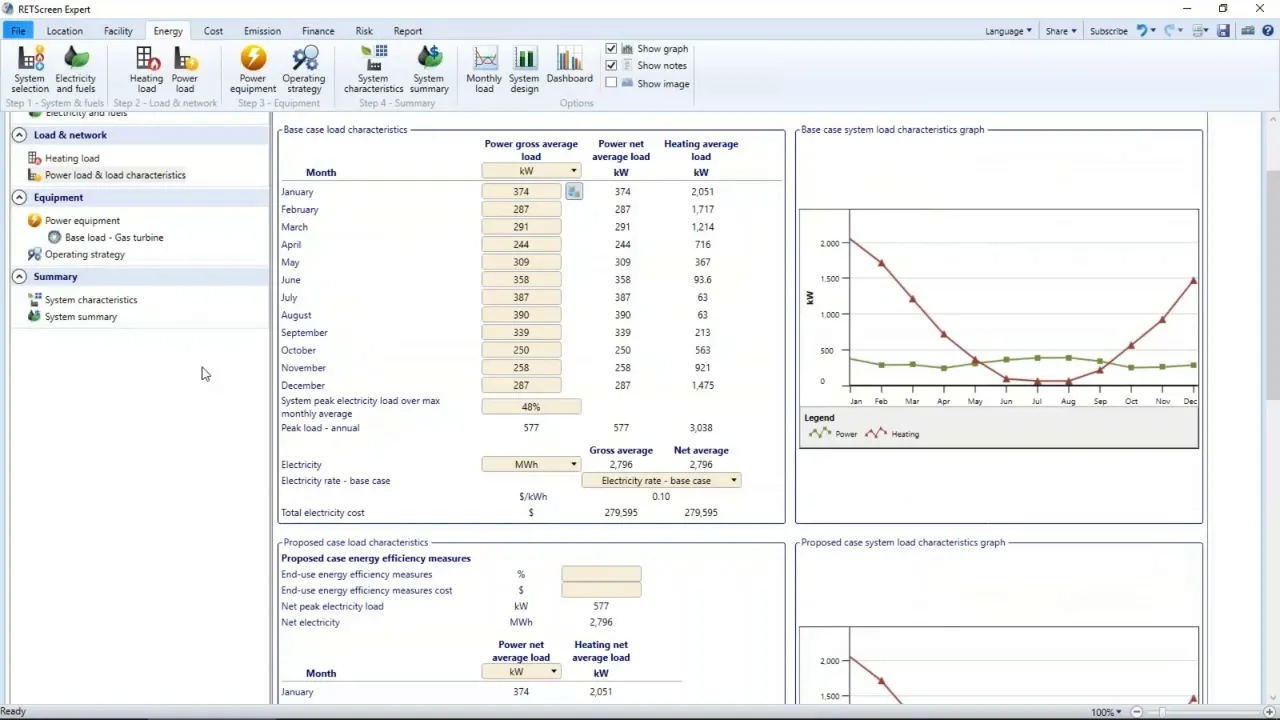
Load Calculation: Power Load
- Determining monthly average power load using utility bills; considering energy-saving measures to lower peak power load pre-cogeneration installation.
Equipment Selection: Cogeneration System Setup
Energy System Design Overview
In this section, the speaker discusses the energy system design process, focusing on factors such as power generation, consumption, and export to the grid.
E-Trade and Recovery Efficiency Calculation
- The model calculates the heating capacity and electricity deliverable to the load and grid based on entered information.
Capacity Adjustment for Grid Export
- Increasing capacity allows for exporting excess energy to the grid, enhancing system flexibility.
Operating Strategy Selection
- Three options are available: fuel power capacity output, power load following, and heating load following.
- Load-following systems prioritize meeting building demand over grid export.
- Higher efficiency expected in the third option.
- Operating profit influenced by fuel and electricity rates.
System Characteristics Analysis
This part delves into system characteristics analysis, offering insights into technology use, energy consumption, and cost considerations.
Secondary Equipment Selection
- Users can select secondary equipment for better system understanding and functionality.
- Power selection involves using grid electricity for peak loads.
- Heating selection involves specifying a boiler for peak heating needs.
- Boiler assumed to be existing with no additional costs specified.
System Design Graph Utilization
- System design graph aids in analyzing proposed systems' performance relative to peak loads and energy delivery efficiency.
- Gas turbine's high efficiency in meeting electricity demands highlighted despite lower capacity percentage relative to peak load power.
Financial Analysis Insights
The financial analysis segment explores cost summaries, operational expenses, emission comparisons between base case and proposed scenarios.
Cost Summary & Emission Comparison
- Summarizes initial costs from energy models along with operation & maintenance (O&M) costs.
- Base case fuel cost compared with annual savings post-system implementation.
- Greenhouse gas emissions compared between base case and proposed scenario.
Financial Viability Assessment
- Project deemed unfeasible due to low internal rate of return (IRR), extended payback period, negative net present value (NPV).
- Cash flow graph reinforces project's financial challenges.