UD2 Componentes fundamentales de los sistemas microinformáticos 14
Understanding Memory Latency in Modules
Introduction to Memory Latency
- Memory latency refers to the time taken from requesting data until it is delivered. Each chip delivers data in 8 bits, equating to 1 byte.
- The key aspect of latency is the delay in delivering a byte, which is crucial when selecting memory modules.
Factors Influencing Module Selection
- When comparing memory modules, consider both transfer speed and CAS latency (Column Address Strobe). CAS latency indicates how many clock cycles are needed for memory to access requested data.
- A higher latency can result in a module with greater speed performing slower than one with lower speed but better latency.
Practical Comparison of Modules
- To compare two modules effectively, check their transfer rates and CAS latencies. For example, if two modules have the same transfer rate but different CAS latencies, the one with lower CAS will generally perform better.
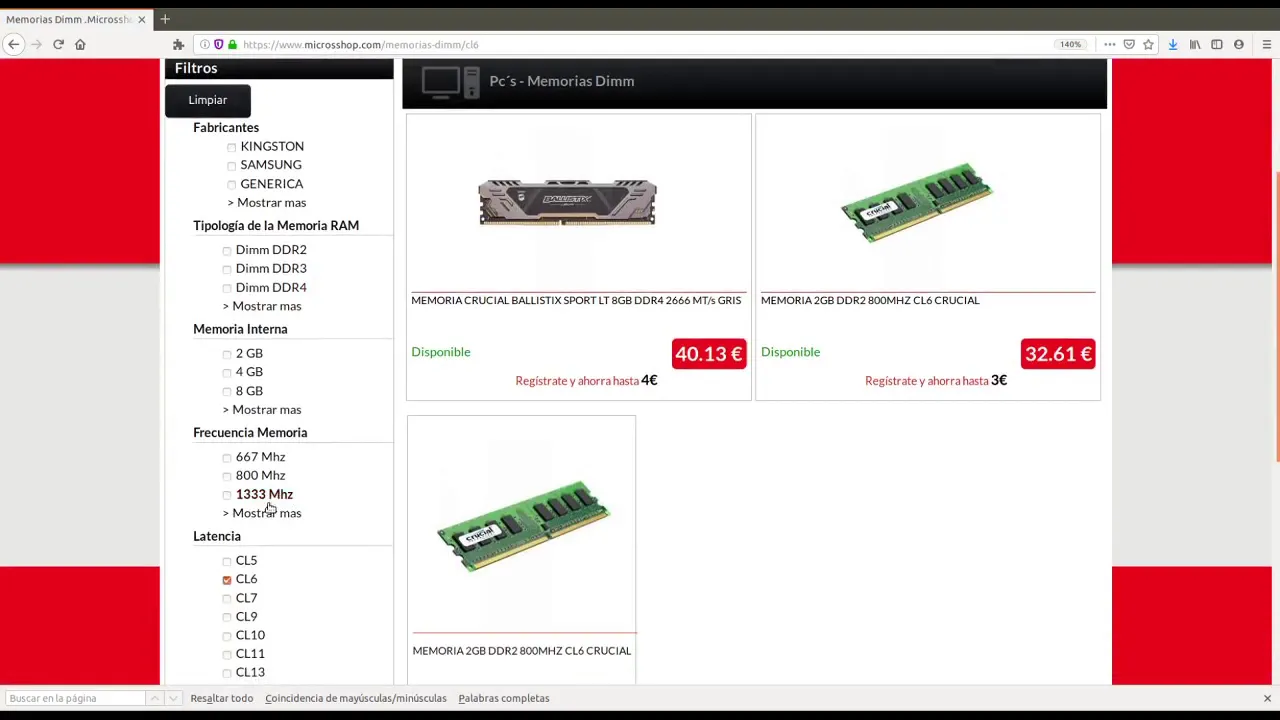
- An example comparison can be made using online retailers like PC Max or Microsoft Store to evaluate specifications such as frequency and CAS values.
Understanding Specifications
- The number associated with CAS latency indicates how many clock cycles are required for accessing a specific column within the chip's memory.
- It’s essential to focus on equal clock frequencies when making comparisons between different memory modules.
Advanced Comparisons and Considerations
- When evaluating options like CL5 vs. CL6 at different speeds (e.g., 2600 MT/s vs. 3200 MT/s), it's important to note that while one may have higher speed, its performance could still be inferior due to higher latency.
- Filtering by specifications such as CL16 can help narrow down choices based on price and performance metrics.
Final Thoughts on Module Selection
- Ultimately, choosing between different RAM configurations involves balancing capacity (e.g., 8GB vs. 16GB), speed (frequency), and latency (CAS).
Understanding Memory Latency and Performance
Key Concepts of Latency and Clock Speed
- Latency is crucial in determining memory performance; lower latency means faster access to data, even at higher clock speeds.
- At equal clock speeds, memory with lower latency (fewer cycles to access data) is preferred for better performance.
Comparison of Memory Modules
- A comparison of 8GB memory modules shows that CL16 modules outperform CL17 ones, despite being slightly more expensive.
- The recommendation is to consider purchasing CL16 modules over CL17 due to their superior speed.
Reliability Factors in Memory Selection
- Reliability parameters are essential; error-correcting memory (ECC) can recover from errors but may be slower than non-ECC types.
- ECC memory tends to be pricier but offers enhanced reliability, making it suitable for servers and critical applications.
Types of Memory for Different Applications
- Registered (or buffered) memory improves synchronization and reliability compared to unbuffered types, often used in server environments.
Summary of Considerations When Choosing Memory
- Total memory capacity is a primary consideration; assess how many slots are available for RAM installation based on future upgrade plans.
Turn any video into a summary like this
YouTube links, meetings, lectures. With transcripts, search, and chat.