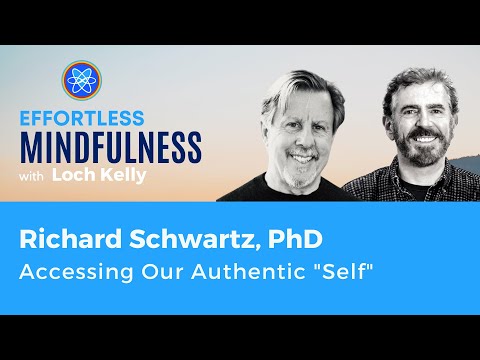
How Can We Access and Heal Our Authentic Self? Richard Schwartz and Loch Kelly
Introduction to Internal Family Systems (IFS)
Overview of the Podcast
- The podcast features Dick Schwartz, founder of Internal Family Systems (IFS), discussing its innovative psychotherapy approach.
- Focus on micro meditations and conversations about non-duality, neuroscience, and contemporary psychology.
Background on IFS
- Schwartz shares his journey in discovering IFS, starting from his background as a family therapist in 1981.
- Initially skeptical of internal psychological work, he aimed to prove that reorganizing family relationships could resolve issues.
Discovery of Parts
Understanding Client Experiences
- Clients described their internal struggles using the concept of "parts," which was unfamiliar to Schwartz at first.
- He learned that these parts often had autonomy and were trying to protect the individual from pain or trauma.
The Concept of Exiles and Protectors
- Schwartz identifies two main categories: Exiles (vulnerable parts) and Protectors (managers and firefighters).
- Exiles: Vulnerable parts locked away due to trauma.
- Managers: Parts that try to control external circumstances to prevent triggering Exiles.
- Firefighters: Reactive parts that act impulsively when Exiles are triggered.
The Nature of Self
Accessing the Authentic Self
- The "Self" with a capital S is described as an inherent part within everyone that cannot be damaged and knows how to heal.
- This Self embodies qualities such as calmness, curiosity, compassion, confidence, creativity, courage, clarity, and connectedness—collectively referred to as the "8 C's."
Transformation Through Dialogue
- IFS encourages clients to engage in dialogue with their parts rather than suppress them; this leads to transformation rather than mere observation.
Distinguishing Parts from Mind States
Understanding Sub-Personalities
- Schwartz discusses how other therapeutic models may conflate negative states with identity rather than recognizing them as distinct parts carrying burdens.
Compassionate Engagement
- Emphasizes the importance of approaching all internal experiences—including negative emotions—with compassion instead of vilification or suppression.
Cultural Perspectives on Healing
Addressing Trauma Without Fear
- Both speakers challenge traditional beliefs about needing a strong ego or good parenting for healing; they argue that self-leadership can emerge even from severe trauma backgrounds.
Bridging Psychology and Spirituality
- They highlight IFS as a bridge between psychological understanding and spiritual awakening by allowing individuals access to their true selves without extensive preparatory work or therapy stages.
Practical Applications of IFS
Daily Integration
- Discusses how individuals can practice self-leadership daily by recognizing when they are triggered by external events and accessing their Self during those moments for better outcomes in interactions.
Learning from Relationships
- Relationships serve as opportunities for growth; challenging interactions reveal unresolved parts needing attention for healing processes.
Exploring Self and Parts in Healing
Accessing Self through Activities
- Engaging in activities you love, such as sports or dancing, can help access the self. It's important to recognize who is experiencing these feelings and what it feels like to be in that state of self-awareness.
The Role of Self-Energy
- A key goal is to bring more self-energy into the world, especially among leaders. This energy has healing properties for both inner and outer relationships. Understanding how leaders can express this energy is crucial for broader impact.
Speaking from Parts vs. Speaking for Parts
- When communicating feelings, it's beneficial to speak for a part rather than as a part. This approach helps clarify emotions without blending with them, allowing for healthier interactions and understanding of one's feelings.
Peak Experiences and Spirituality
- Peak experiences, including those induced by psychedelics, can facilitate access to the self and reveal an innate sense of well-being that many people miss when living from a parts-based perspective. Recognizing this can lead to profound realizations about existence and connection.
Compassionate Engagement with Parts
- Developing compassion towards all parts of oneself is essential for healing. Accepting parts without needing them to change fosters openness within individuals, making them more receptive to transformation over time.
Psychedelics as Tools for Accessing Self
- Psychedelic substances like MDMA can quickly help individuals access their self-energy while remaining grounded in their bodies, promoting deep emotional connections and compassion toward others. These experiences often lead participants to spontaneously engage with their internal parts system (IFS).
Risks Associated with Rapid Accessing of Self
- There are dangers in accessing the self too quickly without addressing protective parts first; backlash may occur where individuals experience overwhelming negative emotions or reactions due to unresolved trauma or fear of feeling good again. Understanding this dynamic is vital during psychedelic sessions or therapeutic work involving IFS techniques.
Managing Emotional Responses During Sessions
- If intense emotional responses arise during therapy sessions (e.g., screaming), it's important to acknowledge the upset part separately rather than becoming overwhelmed by it; facilitating dialogue between the individual and their parts can aid in processing these emotions constructively.
Integrating Mindfulness into Healing Practices
- Practicing mindfulness involves recognizing when one is blended with a part and learning how to unblend effectively; this process allows individuals to connect with their core essence before re-engaging with their various parts in a compassionate manner that promotes healing relationships within themselves and others.
The Interconnectedness of All Beings
- Achieving enough self-awareness leads individuals not only to feel connected within themselves but also fosters a sense of unity with all beings; this interconnectedness aligns closely with Buddhist principles while providing practical pathways toward experiencing it firsthand rather than merely conceptualizing it.
Turn any video into a summary like this
YouTube links, meetings, lectures — with transcripts, search, and chat.