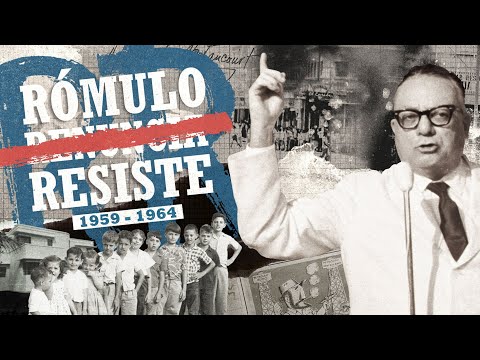
#Documental - Rómulo Resiste
Recollection and Political Landscape in Venezuela
Reflections on Childhood and Memory
- The speaker opens with a quote from Johann Paul Friedrich Richter about memory, emphasizing its significance as an unchangeable paradise.
- The speaker reflects on their childhood years, likening memories to clouds that are elusive yet impactful, indicating a personal narrative that may differ from others' experiences.
Context of Political Change
- Introduction of the film "RÓMULO RESISTS" by Carlos Oteyza, setting the stage for discussions around Venezuelan history.
- Describes the routine of walking to school with cousins, highlighting a sense of community amidst political unrest.
- Mentions military checkpoints and armed guards during travels, illustrating the tense atmosphere in Venezuela at the time.
The Fall of Pérez Jiménez
- January 23, 1958: Announcement of Pérez Jiménez's flight and subsequent jubilation in Caracas over his ousting.
- Formation of a military government following Pérez Jiménez's departure; notable support from various societal sectors including business communities and political parties.
Rómulo Betancourt's Return
- Rómulo Betancourt returns from exile as a significant figure in Venezuelan politics; he aims to unite the country against past political conflicts.
- Betancourt’s call for unity is highlighted as he addresses political cannibalism and seeks to avoid previous mistakes made between 1945 and 1948.
Challenges Faced Post-Dictatorship
- Discussion on economic challenges post-Pérez Jiménez; public works halted leading to massive unemployment issues.
- Vice Admiral Larrazábal implements an emergency plan to address unemployment through subsidies for various jobs like street cleaning.
Military Uprisings and Democratic Struggles
- Mention of two significant movements challenging democracy in 1958: one led by Minister Castro León and another involving military police uprisings.
- A violent uprising results in casualties but showcases public courage during this tumultuous period marked as a 'bloody baptism' into democracy.
Personal Anecdotes Amidst Political Climate
- The speaker shares personal family experiences while growing up comfortably despite national turmoil; mentions moving into a new house bought by their father.
- Reflecting on childhood memories tied to birthday celebrations amidst ongoing discussions about presidential candidates within their family context.
Perspectives on Presidential Candidates
- Speaker notes differing opinions within their household regarding presidential candidates: skepticism towards Betancourt contrasted with more favorable views towards Caldera.
Election Dynamics in Venezuela: December 1958
The Role of Ballot Colors
- The use of colored ballots was explained as a means for illiterate voters to select candidates based on color rather than reading names.
- Rómulo Betancourt represented Acción Democrática, the most organized political party, while Wolfgang Larrazábal gained prestige as head of the Governing Council, leading to a polarized election.
Emotional Responses and Political Tensions
- A sense of emotional connection was felt during the campaign, highlighting the democratic spirit among supporters.
- Rumors circulated that Betancourt's victory could threaten democracy, reflecting military discontent with political parties and their leaders.
Perceptions of Betancourt
- Business sectors viewed Betancourt with suspicion due to his communist affiliations, fearing he might be deceptive in his intentions.
- The Punto Fijo Pact emerged as a crucial agreement aimed at ensuring political stability post-elections, uniting former adversaries under a common government framework.
Exclusion from the Pact
- The Communist Party refrained from signing the Punto Fijo Pact to avoid causing unrest within military ranks; they did not seek governmental inclusion.
- Despite their absence from the pact, leftist forces supported it through votes for the 1961 Constitution.
The Presidential Elections: December 7, 1958
Election Day Experiences
- On election day, Betancourt participated like any citizen alongside his wife while various parties contributed to shaping Venezuela’s future.
Election Results and Reactions
- Initial results showed significant losses for Betancourt in Caracas but ultimately led to his victory against expectations; Larrazábal was anticipated to win.
Personal Reflections Post-Election
- Reflecting on personal experiences during this time included childhood memories tied to Christmas wishes amidst political upheaval.
Impact of Fidel Castro's Revolution
Reaction to Cuban Revolution
- The Venezuelan government's support for Castro's guerrillas foreshadowed Castro's arrival in Venezuela following Cuba’s revolution on January 1, 1959.
Public Sentiment During Castro's Visit
- During Castro’s speech on January 23rd in El Silencio, there was notable hostility towards Betancourt from Larrazabal supporters present at the rally.
Meeting Between Betancourt and Castro
Tensions During Their Encounter
- Despite widespread eagerness among other leaders to meet Fidel Castro, Rómulo Betancourt initially resisted this engagement due to underlying tensions between them.
Economic Proposals Discussed
- Their meeting was marked by tension; Castro proposed economic aid which included preferential oil prices from Venezuela—a proposal that Betancourt rejected outright.
The Challenges of Rómulo Betancourt's Government
Economic and Social Context Post-Dictatorship
- The dictatorship left Venezuela on the verge of bankruptcy, with over 2 million illiterate adults and half a million school-age children lacking access to education. Unemployment was widespread, marking a significant social crisis.
- Betancourt's inauguration on February 13, 1959, faced immediate challenges including high unemployment rates and a paralyzed economy suffering from massive capital flight. The government aimed to eliminate wasteful spending in public works.
Formation of a National Unity Government
- Upon winning elections, Betancourt committed to respecting electoral results and forming a national unity government that included diverse political forces such as COPEI and URD, along with unions and church representatives. This integration aimed to address the country's severe social deficiencies.
- Key challenges for Betancourt included ensuring governmental stability while addressing the dramatic economic situation inherited from his predecessor. His administration faced marked marginalization in urban areas like Caracas, which were surrounded by slums described as a "belt of misery."
Controversial Economic Measures
- In an effort to stabilize public finances, Betancourt dismantled the Emergency Plan initiated by Larrazábal in 1958 due to its unsustainability, leading to criticism from those who had benefited from it. This decision resulted in tens of thousands mobilizing against his government.
- A highly unpopular measure introduced by Betancourt involved reducing civil service salaries by 10% as part of efforts to balance public spending with revenue—a move perceived negatively by many citizens. He advocated for profound reforms rather than violent revolution despite pressure from youth factions within his party seeking rapid change.
Internal Party Divisions
- Ideological divisions emerged within Acción Democrática (AD), particularly among the youth who viewed Betancourt as outdated; this led to the formation of the Revolutionary Left Movement (MIR) that attracted many young members away from AD. The split highlighted generational tensions within Venezuelan politics during this period.
- As protests erupted across Caracas—resulting in injuries and fatalities—Betancourt faced increasing unrest fueled by radical elements challenging his authority and governance style amidst calls for revolutionary change inspired by global movements at that time.
Response to Civil Unrest
- In response to growing street violence and radicalism, Betancourt emphasized order but also recognized that his message needed to resonate with both conservative sectors and military forces rather than just appeasing protestors demanding immediate change through direct action or insurrectionary tactics.
Venezuelan Democracy and Political Turmoil
Reflections on Democracy
- Dr. Elías Toro emphasizes that if Venezuelans had shown the same patience with democracy as they did with dictatorships, the country's fate could have been different.
Personal Anecdotes and Family Life
- The speaker shares a personal story about enjoying wrestling with family, highlighting cultural aspects of entertainment despite its staged nature.
- The speaker discusses their younger brother, Ernestico, who faces developmental challenges but brings joy to the family.
Political Context in Venezuela
- A New Year's message from December 1959 reflects on the end of Venezuela's first year under a constitutional regime after years of non-elected governments.
Attack on President Betancourt
- On June 24, 1960, an assassination attempt against President Betancourt occurs during Army Day celebrations; he sustains serious injuries.
- Betancourt arrives at Miraflores Hospital post-attack, likened to a boxer due to his bandaged appearance.
Conspiracy and International Relations
- The perpetrators of the attack are captured; evidence links them to Rafael Leónidas Trujillo from the Dominican Republic, indicating political tensions between nations.
Symbolism in Politics
- Despite surviving an assassination attempt, Betancourt does not capitalize on this event for political gain; he chooses to move forward without dwelling on it.
Cultural References and Leadership Perception
- Discussion around a "pipe" associated with magical powers illustrates how folklore can influence public perception of leadership in politics.
Public Works Initiatives by Betancourt
School Celebrations and Community Engagement
- Describes school events involving students donning masks for competitions that create a festive yet chaotic atmosphere.
Presidential Visits and Infrastructure Development
- Over 20,000 people greet President Rómulo Betancourt during his visit through various towns while reviewing public works projects like aqueduct construction.
Focus on Functional Public Works
Inauguration and Presidential Travels
The Inauguration Process
- The speaker recounts a moment when they were unsure if everything was ready for an inauguration, emphasizing the importance of ensuring all journalists and photographers were present before proceeding.
- A humorous exchange occurs where a photographer's camera jams, prompting the president to suggest repeating the ribbon-cutting ceremony.
Presidential Travel Preferences
- Romulo Betancourt preferred traveling by car rather than plane, showcasing his connection with the country and its people.
- The presence of a luxurious Rolls Royce in presidential caravans symbolizes both political strategy and personal preference for visibility among citizens.
Personal Style and Public Perception
- Betancourt is described as neat but not extravagant in his attire; he notably wore a hat, which became a symbol of his uniqueness in Venezuelan society.
- A nostalgic memory is shared about witnessing Betancourt’s caravan after the opening of Naiguatá resort, highlighting public engagement with the president.
Childhood Memories at Beach Clubs
Family Dynamics and Responsibilities
- The speaker reflects on their childhood experiences at beach clubs, emphasizing family bonds despite being away from relatives in rural areas.
- A sense of responsibility emerges as the speaker takes on protective duties over their younger brother while enjoying leisure activities.
Adventures and Risks
- An adventurous spirit leads them to explore nearby Puerto Azul club despite its dangers, illustrating youthful curiosity.
- A moment of panic arises when they cannot find their brother after swimming, showcasing themes of fear and familial care.
Agrarian Reform Initiatives
Contextualizing Agrarian Reform
- President Betancourt's agrarian reform is framed as essential for land retention among peasants; it aims to improve agricultural productivity rather than serve as charity.
- The reform encompasses broader initiatives like infrastructure development (roads), housing improvements, and health clinics for rural communities.
Peasant Support and Political Climate
- Peasants express gratitude towards Betancourt during visits; many pledge support for constitutional governance amidst rising tensions from guerrilla movements.
- Betancourt humorously critiques guerrilla movements' lack of genuine peasant support while advocating for comprehensive agrarian reforms to counteract landlordism.
Socioeconomic Challenges in Venezuela
Misunderstandings Among Peasants
- Initial misinterpretations arise when peasants refer to themselves as "from the mocracy," indicating their affiliation with Democratic Action party (ADECO).
Urban Migration Trends
- Despite efforts to revitalize rural life through agrarian reform, urban migration continues unabated due to better opportunities in cities—a common trend across Latin America.
Consequences of Urbanization
Migration and Family Dynamics in Venezuela
The Impact of Family Illness
- The speaker reflects on the ongoing migration during the Betancourt period, noting a personal family crisis as their mother falls ill, leading to emotional distress for the family.
- The household dynamics shift as the speaker's sisters take charge of daily tasks, showcasing resilience amidst adversity.
Historical Context of Migration
- The narrative transitions to discuss the significance of foreign migration in Venezuela during the 1940s and 1950s, emphasizing the need for labor in an oil-rich country.
- The speaker shares their family's journey to Venezuela, highlighting their connection to Grandfather Luis, who arrived at La Guaira during a politically tumultuous time.
Cultural Identity and National Pride
- Despite their Spanish heritage, the speaker expresses pride in being Venezuelan and celebrates local traditions while acknowledging historical figures like Bolívar.
- A glimpse into family life is provided through references to advertising work by the father at ARS and a commercial featuring the speaker's brother.
Political Landscape During Betancourt's Presidency
OPEC Formation and Its Significance
- Rómulo Betancourt’s dedication to understanding oil politics is highlighted through his publication "Venezuela, Politics and Oil," marking a pivotal moment in Venezuelan history.
- Venezuela's role as a founding member of OPEC is discussed; it aimed to stabilize oil prices against powerful nations' interests.
U.S.-Venezuela Relations
- A significant visit from U.S. President Kennedy is noted as an attempt to address misunderstandings regarding Latin American issues.
- Kennedy’s trip symbolizes changing political dynamics within both regions amid evolving global relations.
Tensions in Political Ideologies
Critique of Political Leadership
- Fidel Castro’s criticism of Betancourt reflects broader ideological conflicts between leftist movements and democratic governance in Latin America.
University Activism and Polarization
- The university emerges as a battleground for political ideologies with aggressive leftist activism against opposing views during this era.
Personal Narratives Amidst Political Strife
Urban Guerrilla Warfare in Venezuela
The Role of Students and Criminal Alliances
- Operations were conducted by students from student residence number one, who collaborated with common criminals during the urban guerrilla movement in Venezuela.
- Guerrillas engaged in bank robberies under the pretext of funding revolutionary activities, often allying with actual bank robbers for a share of the loot.
- The guerrilla movement was divided into urban groups that executed bombings and rural factions that directly confronted police and military forces.
Escalation of Violence
- A policy emerged where guerrillas believed they needed to disarm policemen to arm themselves, leading to violent confrontations resulting in deaths.
- Francisco de Venanzi criticized this approach, questioning the morality behind killing poor policemen for their weapons, highlighting the flawed nature of this strategy.
Political Context and Reactions
- The youth's fervor turned violent as slogans demanding Rómulo Betancourt's resignation became prevalent; he was labeled a reactionary agent by figures like Fidel Castro.
- Castro’s rhetoric painted Betancourt as a tyrant, contributing to rising tensions between Venezuela and Cuba, culminating in Venezuela severing ties with Cuba.
Civil Disloyalty and Conspiracies
- 1962 marked a critical year for Betancourt's administration as civil disloyalty began manifesting through opposition within Congress.
- Two conspiracies threatened his regime: one aimed at restoring a previous government type and another seeking to establish a Cuban-style regime in Venezuela.
Military Uprisings and Urban Battles
- Amidst growing civil unrest, two significant military uprisings occurred in 1962, leading to numerous casualties.
- Notable battles included efforts to reclaim Carúpano and intense fighting in Puerto Cabello, which resulted in over 100 deaths during what became known as the bloodiest urban battle in contemporary Venezuelan history.
Political Instability and Governance Challenges
- Independent political figures sought to blame left-wing parties for governmental failures while Cuba’s involvement was seen as part of a broader political agenda against Betancourt’s constitutional order.
Rómulo Betancourt and His Impact on Venezuela
Personal Reflections and Early Influences
- The speaker shares a personal anecdote about spending money earned from their aunts on film rolls, highlighting the joy of skating in December and the thrill of high speeds.
Political Context and International Relations
- The speaker mentions an upcoming discussion with President Kennedy regarding Mr. Rómulo Betancourt's official delegation, emphasizing the importance of U.S.-Venezuelan relations.
- Acknowledges the warm welcome received from President Kennedy, reflecting on the special relationship between Betancourt and Kennedy aimed at fostering democracy and freedom.
Historical Events: The Assassination of JFK
- Describes a pivotal moment in school when students are informed about JFK's assassination on November 22, 1963, marking a significant emotional event for them.
- Introduces Brian O'Connors, an American student who leads outdoor activities at CEL (Loyola Hiking Center), showcasing camaraderie through camping experiences.
Infrastructure Development Under Betancourt
- Discusses public works inaugurated by Betancourt in 1963, including schools and irrigation systems as part of his agrarian reform efforts to improve infrastructure across Venezuela.
- Highlights Betancourt’s commitment to paving dusty roads during his campaign, aiming to enhance connectivity throughout remote areas of Venezuela.
Education Initiatives and Industrialization Policies
- Critiques against Betancourt's government focus on building schools to ensure educational access for marginalized sectors; he emphasizes education as a priority.
- Details the establishment of the Venezuelan Corporation of Guyana (CVG), which aimed at industrializing the country through planned development initiatives under ECLAC principles.
Economic Strategies: Import Substitution Policy
- Explains how Betancourt’s industrialization policy was influenced by ECLAC principles promoting import substitution while also noting challenges related to productivity among protected industries.
- Discusses how financing from oil revenues allowed private sector industries to develop despite some inefficiencies due to protectionism in place during this period.
Urban Development Projects
- Mentions significant public works initiated by Betancourt in Caracas aimed at improving transportation networks and creating green spaces like Parque del Este.
- Describes urbanization projects such as El Cafetal that provided middle-class housing options while illustrating socio-economic dynamics within Caracas neighborhoods like Chacao.
Social Dynamics and Civil Unrest
- Reflecting on life in Chacao, where local businesses thrive amidst social changes; highlights cultural interactions with immigrants contributing to community life.
- Notes increased incidents of violence in 1963 linked to revolutionary movements targeting bourgeois infrastructure as part of broader societal unrest.
The Kidnapping of Di Stéfano and Its Implications
The Context of the Kidnapping
- In August 1963, Real Madrid visited Venezuela for a soccer match, coinciding with the prominence of Argentine footballer Alfredo Di Stéfano, likened to Messi in his era.
- A unit from the MIR (Revolutionary Left Movement) planned to kidnap Di Stéfano, leading to sensational headlines in Venezuelan newspapers about the incident.
The Purpose Behind the Kidnapping
- The kidnapping was not for ransom but aimed at drawing international attention to Venezuela's revolutionary struggle. Di Stéfano reported he was unharmed during his captivity.
Violence and Political Turmoil in Venezuela
Train Robbery Incident
- On September 29, 1963, remnants of the Gran Ferrocarril de Venezuela were involved in a violent train robbery where National Guardsmen were subdued.
- This incident resulted in five National Guardsmen being killed and marked a significant escalation in violence compared to previous uprisings like Porteñazo and Carupanazo.
Government Response
- Following the train robbery, President Rómulo Betancourt arrested leaders from both the Communist Party and MIR, which dealt a severe blow to leftist movements within Venezuelan society.
Personal Reflections Amidst Political Chaos
Family Life During Instability
- The narrator reflects on accompanying their mother to church while dealing with her emotional instability amidst political unrest.
- Despite societal violence, childhood experiences included family outings and community events that provided a sense of normalcy.
Contrasting Experiences
- While urban guerrilla activities persisted in Caracas, life continued relatively comfortably for many families despite underlying tensions.
- The narrator describes their childhood as one filled with normality despite living through a politically unstable period.
Political Dynamics and Electoral Strategies
Importance of Voting
- Young Venezuelans over 18 are encouraged to vote as part of their civic duty; this reflects society's commitment to democratic processes post-military rule.
Divisions Within Political Parties
- Democratic Action faced internal divisions leading to two factions participating under different banners during elections—AD Opposition and AD Government—highlighting ideological diversity within Venezuelan politics.
Leftist Strategies Against Elections
Preventing Electoral Participation
- The Communist Party and MIR strategized against holding elections as they believed it would prolong Betancourt’s power unjustly.
- They aimed for public abstention from voting not out of conviction but as part of a broader strategy involving violence against electoral processes.
Revolutionary Plans Unfolded
The Political Landscape of Venezuela: A Historical Overview
The Evidence of Cuban Involvement
- The discussion begins with accusations against a "bloodthirsty tyrant" and "miserable traitor," highlighting evidence that weapons used in conflicts had origins traced back to Cuba, despite denials from the Cuban government.
- It is noted that these weapons were purchased from Belgium, Italy, and the United States at various times, emphasizing the absurdity of claims denying their Cuban roots. The OAS reportedly has proof linking these arms to Cuba.
Electoral Dynamics in Venezuela
- A pivotal moment in Venezuelan history occurred with the slogan "votes yes, bullets no," which led to a significant electoral victory for democracy over violence. This marked a turning point in public sentiment towards democratic processes.
- On December 6, 1963, Venezuela held presidential elections with an unprecedented low abstention rate of only 8%, indicating strong public engagement and marking a political defeat for leftist movements at that time. Raúl Leoni was elected as president.
The Quest for Democracy
- The majority of Venezuelans expressed a desire for democracy, leading to reflections on past errors where armed struggle was mistakenly seen as the solution rather than seeking democratic means. This misjudgment resulted in significant setbacks for revolutionary aspirations.
- There was an expectation among some revolutionaries that the rapid success of the Cuban revolution could be replicated in Venezuela; however, this belief proved misguided as they faced violent repression from both government forces and leftist militants alike.
Violence and Repression
- The narrative highlights how state repression led to numerous deaths among leftist militants captured during conflicts, illustrating the brutal nature of political struggles at that time. Both sides resorted to violence amidst escalating tensions between government forces and opposition groups.
- Betancourt's administration is characterized as tough yet necessary for fortifying democracy against threats posed by both internal dissenters and external influences like Cuba's revolutionary agenda. Unfortunately, many innocent lives were lost during this turbulent period due to violence on both sides.
Reflections on Leadership and Legacy
- Betancourt's leadership is portrayed positively; he managed to leave behind a stable economy and demonstrated that an elected government could complete its constitutional term despite facing conspiracies from various factions including military elements and foreign governments like Cuba’s regime.
- His tenure culminated in significant political achievements such as fostering cooperation among diverse societal sectors (business community, Catholic Church) which contributed to establishing democratic stability through agreements like the Punto Fijo Pact.
Conclusion: Achievements vs Aspirations
- As Raúl Leoni took office on March 11, 1964, it became clear that while Betancourt aimed for stability within democratic processes amid ongoing threats from communism (particularly Castro’s influence), Fidel Castro’s ambitions for regional revolution remained largely unfulfilled compared to Betancourt's successes in consolidating democracy in Venezuela.
Rómulo Betancourt: A Vision for Democracy
The Future of Democracy
- Rómulo Betancourt aimed to demonstrate that democracy was not merely a relic of the past but a vision for the future, emphasizing its relevance and potential.
- His triumph in political leadership was attributed not specifically to opposition against Fidel Castro, but rather as a result of navigating challenges despite Castro's influence.
- The new president, Leoni, is characterized as a civilian leader who communicates with calmness, suggesting stability in governance.
Personal Reflections and Changes
- A personal narrative begins with an individual entering high school, feeling more confident and socially engaged with new friends.
- The mention of Ernestico starting at AVEPANE highlights the importance of specialized education and support for individuals with specific needs, bringing joy to his family.
Transitioning Realities
- The narrator reflects on their home in Siboney feeling small compared to the broader realities awaiting them beyond Caracas.