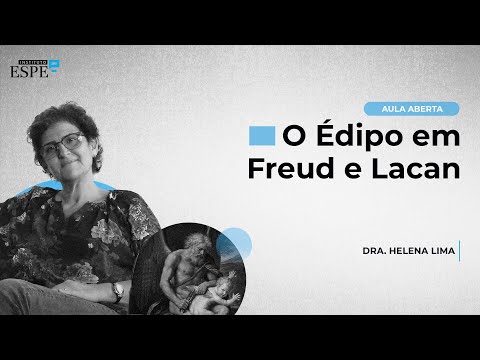
O Complexo de Édipo em Freud e Lacan
Introduction to the Live Session
Welcome and Course Overview
- The live session is hosted by the Instituto Oeste de Londrina, focusing on an open class for the online course about the Oedipus complex in Freud and Lacan.
- Professor Helena Lima is introduced, highlighting her extensive qualifications: biologist, psychologist, with specializations in neuropsychology and psychoanalysis.
- Helena holds a Master's degree in social psychology and a Doctorate in public health from USP, along with post-doctoral work in education.
Course Details
- The course will cover the Oedipus complex as it relates to Freud and Lacan's theories on subject formation.
- Enrollment for the course is currently open, with promotional pricing for the first 50 registrants.
Significance of Psychoanalysis Today
Community Engagement
- The speaker acknowledges participants from various regions, emphasizing the importance of sharing psychoanalytic knowledge during challenging times like a pandemic.
- A desire for future face-to-face interactions is expressed, alongside gratitude for attendees' participation.
Educational Commitment
- Slides from today's lecture will be made available through Instituto Oeste's platform after registration.
- The speaker notes that despite physical distancing due to COVID-19, there has been increased engagement across geographical boundaries.
Thematic Focus of Today's Lecture
Exploring Oedipus Complex
- Helena aims to inspire attendees to delve deeper into Freud's and Lacan's works regarding the Oedipus complex amidst ongoing cultural challenges.
Structure of Upcoming Classes
- The course will consist of three sessions: an introduction to Freud’s perspective on Oedipus, followed by Lacan’s interpretation, culminating in discussions on subject constitution.
Understanding Freud's Work and Its Context
The Importance of Context in Psychoanalysis
- When studying Freud, it's crucial to consider the date of each text as his thoughts evolved over time, reflecting a unique intellectual journey.
- A recommended starting point for serious study is reading a biography of Freud, such as that by Ernest Jones, which provides valuable insights into his life and work.
- Each biographical context helps understand specific concepts like neurosis and the structure of the psyche that Freud was contemplating at different times.
Reading Footnotes and Translations
- In Brazil, there is a lack of culture around reading footnotes; however, they are essential for understanding Freud’s texts as they often contain significant additions and clarifications.
- Notably, many translations available in Brazil stem from English versions rather than directly from German, leading to potential inaccuracies in key terms like "Ego" and "Superego."
Translation Challenges
- The translation process has led to some terms being altered significantly; for instance, "pulsão" (drive) is often inaccurately translated as "instinct."
- Strachey's approach aimed to lend scientific credibility to psychoanalysis through Latin terminology but sometimes resulted in misinterpretations.
Current Editions and Their Relevance
- Various editions exist today; the Companhia das Letras edition offers direct translations from German but may still carry some historical translation errors.
- The Autêntica edition organizes texts thematically rather than chronologically, providing rich contextual insights alongside original German text comparisons.
Continuous Learning in Psychoanalysis
- Studying psychoanalysis involves engaging with multiple versions of texts; this practice enriches understanding through diverse interpretations.
- Key psychoanalytic concepts are interconnected; discussing one often leads to exploring others like defense mechanisms or dreams.
Lifelong Learning and Ethical Practice
- Psychoanalysts engage in continuous education throughout their careers. This ongoing learning reflects an ethical commitment to personal development and client care.
- Freud emphasized that effective psychoanalysts must undergo their own analysis while also pursuing theoretical studies and supervision for professional growth.
The Role of Psychoanalysis
Understanding the Oedipus Complex in Contemporary Psychoanalysis
The Role of Writing in Psychoanalytic Training
- The discussion begins with the challenges faced during moments of feeling trapped or paralyzed, emphasizing the importance of writing as a component of psychoanalytic training.
- Michele Roman Faria introduces Lacanian concepts that expand on traditional psychoanalytic frameworks, suggesting that supervision and written work are crucial for analyst formation.
The Oedipus Complex and Family Configurations
- The speaker highlights the significance of the Oedipus complex in understanding contemporary family structures, questioning how it adapts to new familial configurations.
- Understanding the Oedipus complex is deemed essential for clinical practice, serving as a foundation for unconscious identifications and identity formation.
Literary References and Resources
- A recommendation is made to engage with literature related to the Oedipus myth, particularly referencing Sophocles' narrative as foundational for Freud's theories.
- The speaker expresses a preference for physical books over digital formats, indicating a personal connection to reading and studying psychoanalytic texts.
Key Texts in Psychoanalysis
- Mention is made of significant texts by Laplanche and Pontalis, which are noted for their rigorous translations and contributions to understanding Freudian concepts.
- Pierre Kaufmann's work is discussed as an important resource that bridges Freud's legacy with Lacanian theory, despite its complexity.
Dictionaries and Study Aids
- Various dictionaries relevant to psychoanalysis are recommended, including those by Zimmermann and Hans. These resources aim to deepen understanding through accessible language.
- Emphasis is placed on thematic dictionaries that explore key psychoanalytic terms while connecting them back to foundational figures like Freud and Lacan.
Conclusion: The Human Condition Through Oedipus
- The moral derived from the Oedipus myth illustrates human tendencies towards self-sabotage when unaware of unconscious motivations. This serves as a cautionary tale about understanding one's psyche.
Understanding the Oedipus Complex in Psychoanalysis
Theoretical Foundations of the Oedipus Complex
- The Oedipus complex is a pivotal concept in psychoanalysis, emphasizing the need to understand unconscious determinants to avoid repeating undesirable behaviors.
- Discussion on Lacan's triad: clinical practice, writing, and transmission; questions arise about how written transmission occurs alongside live classes.
- Freud's early career as a neurologist focused on lower vertebrates and their nervous systems, highlighting his scientific background before delving into psychoanalysis.
Freud's Influences and Correspondence
- Freud had significant relationships with contemporaries like Fliess, an otolaryngologist who was both a close friend and confidant during his formative years.
- The correspondence between Freud and Fliess is noted for its importance; some letters are published while others remain unpublished or undated.
Evolution of the Oedipus Concept
- The interpretation of dreams plays a crucial role in understanding the Oedipus complex; it was first formally introduced by Freud in 1910 within his work on neuroses.
- Transition from trauma theory to fantasy is essential for grasping the complexities of the Oedipus complex; this shift marks a significant evolution in Freud’s thinking.
Key Textual References
- Important texts will be highlighted for study, including seminal works that outline Freud's theories chronologically over time.
- The concept of love-hate relationships with parental figures is universal in childhood development, forming the basis for many psychological conflicts.
Implications for Education and Understanding
- Repression often leads to an imbalance between love and hate towards parents; educational materials related to these concepts will be made available publicly.
Understanding the Role of Maternal Influence on Child Development
The Concept of Erogenous Zones
- The child's body can be marked by maternal influence, with any region potentially becoming an erogenous zone, particularly areas like the mouth and genitals.
- Initial contact with the mother is crucial for satisfying needs, allowing the child's body to become a source of pleasure.
Freud's Insights on Childhood Sexuality
- Freud characterized childhood sexuality as "perverse polymorphic," indicating that it lacks limits and encompasses various forms of pleasure.
- The concept of drives (pulsions) emerges from Freud's work, representing psychic sources of somatic excitation in contrast to established norms.
Compulsion and Repetition
- Drives are linked to compulsive behaviors that may lead to self-destructive patterns; they originate from bodily sources and involve processes of excitation.
- Objects of these drives can vary widely—from food items to people—highlighting how compulsions manifest through different relationships.
Phases of Sexual Development
- Freud posited that the Oedipus complex is central to sexual development around five years old, marking a shift towards genital focus after earlier polymorphic experiences.
- Following this phase, there is a latency period where sexual urges subside until adolescence when they resurface more intensely.
Critiques and Evolution of Freudian Theory
- Despite critiques regarding his perspective as male-centric, Freud introduced the idea that female sexuality extends beyond mere reproduction.
- He faced challenges in articulating differences between male and female Oedipal experiences but eventually addressed these complexities in later works.
Pulsions: Life and Death Dynamics
Understanding Freud's Theories in the 1920s
Key Themes and Concepts
- The 1920s marked a significant period for Freud, where he revisited themes from earlier works, emphasizing that not all aspects of life lead to growth; some involve darker elements like prostitution.
- Freud's exploration included topics such as childhood genital organization, the dissolution of the Oedipus complex, anatomical distinctions between sexes, and fetishism. This decade was rich in conceptual production.
- In "Three Essays on the Theory of Sexuality," Freud noted that the Oedipus complex is central to neuroses and significantly influences adult sexuality. He argued it represents the pinnacle of infantile sexuality.
- Freud asserted that everyone born must confront and master their Oedipus complex; failure to do so results in neuroses. The importance of this concept has become increasingly evident over time.
- He highlighted differences in how boys and girls experience fear related to loss—boys fear castration while girls fear losing love—indicating a nuanced understanding of gender dynamics.
Contemporary Relevance
- The discussion reflects contemporary relationships where emotional fidelity may outweigh sexual fidelity, illustrating ongoing relevance in modern contexts.
- Freud's work initiated discussions about female sexuality historically overlooked, challenging norms by placing women's sexual experiences at the forefront.
- He faced challenges articulating female ethics compared to male ethics, suggesting women have different ethical standards regarding sexuality than men.
Clinical Observations
- Many women aged 60–65 renounce active sexuality without biological justification. This observation raises questions about societal expectations surrounding aging and sexuality.
- Freud himself reportedly ceased sexual activity around age 40 after having children, reflecting personal choices influenced by societal norms rather than biological imperatives.
Understanding the Oedipus Complex
- Freud systematically described the Oedipus complex as based on three universals: existence of infantile sexuality characterized by pleasure-seeking behavior distinct from genitality.
- Children develop theories about their own sexuality with mothers as primary objects of affection. This foundational relationship shapes their understanding of gender roles and identity.
- During the phallic stage, boys exhibit intense masturbatory behavior; parental reactions can influence their perceptions of gender differences and fears related to castration or loss.
Understanding the Complexities of Castration in Psychoanalysis
Theoretical Foundations and Historical Context
- Discussion on the concept of castration, referencing Freud's rejection of Electra complex for women, indicating a divergence from traditional theories.
- Exploration of Freud's relationship with Jung and the introduction of Electra theory by Jung in 2012, highlighting Freud's dismissal of this idea.
- Examination of how Freud interprets female genitalia as a symbol of castration due to real-life threats experienced during therapy sessions.
Castration Complex: Understanding Its Implications
- Analysis of two interpretations of the Oedipus complex: one as predetermined by heredity and another influenced by external factors and maturation processes.
- Explanation that castration is initially perceived as a lack (absence of a penis), which later gets redefined by children through their experiences with limits and desires.
The Role of Play in Understanding Castration
- Insight into how children's play can reflect their understanding or misunderstanding of sexual organs, leading to new perceptions about gender and identity.
- Discussion on narcissism related to early castration experiences, suggesting that an absence or premature experience can lead to identity crises.
Clinical Manifestations and Psychoanalytic Perspectives
- Clarification that the significance attributed to castration emerges from combining initial perceptions with subsequent experiences, shaping one's understanding over time.
- Notion that childhood games may transform into traumatic memories in adulthood if not properly integrated or understood within psychoanalytic frameworks.
Addressing Borderline Personality Disorder Through Castration Theory
- Inquiry into whether the castration complex contributes to borderline personality traits; discussion suggests indirect connections rather than direct causation.
- Emphasis on how Oedipal dynamics manifest clinically through individuals' responses to emotional conflicts and life choices, reflecting broader psychoanalytic themes.
Understanding Psychoanalytic Structures
The Role of Choice in Psychoanalysis
- Regina discusses the complexity of choice in psychoanalysis, particularly highlighting how neurotic patients struggle with renunciation, making it difficult to make decisions.
- A reference is made to Joel Dora's book on psychoanalytic structures, which explores different relational modes concerning castration and differentiates between hysteria and obsessive neurosis.
Castration and Its Implications
- Simone requests a repetition of three key phrases about castration; the discussion emphasizes that neurotic individuals recognize castration but suffer from it, while psychotic individuals do not engage with this concept at all.
- The conversation touches on André Green's work regarding limits in psychoanalysis and how these relate to social positions and the recognition of castration.
Ethical Considerations in Psychoanalysis
- The historical context of ethical boundaries in psychoanalysis is discussed, noting that significant guidelines were established as early as 1925 regarding analyst-patient relationships.
- Mention is made of a film related to Sabina Spielrein, who contributed significantly to psychoanalytic theory despite being portrayed simplistically.
Symbolic Nature of Castration
- A question arises about how early education on anatomy affects mental concepts of castration; it's clarified that this notion is symbolic rather than biological.
- The importance of cultural context in understanding family dynamics around sexuality and repression is highlighted, referencing Brazilian proverbs that reflect societal attitudes towards gender roles.
Current Perspectives on Psychosis
- Freud’s views on sexual education for children are revisited; he suggests responding simply when children ask questions rather than preemptively explaining complex ideas.
Understanding Obsessive Traits and the Oedipus Complex
The Nature of Obsessive Traits
- Discussion on how obsessive traits can manifest within a spherical structure, indicating a complex interplay between defenses and subject positions in psychoanalysis.
- Emphasis on the importance of collaboration among psychoanalysts to address these traits effectively, suggesting supervision as a key resource for practitioners.
Exploring Psychosis and Its Implications
- Proposal for further discussions or lectures on psychosis, highlighting its relevance during challenging times like the pandemic.
- Mention of ongoing exploration into the Oedipus complex, indicating that it remains a significant topic of interest.
Freud's Perspective on Oedipus Complex
- Introduction of Freud's solution regarding the Oedipus complex, where paternal figures play crucial roles in shaping identity and superego formation.
- Explanation of how objects are replaced by identifications with authority figures, leading to the development of the superego through internalized parental prohibitions.
Identification Processes in Psychoanalysis
- Discussion about unconscious identification processes as described by Freud in his 1920 theories, emphasizing how desires shape personal identity.
- Reflection on societal impacts from parenting styles, particularly concerning physical discipline and its psychological effects on children.
Libidinal Cathexes and Their Development
- Analysis of libidinal cathexes related to the Oedipus complex; these impulses evolve from sexualized feelings into broader emotional attachments.
- Examination of how boys navigate their identities through familial relationships during critical developmental stages around ages 8 to 12.
Freud's Views on Female Development
The Enigma of Female Oedipal Experience
- Exploration of Freud’s initial thoughts on female counterparts to the Oedipus complex; he struggled with applying male models directly to females.
- Clarification that Freud rejected terms like "Electra complex," arguing against direct parallels between male and female sexual development experiences.
Stages in Female Sexual Development
- Description of two stages identified by Freud: first involving maternal attachment followed by paternal attachment as girls mature sexually.
- Insight into how castration anxiety differs for girls compared to boys; it is rooted more in feelings of inadequacy rather than fear over losing a penis.
Maternal Relationships and Identity Formation
- Discussion about how disappointment regarding maternal relationships influences girls' transitions towards paternal affection as they develop their identities.
Understanding the Complexities of Desire and Gender
The Role of Desire in Gender Identity
- Discussion on how the desire for a baby can replace the desire for a penis, highlighting the complexities of gender identity and desire.
- Explanation of Freud's theory regarding female development, emphasizing the gradual abandonment due to unfulfilled desires and the implications of adopting feminine roles.
- Reference to Freud's 1933 work on the Oedipus complex, where he discusses a girl's unconscious wish to receive a baby from her father as a substitute for a penis.
Sexuality and Castration Anxiety
- Observations from clinical practice indicating that many women renounce their sexuality due to castration anxiety, leading to total abandonment of sexual activity.
- Introduction of key texts by Ivan Ramos Estevão and Michele Roman Faria that will be referenced throughout discussions on Oedipal theory.
Critiques and Interpretations of Freudian Theory
- Acknowledgment of critiques surrounding Freud’s concept of "penis envy," suggesting that misunderstandings may arise from misinterpretation rather than inherent flaws in his theories.
- Clarification on distinctions between psychotic dependencies versus neurotic dependencies within psychoanalytic frameworks.
Lacanian Perspectives on Oedipus Complex
- Overview of Lacan's reinterpretation of Freud’s Oedipus complex, focusing on initial mother-child relationships and subsequent interdictive dynamics.
- Discussion about narcissism in relation to object choice within the context of the Oedipus complex, emphasizing its indirect connections.
Subjectivity and Parental Functions
- Exploration into subjective constitution as central to understanding individual desires; emphasis placed on responsibility for one's own desires amidst castration themes.
- Examination of maternal versus paternal functions in child development, with references to Lacan’s writings about maternal care versus paternal law.
The Concept of "Good Enough" Mothering
- Introduction to Winnicott's idea of "good enough" mothering, which suggests that mothers need not fulfill every need but should interpret and name issues effectively.
- Further discussion on how Lacan builds upon this concept while addressing paternal roles as embodiments of societal laws concerning desire.
Sexuality Across Lifespan
- Insights into how sexual orientation can manifest at any point in life without strict timelines or definitions; challenges traditional views on when one becomes aware or identifies sexually.
Constitution of the Subject and Bisexuality
The Role of Bisexuality in Identification
- Discussion on how bisexuality influences the process of identification, referencing Freud's theories.
- The concept of a "perverse polymorphic constitution" is introduced, indicating that identity choices evolve over time and relate to the Oedipus complex.
Lacan's Interpretation of Oedipus Complex
- Lacan’s analysis includes the relationship dynamics between mother and child, emphasizing that 'phallus' relates to desire and power rather than just physical attributes.
- Reference to the case study of Little Hans, illustrating how phobias can be interpreted through familial relationships and their complexities.
Language Acquisition and Recognition
- Importance of maternal language in shaping identity; introduces concepts from Lacan's Seminar 5 regarding logical times in development.
- Emphasizes the significance of recognition in psychological development, linking it to Lacan’s mirror stage theory.
Understanding Lacanian Theory
Engaging with Lacan's Texts
- Acknowledgment that reading Lacan requires patience; understanding comes gradually as one engages deeply with his references.
- Highlights the importance of grappling with complexity in psychoanalysis; suggests that misunderstanding can lead to deeper insights.
Application in Clinical Practice
- Discusses how understanding Oedipal theory is crucial for clinical practice, especially when working with children and their familial relationships.
Parental Roles in Psychoanalysis
Functionality of Parental Figures
- Clarifies that paternal and maternal functions cannot be reduced merely to their physical presence; they embody broader psychological roles.
Cultural Contextualization
- Explores how cultural differences affect perceptions of incestuous relationships, impacting psychoanalytic interpretations.
Clinical Implications for Child Analysis
Addressing Parental Involvement
- Discusses challenges faced by clinicians when parents present children for treatment; emphasizes understanding parental demands within therapy contexts.
The Complexity of Parent-child Dynamics
Understanding Family Dynamics and Child Analysis
The Role of Family Structure in Child Development
- The speaker critiques the term "dysfunctional family," arguing that all families have unique structures and dynamics, questioning the authenticity of common clichés surrounding family.
- Parents often project their issues onto children, making them scapegoats for familial problems. This dynamic can lead to a child being labeled as problematic despite having otherwise supportive parents.
- Effective clinical practice requires understanding each family member's role in treatment, including parents and stepparents. The speaker emphasizes avoiding stereotypes associated with stepfamilies.
Clinical Approaches to Child Therapy
- Initial interviews are crucial; they may require multiple sessions to gather necessary information about the child's situation and familial context.
- Distinction between preliminary interviews and ongoing analysis is highlighted, focusing on technical details like payment arrangements during initial meetings.
Addressing Psychosis and Autism in Children
- The speaker discusses how psychotic children can also undergo analysis, emphasizing that treatment approaches must be tailored based on individual circumstances.
- Reference is made to François Dolto’s work on child psychoanalysis, which contributes significantly to understanding children's psychological needs.
Transferential Relationships in Child Analysis
- The concept of transferential relationships is introduced, where children may embody parental fantasies or unresolved issues within the family structure.
- Children are considered analyzable subjects; their experiences reflect broader familial tensions rather than solely individual pathology.
Implications of Parental Roles in Psychoanalysis
- Discussion includes how parental roles influence a child's development and the importance of recognizing these dynamics within therapeutic settings.
- Emphasis on personal involvement from therapists is crucial; practitioners must navigate their own biases while addressing complex familial issues.
Lacanian Perspectives on Childhood Development
- Freud's castration complex is linked to anatomical realities but also highlights symbolic paternal functions essential for child development according to Lacan's theories.
- Lacan’s insights into incestuous desires underscore unconscious motivations affecting child-parent relationships, shaping therapeutic approaches.
Course Overview and Future Discussions
- Upcoming classes will revisit foundational concepts from Freud while expanding into Lacanian theory regarding subject formation within clinical contexts.
Psicanálise e Ensino Online em Moçambique
Introdução ao Curso de Psicanálise
- A equipe envolvida na transmissão da psicanálise para Moçambique é descrita como muito especial, com um curso online que conta com mais de 50 alunos moçambicanos e convidados brasileiros.
- O curso aborda textos de Freud em ordem cronológica, relacionando-os aos contextos atuais e discutindo conceitos principais aplicáveis na clínica.
Práticas Clínicas e Manejo
- Um exemplo é dado sobre a abordagem clínica onde o paciente se sente culpado por suas falhas, enfatizando a importância da escuta psicanalítica sem julgamentos.
- A prática envolve problematizar as questões do paciente gradualmente, evitando confrontos diretos que podem levar à desistência do tratamento.
Dicas para Estudantes de Psicanálise
- Para estudantes iniciantes, recomenda-se a prática constante e a supervisão como essenciais para desenvolver habilidades clínicas.
- Supervisões podem ser individuais ou em grupo, oferecendo diferentes estilos de aprendizado e suporte.
Reflexões sobre Psicanálise
- A admiração por Winnicott é expressa; ele atendeu muitos órfãos durante a guerra na Inglaterra. A oradora incentiva o estudo contínuo da psicanálise.
- Discussões sobre narcisismo e ego são mencionadas como tópicos importantes que merecem aulas futuras.
Conclusão do Encontro
- O impacto das mudanças sociais na prática clínica é abordado, destacando uma luta pela reflexão e aprimoramento no campo da psicanálise.
- O encerramento agradece aos participantes pela presença e destaca o sucesso do evento com um grande número de alunos online.
Oportunidades Futuras
- Anúncio sobre vagas promocionais para novos cursos foi feito, incentivando os interessados a se inscreverem rapidamente.
- A experiência positiva do ensino online é ressaltada como uma forma eficaz de conectar pessoas distantes geograficamente.
Recursos Adicionais