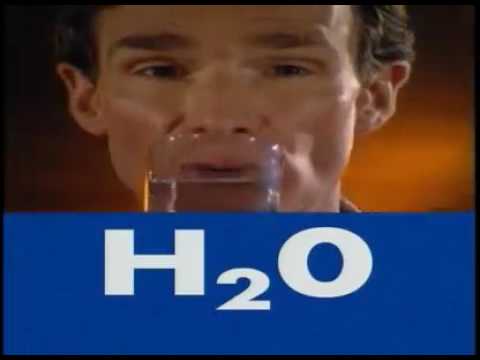
Bill Nye The Science Guy Atoms & Molecules
Understanding Atoms: The Building Blocks of Matter
Introduction to Atoms
- The speaker confirms the existence of tiny particles that are fundamental building blocks of all matter, emphasizing their potential for control and manipulation.
- Introduces the concept of "stuff" as everything around us, highlighting the vast number of different objects we encounter daily.
What is Matter?
- Defines matter as everything we can see and touch, which can be broken down into smaller components.
- Uses an analogy of cutting cheese to illustrate how matter can be divided until reaching atoms, which cannot be cut further.
Structure of Atoms
- Describes atoms as extremely small units that consist mainly of empty space; introduces the term "atom," derived from Greek meaning "uncuttable."
- Explains the structure of an atom with a nucleus containing protons (positively charged) and neutrons (neutral), surrounded by electrons.
Electrons and Their Role
- Discusses how electrons orbit far from the nucleus, illustrating that most of an atom's volume is empty space.
- Highlights that despite being mostly empty space, atoms behave like solids due to strong repulsion between electrons.
Size and Significance of Atoms
- Emphasizes the minuscule size of atoms, stating that millions could fit on a pinhead.
- Compares atoms to letters in an alphabet; when combined, they form molecules akin to words in our universal language.
How Do Atoms Combine?
Understanding Molecules
- Introduces water (H2O), explaining its molecular composition—two hydrogen atoms bonded with one oxygen atom.
Experimental Evidence
- Demonstrates through experimentation how passing electricity through water separates it into gases, confirming H2O's molecular structure.
Conclusion and Practical Experimentation
Understanding Atoms and Molecules
The Basics of Atoms
- The distinction between different materials is based on the number of protons in their atomic nuclei, which defines their properties.
- Example metals like aluminum (shiny and silver) and copper (orange-colored) illustrate how physical characteristics can vary due to atomic structure.
The Periodic Table
- Scientists have organized elements into groups known as periods, displayed in the periodic table, which includes familiar elements like carbon and oxygen alongside lesser-known ones like erbium and krypton.
- Each element is represented by a one or two-letter symbol along with an atomic number that indicates the number of protons in its nucleus.
Natural Elements and Molecules
- There are 92 naturally occurring elements that combine to form various molecules such as H2O (water), NaCl (salt), and C3H5N3O9 (nitroglycerin).
Exploring Atomic Structure
- Warren Buck, a nuclear physicist, discusses studying atoms using advanced machinery designed to observe subatomic particles like quarks within protons and neutrons.
- A giant machine acts as an "electronic eye" to analyze atoms by directing high-energy electron beams onto them for deeper insights into their structure.
Matter vs. Energy
- Everything in the universe is categorized as either matter or energy; examples include heat, light, sound (energy), versus tangible objects like hot dogs (matter).
Importance of Carbon
- Carbon is highlighted as a fundamental element present in all living things; it forms essential compounds necessary for life.
- The significance of carbon leads to the establishment of organic chemistry, emphasizing its role in biological processes.
Conclusion: Atoms Make Up Everything
Understanding Atoms and Matter
The Structure of an Atom
- An atom consists of a nucleus at its center, surrounded by particles. The nucleus contains heavy particles, while lighter particles buzz around it.
- The nucleus is made up of protons (positively charged) and neutrons (neutral). Their actual appearance remains unknown.
- Electrons are small particles that orbit the nucleus; their movement creates electricity when they flow from one atom to another.
Size and Composition of Atoms
- Everything in our environment, from everyday objects to natural elements, is classified as matter. All matter can be broken down into fundamental components.
- If you keep dividing a piece of cheese, eventually you'll reach atoms—tiny units that cannot be divided further. The term "atom" comes from Greek meaning "uncuttable."
Empty Space in Atoms
- Atoms are mostly empty space; even with advanced microscopes, individual atoms remain invisible due to their minuscule size.
- Electrons orbit the nucleus at significant distances—up to 500 meters away—indicating that most of an atom's volume is empty space.
Interaction of Atoms
- Despite being mostly empty space, atoms do not pass through each other due to electromagnetic forces that create repulsion between them.
- Atoms serve as the fundamental building blocks for all matter. Their control could lead to vast possibilities in science and technology.
Conclusion on Atomic Structure