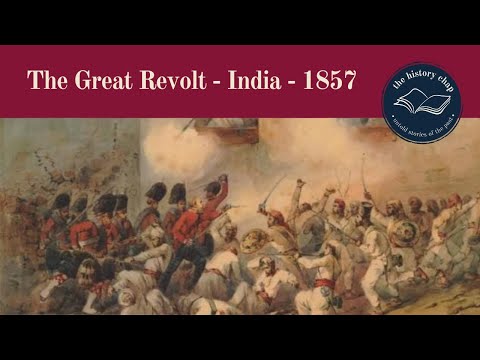
Why did the 1857 Indian Rebellion (Indian Mutiny) start?
Introduction to the Indian Mutiny
This section provides an introduction to the Indian Mutiny or Sepoy Rebellion, which was a significant challenge to British rule in India in the 19th century. It resulted in the loss of thousands of lives and had far-reaching consequences.
Background of the East India Company
- The East India Company had been trading in India since the late 1600s and gradually established its own army and navy.
- In 1757, they won the Battle of Plassey, which marked their transition from a trading company to an imperial administrator.
- By 1857, the East India Company directly ruled about two-thirds of the Indian subcontinent.
Bengal as the Center of Story
- The story primarily centers around Bengal, one of the three presidencies under direct British rule.
- The Bengal Army recruited heavily from higher castes, particularly Brahmins, resulting in a Hindu-centric view within their ranks.
Factors Leading to Discontent
- There was growing discontent among sepoys (Indian soldiers) regarding pay stagnation and declining social standing.
- Annexation of independent kingdoms by the East India Company diluted privileges enjoyed by sepoys.
- Changes in military recruitment policies raised concerns about fighting overseas and religious customs being compromised.
Causes Behind the Rebellion
This section explores various factors that contributed to the outbreak of rebellion during this period.
Complexities in India during 1850s
- Multiple factors beyond just grievances within the army led to widespread desire for change among Indians.
- Anglicization efforts, such as English language schools and adoption of British legal codes, created unease among Indians longing for traditional ways.
- Both sepoys and nobility desired a return to independent power without interference from the East India Company.
Role of Greased Cartridges
- The introduction of greased cartridges in late 1856 became a catalyst for rumors and discontent among sepoys.
- Rumors circulated that the cartridges were greased with animal tallow, including cow fat, which was offensive to Hindus.
Conclusion
This section concludes the summary by emphasizing the importance of understanding the complexities and multiple factors that contributed to the outbreak of rebellion during this period.
- The Indian Mutiny or Sepoy Rebellion was a significant challenge to British rule in India in the 19th century.
- Grievances within the army, along with broader societal changes and desires for independence, played a role in sparking the rebellion.
- The introduction of greased cartridges served as a trigger but was not the sole reason behind the uprising.
New Section
This section discusses the introduction of chapatis being passed from village to village in Bengal, signaling a momentous change. There is growing anticipation that something significant is about to happen, but the British authorities seem unconcerned.
The Significance of Chapatis
- Chapatis, small round flatbreads, started being passed from village to village in Bengal.
- This was seen as a sign of a momentous change, although its exact meaning was unknown.
- Some believed it was related to the 100th anniversary of Clyde's victory at Plessy in 1857.
- Despite signs of trouble brewing, the British authorities were not taking it seriously.
New Section
In this section, there is a discussion about the growing tension and expectation among the sepoys (Indian soldiers) regarding rumors about cartridges containing animal fat. While General Hersey tries to reassure his men at Barackpore military base, Colonel Mitchell takes a tougher approach with his troops.
Tensions over Cartridges
- Sepoys are concerned about rumors that cartridges are greased with animal fat.
- The sepoys see this as an attempt to undermine their religions and convert India to Christianity.
- General Hersey tries to allay fears and convince sepoys that the rumors are false.
- Colonel Mitchell takes a more confrontational approach and threatens his troops with punishment if they refuse the cartridges.
New Section
This section focuses on the events following Colonel Mitchell's confrontation with his troops. The authorities decide to disband the 19th Bengal Native Infantry and order them to march to Barackpore. The arrival of British troops further escalates tensions among the sepoys.
Disbanding of 19th Bengal Native Infantry
- Colonel Mitchell's confrontation with his troops leads to a loss of respect and trust.
- The authorities order the 19th Bengal Native Infantry to march to Barackpore for disbandment.
- British troops, the 87th Regiment of Foot, are brought in as a precautionary measure.
- The arrival of the British troops increases fears among the sepoys at Barackpore.
New Section
This section highlights the incident involving Sepoy Mangal Pandy at Barackpore. He incites his comrades to rise up against the British, leading to a confrontation with officers. General Hersey orders Pandy's arrest, but he attempts suicide instead.
Sepoy Mangal Pandy's Mutiny
- Sepoy Mangal Pandy incites fellow sepoys to rise up against the British at Barackpore.
- He confronts officers and takes shots at them, injuring both an officer and a horse.
- Other sepoys watch without joining or disarming Pandy during the confrontation.
- General Hersey orders Pandy's arrest, but he attempts suicide by shooting himself.
New Section
This section discusses how Mangal Pandy becomes a martyr and rallying cry during the upcoming sepoy rebellion. The focus then shifts to Meerut military base where tensions are rising among East India Company troops stationed there.
Impact of Mangal Pandy's Actions
- Mangal Pandy is caught, court-martialed, found guilty, and hanged.
- His actions make him a martyr and inspire others during the sepoy rebellion.
- Tensions are rising among East India Company troops stationed at Meerut military base near Delhi.
Due to limitations in available timestamps, some sections may not have specific timestamps associated with them.
Loading the Rifles and Court Martial
This section discusses the controversy surrounding the loading of rifles with new cartridges and the subsequent court martial of 85 men.
Controversy over Cartridge Loading
- The proposal to change the way rifles were loaded was met with resistance.
- Rumors spread that the new cartridge paper was made from animal products, causing concerns about religious purity.
Court Martial
- Lieutenant Colonel George Carmichael Smythe ordered 90 Sharpshooters to attend firing drill with the new cartridges.
- 85 out of the 90 men refused to touch them, leading to their immediate arrest.
- The court martial took place on May 9th, 1857, and lasted over two hours.
- All 85 men were found guilty and sentenced to 10 years imprisonment with hard labor.
The Outbreak of Rebellion
This section describes the events leading up to the outbreak of rebellion in Murut.
Tense Standoff
- On May 9th, 1857, a tense atmosphere prevailed as Indian and British troops lined up facing each other.
- The British troops pointed their rifles at the Indian Garrison while artillery pieces aimed at them as well.
Harsh Sentences
- The sentencing of the 85 men to imprisonment for ten years with hard labor was seen as harsh and disproportionate.
- Soldiers pleaded for mercy but were denied. They were shackled and marched past their fellow sepoys on the parade ground.
Frustration and Anguish
- Sepoys wept as they passed their comrades who stood by helplessly.
- Many sepoys faced beratement from townsfolk for not standing up for their comrades' rights.
The Mutiny Begins
This section details how the mutiny began and the initial acts of violence.
Warning of Impending Attack
- Sepoys rushed back to the barracks to warn their comrades of an impending British attack.
- Joined by a mob from the town, they broke into the Armory to seize weapons for self-defense.
Mayhem in the Town
- Buildings burned as mobs targeted Europeans in the town.
- The sepoys joined forces with the mob, hunting down British officers and civilians.
- Numerous brutal killings occurred, including the hacking death of Mrs. Chambers, a pregnant wife of a British officer.
Chaos and Confusion
This section highlights the chaos and confusion that ensued during the mutiny.
Missed Opportunity for Control
- The British troops were initially unaware of the rebellion brewing in Murut.
- Shocked senior officers acted ineffectively, missing opportunities to regain control.
Movement Towards Delhi
- Instead of attacking the British Garrison, mutineers chose to head towards Delhi, 40 miles southwest.
- They arrived outside Delhi's Old Red Fort and expressed support for Emperor Bahadur Shah's restoration.
Conclusion
This section concludes with an overview of how rebellion spread from Murut to Delhi.
Spread of Rebellion
- The Indian Mutiny or First Indian War of Independence had begun.
- Rebellion spread from Murut to other regions, including Delhi.
Timestamps are approximate and may not be exact due to differences in transcription.
New Section
The rebellion in Delhi and the occupation by the rebels, with British civilians and Indian Christians being attacked. The British officers blow up the Arsenal to prevent it from falling into rebel hands.
Rebellion in Delhi
- Troops arriving for mirot and local crowds joined the sepoys.
- Virtually no British troops stationed in Delhi.
- City swiftly occupied by rebels.
- British civilians and Indian Christians were attacked.
- Only part of the city held by the British was the Arsenal.
- Group of nine officers had no hope of holding out.
- Officers blew up the Arsenal in a huge explosion to prevent it from falling into rebel hands.
New Section
Rebels seize the magazine outside Delhi, capturing gunpowder barrels.
Seizing the Magazine
- Two miles outside Delhi, rebels seize the magazine.
- Magazine was totally undefended.
- Rebels capture 3,000 barrels of gunpowder.
New Section
Bahadur Shah gives his blessing to the rebellion as it gains traction across Northern India. The British are caught by surprise.
Rebellion Gains Traction
- Bahadur Shah, last Mughal Emperor, supports the rebellion.
- Rebellion gaining traction across Northern India.
- Other sepoys rise after hearing news of rebellion.
- British misread and mishandle situation, caught totally by surprise.
New Section
The significance of chapatis as a symbol of momentous times. Expectations for a savage war and hopes for a resurgent Mughal Empire.
Significance of Chapatis
- Chapatis foretell momentous times for India breaking free from British rule.
- Rebel sepoys dream of independence.
- Expectation of a savage war costing many lives.
- Hope for a resurgent Mughal Empire.
New Section
The British strike back, laying siege to Delhi and unleashing violence.
The British Strike Back
- British lay siege to Delhi.
- Orgy of violence ensues.
- Devil's wind as Indians call it heralds the downfall of the East India Company.
This summary is based on the provided transcript and has been organized into meaningful sections.