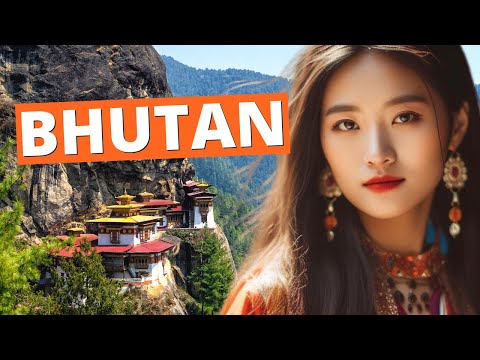
THIS IS LIFE IN BHUTAN: The most isolated country in the world?
Did you know about Bhutan?
This section provides information about Bhutan, its isolation, and the preservation of its culture and independence.
Bhutan's Isolation
- Bhutan is recognized as one of the most isolated destinations in the world due to its mountainous location at the Eastern end of the Himalayas.
- The country voluntarily isolates itself to preserve its culture and independence.
Low Influence of Modern Culture
- Bhutan is one of the few countries where modern culture has a low influence.
- Foreigners were only allowed to enter the country in limited quantities starting from 1974.
Authenticity and Preservation
- Bhutan retains its traditions, customs, architecture, and ancestral society, making it one of the most authentic places in the world.
Unique Aspects of Bhutan
This section highlights unique aspects of Bhutan including their focus on happiness instead of GDP, connection with nature, carbon-negative status, and restrictions on tobacco.
Gross National Happiness
- Success in Bhutan is measured by gross national happiness rather than gross domestic product (GDP). Happiness is considered more important than material wealth.
- Gross national happiness is based on sustainable socioeconomic development, environmental conservation, preservation of culture, and good governance.
Small Size and Connection with Nature
- Bhutan is one of the smallest countries in the world with a strong connection to nature.
- The country prioritizes health and environment care and has become carbon negative by absorbing more carbon dioxide than it emits.
Tobacco Prohibition
- Bhutan is the only country in the world where the sale and production of tobacco are prohibited. This measure aims to protect citizens' health and promote a healthier lifestyle.
Bhutan's Opening to the World
This section discusses Bhutan's historical isolation, its gradual opening to the world, and its diplomatic relations with other countries.
Historical Isolation
- Bhutan remained isolated until the 1960s when it initiated a modernization process during the reign of the third king, Shigme Dorhi Wangchuk.
- In 1974, Bhutan allowed a limited number of foreign tourists as part of its high-value low-impact tourism policy.
Diplomatic Relations
- Bhutan established diplomatic relations with countries like India in 1949 and joined international organizations like the United Nations in 1971.
- The country remains relatively isolated with embassies or consulates only in a few countries such as Australia, Thailand, Belgium, Bangladesh, Kuwait, India, Switzerland, and the United States.
European Interactions and Media Arrival
This section covers early European interactions with Bhutan and the arrival of mass media in the country.
Early European Interactions
- Portuguese Jesuits were the first Europeans to reach Bhutan in 1627 while searching for a route to India. They met with regional leader Ung Nam Gyal before continuing their journey.
- In later centuries, interactions occurred between Bhutan and Europeans, particularly with British representatives from the East India Company. Detailed records were left documenting these encounters.
Late Arrival of Mass Media
- Mass media arrived late in Bhutan compared to most countries. Television and internet access were allowed in 1999 as part of efforts to modernize the country and improve the quality of life.
- The government maintains some control over content, promoting educational and cultural programs rather than purely commercial or entertainment content.
Conclusion
Bhutan's isolation, focus on happiness, preservation of culture, and unique policies make it a truly distinctive country. Its connection with nature, carbon-negative status, and restrictions on tobacco contribute to its commitment to environmental sustainability and citizen well-being. Bhutan's gradual opening to the world has allowed for limited tourism and diplomatic relations while maintaining its cultural authenticity.
Transportation in Bhutan
This section provides an overview of the transportation options in Bhutan.
Modes of Transportation
- Private vehicles, taxis, and buses are the most common forms of transportation in Bhutan.
- Air transport is available through four airports in the country, but flights are limited in remote areas due to mountainous geography and lack of infrastructure.
- Walking, horse riding, and riding yaks are alternative modes of transportation, with yaks primarily used as pack animals.
- Bhutan does not have trains or railways.
Postal Service in Bhutan
This section discusses the postal service in Bhutan.
Evolution of Postal Service
- Before the establishment of the modern postal service in 1962, foot messengers were used to carry important messages and packages between districts and towns.
- With the introduction of the modern postal service, postal stamps and post offices were implemented throughout the country to improve communication and exchange of goods and services.
Paro International Airport
This section focuses on Paro International Airport, which is Bhutan's only international airport.
Unique Features
- Paro International Airport serves as the main gateway for tourists visiting Bhutan.
- It is known for being one of the most difficult and dangerous airports in the world due to its complicated geographical conditions.
- The airport is situated at an altitude of 7,333 feet and requires pilots to navigate between mountains during landing and takeoff.
- The runway is relatively short at 3,937 feet, requiring precise maneuvers by experienced pilots.
- Landings can only be made during daylight hours, and adverse weather conditions can result in flight diversions.
Monarchy in Bhutan
This section provides information about the monarchy in Bhutan.
Historical Background
- The monarchy in Bhutan was established in 1907, with Seer ugien Wang chuk being crowned as the first dragon king.
- The monarchy has passed through five generations of the same family.
- The current king, known as Druk Galpo, ascended to the throne in 2008 following his father's abdication.
- The king plays a significant role in governance, promoting welfare and unity among the Bhutanese people.
King and Queen Consort of Bhutan
This section focuses on the current king and queen consort of Bhutan.
King Druk Galpo
- King Druk Galpo is known for his charisma and close connection with his people.
- He received education at prestigious universities in the United Kingdom and the United States, allowing him to balance tradition and modernity in governance.
Queen Consort Hatsun Pema
- Queen Consort Hatsun Pema is renowned for her beauty, elegance, and interest in art, painting, and basketball.
- She married King Druk Galpo at the age of 21, becoming the youngest queen consort in the world.
- Although not of royal birth, she comes from a distinguished family and has studied in India and the United Kingdom.
Transition to Constitutional Monarchy
This section discusses Bhutan's transition from an absolute monarchy to a constitutional monarchy.
Constitutional Changes
- In 2008, Bhutan approved a new constitution that transformed it into a constitutional monarchy based on Buddhist philosophy and human rights.
- While the king's powers have been limited by the constitution, he remains a significant figure involved in government formation, legislation, and promoting welfare.
Tiger's Nest Monastery
This section highlights Tiger's Nest Monastery as one of Bhutan's wonders.
Sacred Site
- Tiger's Nest Monastery is located on a cliff in the Paro Valley, 11,483 feet above sea level.
- It is considered one of the most sacred and venerated places in Bhutan.
- The monastery dates back to the 8th century when Guru Padma Sambhava introduced Buddhism to Bhutan and Tibet.
- According to legend, Guru Padma Sambhava flew on the back of a tigress, who was actually a queen consort transformed into an animal.
- The current complex was built in the 17th century around the cave where Guru Padma Sambhava meditated.
Thimphu - Capital of Bhutan
This section focuses on Thimphu, the capital city of Bhutan.
City Overview
- Thimphu is located in the Valley of Timpoochu River at an altitude of 7,657 feet above sea level.
- It is one of the highest capitals in the world.
- Despite being the capital, Thimphu does not have traffic lights. Traffic officers direct vehicle flow at major intersections.
- The city has a calm and peaceful atmosphere with buildings following traditional Bhutanese architectural style.
Landmarks
- Natashi Cho Zhang is a monastery fortress that houses the king's offices and serves as summer residences for spiritual leader Hey Kenpo.
- Buddha Dordenma, a massive Buddha statue, is another notable landmark in Thimphu.
These notes provide a comprehensive summary of key points from each section of the transcript. They are organized chronologically and make use of timestamps to help others study and navigate through the transcript effectively.
[t=14m24s] Palace of Great Happiness Hakar and Bhutanese Culture
This section provides an overview of the Palace of Great Happiness Hakar in Bhutan and the religious festivals hosted there. It also discusses the majority religion in Bhutan and how it is integrated into daily life.
Palace of Great Happiness Hakar
- The Palace of Great Happiness Hakar is located in the heart of Bhutan.
- It hosts religious festivals like Hambai Lakandrup and Tronza.
- It is the birthplace of the Wangchuk dynasty, the Royal Family.
Religion in Bhutan
- The majority religion in Bhutan is Mahayana or Vajrayana Buddhism, practiced by 85% of the population.
- Bhutanese integrate their religious beliefs and practices into their daily lives.
- This includes meditation, pilgrimages to sacred sites, recitation of mantras, and using prayer flags throughout the country.
- Prayer flags carry printed prayers and mantras believed to bless the environment and people.
Importance of Hey Kenpo
- The Hey Kenpo is the most important religious and spiritual leader in Bhutan.
- He is considered the embodiment of wisdom and compassion.
- Plays a role in advising the king and government on religious and ethical matters.
- Appointed by the king from erudite and virtuous monks.
Monastic Life in Bhutan
- Monks dedicate their lives to spiritual practice and study.
- They enter monastic life at a young age, sometimes decided by their parents.
- There are eight major monasteries and approximately 200 small monasteries/nunneries with around 12,000 monks and 5,000 nuns.
- Monks lead a disciplined life with rituals, meditation, study, manual labor, community contributions.
[t=15m58s] Lifestyle & Education of Bhutanese Monks
This section focuses on the lifestyle and education of Bhutanese monks, including their daily routines, education system, and vows.
Monastic Life
- Bhutanese monks lead a simple and disciplined life.
- They wake up early around 4:30 am for rituals, meditation, and prayer.
- They study philosophy, literature, history, chanting, rituals.
- Engage in manual labor and contribute to their communities.
Education & Training
- Education and training for monks can last many years.
- Monks ascend through various levels of knowledge and skills.
- Meditation and prayer are fundamental practices for cultivating self-control, compassion, and wisdom.
Vows & Disciplinary Rules
- Monks follow a series of vows known as Vinaya.
- Vows include celibacy, abstaining from killing or harming living beings, leading a simple life.
- Humility and respect towards others are important values.
- Shaving heads symbolizes renunciation of ordinary life.
Community & Spiritual Guidance
- Philosophical debates on Buddhist teachings deepen understanding rather than compete or demonstrate knowledge.
- Living together in temples fosters a strong sense of community among monks.
- Monks also serve as spiritual guides to people in the communities.
[t=17m23s] Language & Animal Respect in Bhutan
This section discusses the official language of Bhutan, cultural respect for animals rooted in Buddhism beliefs, and conservation policies.
Official Language
- The official language of Bhutan is Dzongkha (Zonka).
- There are about 20 languages spoken throughout the territory with various dialects.
Respect for Animals
- Respect for animals is deeply rooted in Bhutan's culture and religious beliefs influenced by Buddhism's emphasis on compassion towards all living beings.
- Killing animals for human consumption is prohibited. Meat must be imported from neighboring countries.
- Stray dogs are well-treated by the local population, providing them with food and shelter.
- Yaks and cows play important roles in everyday life and are treated with respect and care.
Conservation Policies
- Bhutan has strict conservation policies to preserve biodiversity.
- Numerous national parks and protected areas exist, including the Wangchuk Centennial Park covering 1931 square miles.
- The constitution requires that at least 60% of Bhutan's territories be covered by forests at all times.
[t=20m39s] Wildlife in Bhutan
This section highlights some of the animals found in Bhutan's territory, including the Malayan giant squirrel, Bengal tiger, red panda, and snow leopard.
Wildlife in Bhutan
- Animals found in Bhutan include the Malayan giant squirrel, Bengal tiger, red panda, and snow leopard.
- Snow leopards inhabit the highest and most remote regions at altitudes between 9842 and 13,123 feet.
- Snow leopards are elusive due to their low population, shyness, ability to camouflage.
[t=0:18:34] Women's Role & Rights in Bhutan
This section discusses the significant responsibility of women in Bhutanese society and their rights traditionally enjoyed more than men.
Women's Role & Rights
- Bhutanese women have significant responsibilities in society.
- They enjoy a series of rights and freedoms traditionally more so than men.
Gender Roles and Marriages in Bhutan
This section discusses the gender roles and marriage customs in Bhutan, highlighting the differences between rural and urban areas.
Gender Roles
- In rural areas, women are responsible for agricultural tasks and home care.
- In urban areas, more women are joining the workforce in professional and technical positions.
Marriage Customs
- Arranged marriages still exist, particularly in rural communities.
- Parents often take the initiative in seeking a suitable spouse for their children.
- Astrologers are consulted to determine compatibility of couples.
- Men perform significant household chores, including cooking and clothing repair.
- Polygamy is legal but practiced less frequently now. It was more common among nobility and wealthy families in the past.
- Example: The fourth king of Bhutan, Jigme Singye Wangchuck, had four wives.
- Polyandry (a woman married to several men) is practiced by the Brokpa ethnic group and in Laya population in Northwestern Bhutan. It ensures inheritance within the same family.
- Marrying strangers is frowned upon in remote places; elder man or brother leads the household.
Literacy Rates and Greetings
This section covers literacy rates in Bhutan as well as traditional greetings.
Literacy Rates
- Adult literacy rates are relatively low at around 70%, but it has increased by 20% since 1980.
- Among young people, literacy rates are much higher at around 93%.
Traditional Greetings
- When greeting someone, Bhutanese join their palms near their chest in a prayer position known as Namaste or Namaskar. It is considered a respectful way of greeting others.
Cultural Practices and Bhutanese New Year
This section explores cultural practices in Bhutan, including chewing Doma and celebrating the Bhutanese New Year.
Chewing Doma
- Bhutanese are accustomed to chewing Doma, a mixture of areca palm nuts, leaves, and lime. It has a stimulating effect but is not good for long-term health.
Bhutanese New Year (Losar)
- The Bhutanese New Year, known as Losar, is celebrated according to the Tibetan lunar calendar.
- It is an important national holiday celebrated between late January and early March.
- Traditional dishes like kapsee (fried flour sweets) and suja (tea with butter and salt) are prepared during Losar.
- Families clean their homes thoroughly before Losar to remove bad energy and attract good fortunes.
- Offerings are made on home altars, and local monasteries are visited to receive blessings from monks.
Birthdays and Naming Conventions
This section discusses birthdays and naming conventions in Bhutan.
Birthdays
- Most Bhutanese do not keep a record of their exact date of birth or celebrate individual birthdays.
- It is considered that everyone's birthday is the first day of the Bhutanese New Year.
- However, with the influence of Western culture, some Bhutanese have started celebrating individual birthdays on their actual date of birth.
Naming Conventions
- Except for royal and noble lineages, names in Bhutan do not include surnames.
- Children are given unique names shortly after birth based on factors such as astrology or desired qualities/characteristics.
Astrology and Traditional Medicine
This section explores the significance of astrology and traditional medicine in Bhutanese culture.
Astrology
- Astrology plays an important role in decision-making, predicting future events, and interpreting past events.
- It follows the lunar system based on celestial bodies' positions at a person's date and time of birth.
- Bhutanese believe in reincarnation, with astrology influencing the identification of reincarnated llamas and spiritual teachers.
Traditional Medicine
- Bhutanese traditional medicine is based on concepts derived from Tibetan Buddhism, Tibetan medicine, and Ayurvedic medicine from India.
New Section
This section provides information about Bhutan's strong sense of community, cultural and spiritual values, as well as its national philosophy of gross national happiness. It also mentions the most common crimes in Bhutan and the low occurrence of violent crimes.
Bhutanese Culture and Values
- Bhutan's low crime rate is largely attributed to its strong sense of community, cultural, and spiritual values.
- The national philosophy of gross national happiness contributes to the well-being and prosperity of the nation.
Common Crimes in Bhutan
- The most common crimes in Bhutan are usually thefts, burglaries, drug consumption, and scams.
- Violent crimes such as homicides and assaults are uncommon in Bhutan.
Bhutan: Unifying the Country and Celebrating Heritage
This section discusses the historical significance of Bhutan as the starting point of the Wangchuk dynasty's unification of the country in the 19th century. It also highlights Bhutan's importance as a religious and cultural center, with various festivals celebrated throughout the year.
The Wangchuk Dynasty and Cultural Significance
- The Wangchuk dynasty began to unify Bhutan in the 19th century.
- Bhutan is an important religious and cultural center, hosting numerous festivals and events throughout the year.
- One notable festival is Trungzza Sechu, which celebrates Buddhist heritage and history.
Suspension Bridges and Mountains
- Bhutan has numerous suspension bridges due to its deep canyons.
- The Punaka Suspension Bridge is the longest, spanning 518 feet and adorned with colorful prayer flags.
- The Tachong Suspension Bridge is one of the highest at 8,595 feet above Parochu River. It was built in the 15th century by a renowned bridge builder.
- Over 20 mountains in Bhutan surpass 22,965 feet, with Kankarpunzung being the highest at 24,836 feet.
- Since 1994, mountaineering expeditions above 19,685 feet have been banned by the Bhutanese government. In 2003, all mountaineering was banned to preserve nature and respect local beliefs.
Trekking Opportunities and Sacred Sites
- While mountaineering is banned, trekking is allowed in Bhutan.
- High altitude treks offer breathtaking views of some of the highest mountains like Mount Jomolhari (24,035 feet).
- Dochula Meditation Caves are shrines located between the old capital of Bhutan, Punakha, and the current capital, Thimphu.
- Maybar Shell or Burning Lake is a sacred place in Tang Valley. It is believed to have healing and protective powers.
Ancient Temples and Cultural Heritage
- Kichu Lhakhang is one of the oldest and most sacred Buddhist temples in Bhutan.
- Legend says it was built in the 7th century by Tibetan King Zhongsten Gampo to subdue a demon hindering Buddhism's spread.
- Jambai La Kang Temple was allegedly built by the same king to immobilize another demon's left knee.
- The Kamsum Yuel Namgyal Chorten Temple was built in 1999 by Queen Mother Ashi Sering Yangdon Wangchuck to promote peace and harmony.
Bhutan's Economy and National Library
- Bhutan's economy relies heavily on agriculture, forestry, and hydropower.
- The majority of the population engages in subsistence farming, growing crops like rice, wheat, maize, potatoes, and chilies.
- Livestock farming (yaks, cows, sheep) is also common for milk, meat, and wool production.
- Hydropower plays a significant role due to Bhutan's rivers and mountainous location. Energy generated is exported to India.
- Bhutan has sought to diversify its economy through manufacturing and service industries like technology, education, healthcare.
- The National Library of Bhutan houses the world's largest published book called "Bhutan: A Visual Odyssey Across the Last Himalayan Kingdom." It also has an extensive collection of Buddhist literature.
Spiritual Retreats in Serene Landscapes
- Retreats in remote locations surrounded by Himalayan landscapes offer unique spiritual experiences.
- These retreats provide opportunities for introspection, reflection, and meditation.
- Guided meditation sessions, connecting with nature, and practicing silence are part of the retreat experience.
Planning a Trip to Bhutan
This section provides information on visiting Bhutan, including visa requirements and travel regulations.
Visa Requirements
- Almost all foreign citizens (except those from India, Bangladesh, and the Maldives) need a visa to enter Bhutan.
- Self-organized travel was not allowed in Bhutan.
The transcript ends here.
New Section
This section provides information about cultural norms and regulations in Bhutan.
Cultural Norms and Regulations
- It is considered rude to play loud music, including in National Parks or religious places.
- Taking photos or videos of people without permission is also considered impolite.
- When visiting monasteries, it is important to ask for permission before taking photos inside.
- Selling and producing tobacco is prohibited in Bhutan, but consuming it privately in designated places is allowed.
- If carrying cigarettes, ensure they are permitted at the time and only smoke them in designated areas.
- In religious places like zhongs, visitors are required to wear long-sleeved clothing and long pants.
- Bhutanese people are mindful of the environment, so it is advised to avoid using plastics or single-use items. Plastic bags have been banned since 1999.
- Due to high altitudes in many parts of the country, altitude sickness may occur. It is recommended to consult a doctor before traveling and bring necessary medication.
- Bhutan can be entered from India, providing an alternative option for Indian travelers.
- Criticizing the royal family and discussing sensitive political topics should be avoided.
New Section
This section provides additional information about entering Bhutan from India, currency usage, and cultural sensitivities.
Entering Bhutan and Currency Usage
- Entry into Bhutan from India is possible.
- Entering from Tibet is not an option.
- The local currency used in Bhutan is called ngultrum (BTN), but US dollars are also accepted for purchasing souvenirs or tipping.
Cultural Sensitivities
- Avoid criticizing the royal family.
- Steer clear of discussing sensitive political topics.
Conclusion
Bhutan captures the heart with its unique cultural norms, beautiful landscapes, and mindful approach to the environment. Visitors should be respectful of local customs and regulations while enjoying their time in this enchanting country.