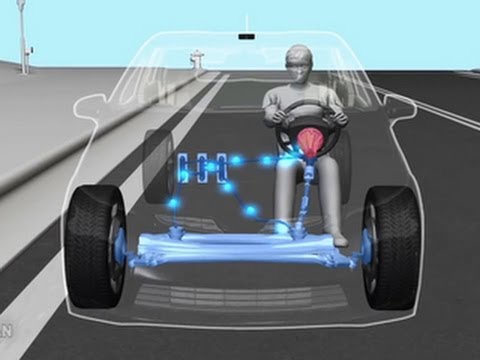
Car Tech 101: Power steering explained
Evolution of Steering Systems in Automobiles
The Origins of Steering Mechanisms
- Initially, steering was purely manual; drivers had to exert significant physical effort to change direction.
- The first mainstream car with power steering was the 1951 Chrysler Imperial, featuring a system called Hydra-Guidance.
- Early hydraulic systems utilized a power steering pump driven by the engine, leading to parasitic losses even when not actively steering.
Transition to Electric Power Steering (EPS)
- Modern vehicles like the 2014 Jeep Cherokee utilize electric power assisted steering (EPAS), which differs significantly from traditional hydraulic systems.
- EPS systems can be designed with motors either on the steering rack or on the column, enhancing efficiency and responsiveness.
Advantages of Electric Power Steering
- Efficiency: EPS can save up to 90% of energy lost in hydraulic systems. For example, Chevy's 2013 Malibu improved fuel economy by 2.5% due to EPS.
- Addressability: Being electric allows integration with vehicle control systems for features like automatic parking and lane departure correction.
- Accuracy: Software-driven adjustments provide better feedback and performance compared to mechanical changes required in hydraulic systems.
- Compactness: EPS eliminates bulky components like pumps and belts, allowing for more efficient use of space under the hood.
Challenges and Perceptions
- Despite its advantages, some driving purists resist EPS due to nostalgia for traditional hydraulic feel and concerns over numbness in early models.