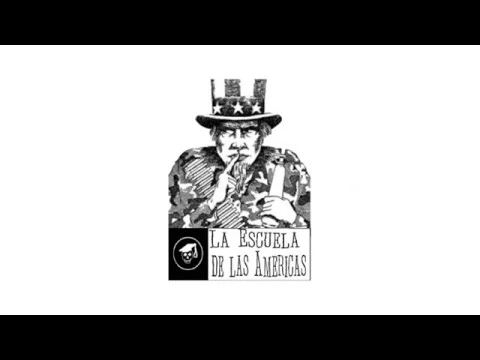
DICTADURAS MILITARES EN AMERICA LATINA
Dictatorships in Latin America
This section provides an introduction to military dictatorships in Latin America, describing their authoritarian nature and control over various aspects of society.
Characteristics of Military Dictatorships
- Military dictatorships in Latin America were characterized by the suppression of freedoms of expression and control over education, economy, and opinion.
- Many Latin American military dictators were trained at the School of the Americas, which ensured their loyalty to US foreign policy during the Cold War.
- These dictatorships were led by a junta or committee composed of high-ranking military officials who controlled executive, legislative, and judicial institutions.
Examples of Military Dictatorships
- Argentina: Ruled by military juntas composed of representatives from the army, navy, and air force. The presidency rotated among the junta members.
- Uruguay: Juan María Bordaberry served as a civilian facade for the military junta that ruled from 1973 to 1984.
- Chile: Augusto Pinochet became commander-in-chief of the army after a coup d'état in 1973. He governed as president first through a military junta and later as an individual ruler until 1990.
Human Rights Violations
- Military dictatorships in Latin America were responsible for numerous human rights violations that drew criticism both domestically and internationally.
- Bolivia: General Hugo Banzer's dictatorship (1971-1978) escalated repression, suppressing labor movements and suspending civil rights.
- Paraguay: Alfredo Stroessner's dictatorship (1954-1989) came into power through a coup d'état. His regime was marked by violence against workers and political opponents.
Other Examples
- Dominican Republic: Rafael Trujillo exercised dictatorial power indirectly from 1930 to 1961 through puppet presidents.
- Peru: Juan Velasco Alvarado's dictatorship (1968-1975) implemented nationalist and leftist reforms.
- Colombia: General Gustavo Rojas Pinilla ruled from 1953 to 1957, focusing on infrastructure development.
- Nicaragua: Anastasio Somoza García's dictatorship (1936-1956) continued the family dynasty's rule with repression and corruption.
- Venezuela: General Marcos Pérez Jiménez held power from 1953 to 1958 until he was overthrown by a military coup.
Consequences of Military Dictatorships
- Human rights abuses, unemployment, illiteracy, malnutrition, and infant mortality were prevalent under military dictatorships.
- Torture became a common method of control and suppression.
Transition to Civilian Rule in Brazil
This section focuses on the transition from military dictatorship to civilian rule in Brazil.
Military Dictatorship in Brazil
- In 1964, a military coup led to the establishment of a dictatorship that lasted until 1985.
- The military leaders initially intended for the dictatorship to be temporary and aimed to return political power to civilians as soon as possible.
Transition Process
- The military regime undertook large-scale infrastructure projects but faced opposition from socialist or communist factions within Brazil.
Conclusion
The transcript provides an overview of military dictatorships in Latin America, highlighting key characteristics, examples, human rights violations, and the transition process towards civilian rule.