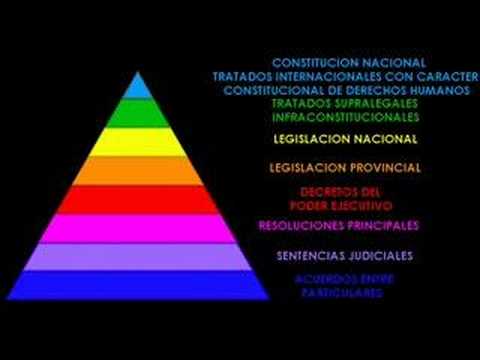
PIRAMIDE DE KELSEN - Ordenamiento Jurídico
Understanding the Legal Hierarchy
The Kelsen Pyramid and Legal Order
- The discussion begins with the concept of legal order, emphasizing the importance of establishing a hierarchy of laws, illustrated by Kelsen's famous pyramid.
- At the top of this hierarchy is the national constitution, which outlines the separation of powers and citizens' rights.
- Following the 1994 Constitutional Reform, international treaties concerning human rights are now considered equal to the constitution in terms of legal standing.
Layers Below the Constitution
- Just below constitutional law are other international treaties that do not have constitutional status but are still significant; these are classified as superlegislative and infraconstitutional.
- National legislation enacted by Congress follows next, including codes and substantive laws that define rights and obligations for citizens.
- Procedural laws dictate how these substantive laws should be implemented or enforced.
Provincial Legislation and Executive Decrees
- Provincial legislation and constitutions rank lower in this hierarchy as established by Article 5 of the national constitution.
- The president operates under provincial constitutions, issuing executive decrees that have normative regulatory content for urgent situations but remain subordinate to any law.
Judicial Resolutions at the Base