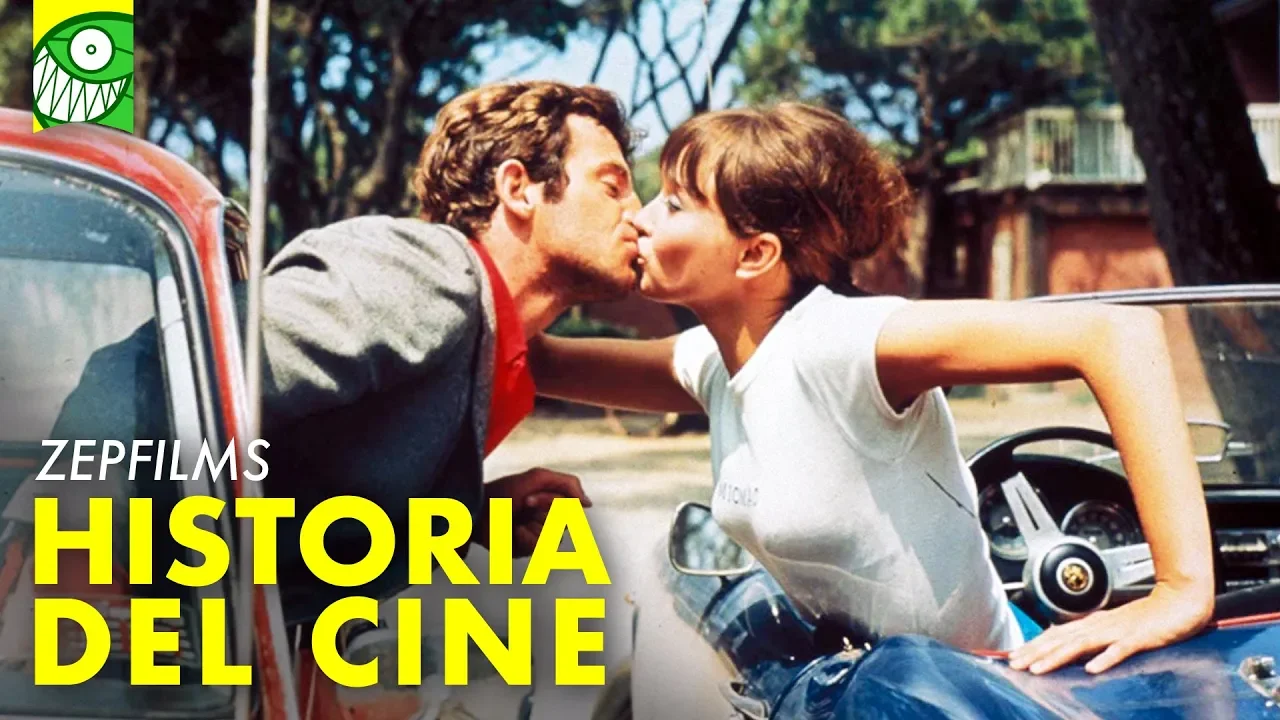
LA NOUVELLE VAGUE | Historia del Cine
New Section
The introduction to the French New Wave movement, known as 'nouvelle vague,' and its impact on French cinema.
The Emergence of 'Nouvelle Vague'
- In the mid-1950s, French cinema faced stagnation with period productions lacking depth.
- Young cinephiles like Jean-Luc Godard and François Truffaut criticized the coldness of French cinema, advocating for Hollywood directors and appreciating European and Asian filmmakers.
Influence of Auteurs and Theory of Authorship
- Cahiers du Cinéma critics popularized the auteur theory, emphasizing the director's creative control in filmmaking.
- Directors like Jean-Pierre Melville were celebrated for their independence and unique styles, inspiring a shift towards authorial filmmaking.
Impact of 'Nouvelle Vague'
Discusses the term 'nouvelle vague' coined by François Giroud and political influences on the movement.
Birth of 'Nouvelle Vague'
- François Giroud introduced the term 'nouvelle vague' in 1957, signifying a renewal in French culture driven by youth.
- André Malraux's cultural policies under President Charles de Gaulle supported new filmmakers, leading to Claude Chabrol's independent production marking the beginning of the New Wave.
Innovations in Filmmaking
Explores Claude Chabrol's pioneering approach to location shooting and Hitchcockian influences.
Filmmaking Techniques
Filmmakers of the Nouvelle Vague
This section delves into the backgrounds and early works of key filmmakers associated with the French New Wave movement, including François Truffaut, Eric Rohmer, and Jean-Luc Godard.
François Truffaut
- François Truffaut's childhood trauma influenced his filmmaking.
- His film "Les 400 Coups" showcased autobiographical elements.
- Truffaut's focus on characters challenging societal norms was a hallmark of the Nouvelle Vague.
- Shared techniques with Claude Chabrol like handheld camera use and outdoor shoots.
Eric Rohmer
- Known for dialogue-driven films within the Nouvelle Vague.
- Noted for intellectual depth among New Wave directors.
- Films like "Ma Nuit Chez Maud" attracted a dedicated fan base despite his reclusive nature.
- Influence on contemporary directors like Luca Guadagnino.
Jean-Luc Godard
- Godard's debut film "Breathless" broke conventions with its improvisational style.
- Emphasized visual experimentation and narrative risks in his work.
- Considered a pioneer of the French New Wave movement for his radical approach to storytelling.
New Section
The section discusses the director Jean-Luc Godard's approach to filmmaking, his experimentation with storytelling, and his influence on other filmmakers like Quentin Tarantino.
Jean-Luc Godard's Filmmaking Approach
- Godard was unafraid of experimentation in his films, unlike Chabrol and Truffaut. He believed that every story should have a beginning, a middle, and an end but not necessarily in that order.
- Quentin Tarantino paid homage to Godard in his work, particularly in "Pulp Fiction," referencing scenes from Godard's films like "Bande à part." Tarantino worked with actors such as Brigitte Bardot and Anna Karina, who was also Godard's wife.
Political Shift and Impact
- Motivated by the events of May 1968 in France, Godard embraced Maoism and shifted towards politically charged filmmaking. Despite this shift, his films retained their intensity and he famously stated that "cinema is life at 24 frames per second."
Jacques Rivette and Alain Resnais
- Jacques Rivette shared similarities with Godard in mixing genres and experimenting with filmmaking techniques. His films like "Paris Belongs to Us" showcased improvisation with actors.
- Alain Resnais differed from his New Wave peers by never collaborating with Cahiers du Cinéma. He started making films at a young age and gained recognition for works like "Hiroshima Mon Amour," which explored the relationship between a French actress and a Japanese man post-WWII.
Influence of Nouvelle Vague
This section delves into the impact of the Nouvelle Vague movement on French cinema, its influence on directors globally, including Hollywood filmmakers like Francis Ford Coppola.
Legacy of Nouvelle Vague
- The Nouvelle Vague movement revitalized French cinema by introducing fresh perspectives. Directors like Coppola were influenced by its style while Brian De Palma aimed to emulate Godard's boldness.
- Steven Spielberg even collaborated with François Truffaut on "Close Encounters of the Third Kind," showcasing how New Wave directors left a lasting impression on Hollywood.
Turn any video into a summary like this
YouTube links, meetings, lectures. With transcripts, search, and chat.