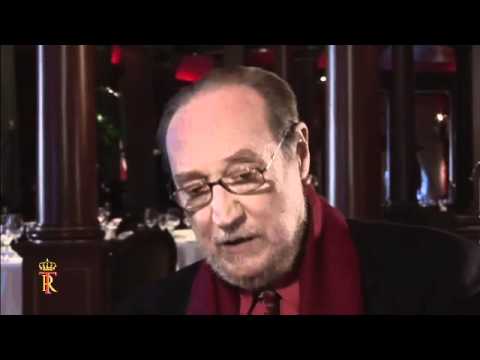
Téllez habla de "La clemenza di Tito" de Wolfgang Amadeus Mozart
The Roman Opera Series
In this section, the speaker introduces the main character of the opera series, Stito Flavio Vespasiano, who governed between 79 and 81 AD. The speaker also discusses how the idea of writing an opera about this character came to be.
Introduction to Stito Flavio Vespasiano
- Stito Flavio Vespasiano is the main character of the Roman opera series.
- The idea of writing an opera about him was inspired by Metastasio's egonia.
- The figure of Caesar in the opera is identified with Carlos Sesto, governor of Turno at that time.
Clemency and Monarchy Institution
This section discusses how the opera had an institutional function as a kind of propaganda for monarchy institution. It also talks about how clemency was a recurring theme in the opera.
Institutional Function and Clemency
- The Gleminza de Tito had an institutional function as a kind of propaganda for monarchy institution.
- Clemency was a recurring theme in the opera, and it recommended clemency to that king (the emperor).
Mozart's Last Opera
This section talks about Mozart's last opera composed before his death.
Mozart's Last Opera
- "The Magic Flute" was not Mozart's last work but his last opera composed before his death.
- "La Clemenza di Tito" was performed on September 6th, 1791, precisely on the afternoon of Leopold II's coronation.
Overview of the Opera Bufa
In this section, the speaker discusses the theme of the opera Bufa and its connection to Roman history.
The Opera Bufa
- The opera is a clear institutional role and comes from the genre of opera series that could be considered Roman.
- The main character is Tito Flavio Vespasiano, who ruled between 79 and 81 AD.
- The story includes famous events such as the eruption of Vesuvius, Pompeii, and Herculaneum.
- There is a real dramatic action in the opera that celebrates Emperor Tito's magnificence, generosity, clemency, and forgiveness of conscripts.
- The Calpurnian prison conjure unifies the story atonally.
- Metastasio says that Tito has inspired his egonia in the two great finales.
Leopoldo II's Contribution to Neoclassical Opera
In this section, the speaker talks about Leopoldo II's contribution to neoclassical opera through his support for Mozart's work.
Leopoldo II's Contribution
- Leopoldo II was a great duke of Tuscany who turned Mozart's work into a genuine model for twenty-eight years in Florence.
- He sublimated the inquisition and made it a subject for propaganda as a music chamber of monarchy in Vienna.
- Mozart accepted some ideals of humanitarianism in his work due to Leopoldo II's influence.
- Many members of the Bumia diet were also influenced by Leopoldo II's support for Mozart's work.
- Leopoldo II gave 1500 flourishes for a part of the opera, which was almost double his usual contribution.
Mozart's Opera Buffa
In this section, the speaker talks about Mozart's opera buffa and how it was not a work of tramit. He also mentions that some of Mozart's most beautiful music comes from this genre.
Characteristics of Opera Buffa
- The speaker describes how opera buffa is a genre that has been cultivated a lot.
- He talks about the instrumental treatment of the figures' voices in opera buffa.
- The speaker praises the admirable order of 20 musicians in opera buffa.
- He explains how there is a real dramatic action in the orchestra during an opera buffa performance.
Examples of Opera Buffa
- The speaker mentions that solitude is a common theme in many operas, including Mozart's opera buffa.
- He talks about how two large finales were interpreted by Certo del Don Giovanni and Clemente Chaitito.
- The speaker explains how Guarda Sony gives a greater real and dramatic music to Mozart's opera buffa.
Economic Reasons for Writing Opera Buffa
- The speaker discusses how Mozart wrote his obligations for economic reasons, such as giving Anton Estadler 1,500 flour for playing clarinet in his concert.
- He mentions that Mozart realized he could make more money writing chamber music than writing operas like Clemente Chaitito.
- The speaker explains how renting out parts for performances was expensive during Mozart's time.
I understand the instructions. Thank you for providing them. I will follow these guidelines to create a clear and concise markdown file that makes use of timestamps when available.
Symphonic
This section is very short and only contains one word, "symphonic."
- The only content in this section is the word "symphonic."