Let's use video to reinvent education | Salman Khan
New Section
This section introduces Khan Academy and its collection of educational videos. Salman Khan shares a montage showcasing various topics covered in the videos.
Introduction to Khan Academy
- Khan Academy is well-known for its collection of educational videos.
- The organization offers a wide range of subjects, from basic arithmetic to vector calculus.
- The videos are accessible online and cover diverse topics.
New Section
This section highlights the use of integration notation and mentions the creation of the Committee of Public Safety during the French Revolution.
Integration Notation and Committee of Public Safety
- Integration over a surface is represented by a capital sigma symbol.
- The Committee of Public Safety was established during the French Revolution, although it may sound like a pleasant committee.
New Section
In this section, Salman Khan discusses the growth and impact of Khan Academy's video library.
Growth and Impact
- Khan Academy currently has approximately 2,200 videos covering various subjects.
- The platform attracts around one million students per month who watch an average of 100 to 200,000 videos daily.
- The organization aims to take education to the next level.
New Section
Salman Khan shares his personal journey and how he started creating YouTube videos for his cousins while working as an analyst at a hedge fund.
Personal Journey
- Around five years ago, Salman Khan tutored his cousins remotely while working as an analyst in Boston.
- He began uploading YouTube videos as supplementary material for his cousins' education.
- Initially, it was just a nice-to-have addition for his family members.
New Section
Salman Khan explains how positive feedback from his cousins led him to realize the potential impact of his YouTube videos.
Positive Feedback
- Salman Khan's cousins expressed a preference for learning from his YouTube videos rather than in person.
- This feedback highlighted the benefits of an automated learning experience.
- Students could pause, repeat, and review concepts at their own pace without feeling like they were wasting someone's time.
New Section
Salman Khan reflects on the advantages of self-paced learning through online videos and the avoidance of judgment during the initial stages of understanding new concepts.
Advantages of Self-Paced Learning
- Watching educational videos allows learners to study in the comfort and privacy of their own rooms.
- Learners can review material without feeling embarrassed or judged by others.
- The absence of immediate human interaction eliminates pressure when grappling with new concepts.
New Section
Salman Khan discusses how sharing his YouTube videos publicly led to unexpected feedback from viewers worldwide.
Unexpected Feedback
- Initially, Salman Khan made his YouTube videos public without considering any specific audience beyond his family.
- People stumbled upon these videos and started leaving comments and sending letters from various parts of the world.
- Some comments expressed gratitude for making difficult topics more enjoyable and understandable.
New Section
Salman Khan shares a letter he received that highlighted how Khan Academy's videos helped a child with autism excel in math.
Impact on Students with Autism
- A parent wrote a letter expressing how their 12-year-old son, who has autism, struggled with math until they discovered Khan Academy's video on decimals.
- The child not only understood decimals but also successfully grasped fractions, leading to excitement and progress in math education.
New Section
Salman Khan acknowledges that creating educational content has social value beyond his previous role as an analyst at a hedge fund.
Recognizing Social Value
- Salman Khan, previously an analyst at a hedge fund, found it unusual to engage in something of social value.
- The positive impact on students motivated him to continue creating educational videos.
- He realized that the content he created could benefit future generations and serve as a timeless resource.
New Section
Salman Khan emphasizes the long-lasting impact of educational videos and their potential to help future learners.
Everlasting Educational Content
- Khan Academy's video library remains relevant over time, providing ongoing support for current and future students.
- The content can assist not only present learners but also their children and grandchildren.
- Salman Khan humorously mentions that if Isaac Newton had created YouTube videos on calculus, he might not have needed to create his own (assuming Newton was good at teaching).
New Section
Salman Khan shares how feedback from viewers indicated that the videos were more than just supplementary material.
Realizing the Impact
- As viewership increased, Salman Khan received letters from people who expressed how the videos had significantly helped them.
- These testimonials made it clear that the videos were more than just a nice-to-have addition; they played a crucial role in education.
- One letter highlighted how Khan Academy's video on decimals and fractions positively impacted a child with autism.
The remaining part of the transcript is not provided.
Flipping the Classroom: Using Technology to Humanize Education
In this section, Salman Khan discusses how technology can be used to transform the traditional classroom model and create a more personalized and interactive learning experience.
The Benefits of Flipping the Classroom
- By assigning lectures as homework and using class time for hands-on activities, teachers can create a more engaging learning environment.
- Students can watch video lectures at their own pace and have the ability to pause and repeat as needed.
- Removing the one-size-fits-all lecture from the classroom allows for individualized instruction and peer interaction.
The Role of Khan Academy
- Khan Academy provides online exercises that allow students to practice concepts until mastery is achieved.
- The platform offers hints and step-by-step solutions to help students understand problem-solving techniques.
Contrasting Traditional Classrooms with Mastery-Based Learning
- Traditional classrooms follow a cycle of homework, lecture, and exams without ensuring mastery of concepts.
- Mastery-based learning encourages experimentation, failure, and continuous practice until mastery is achieved.
A Comprehensive Knowledge Map
- Khan Academy's knowledge map covers various subjects such as math, logic, computer programming, grammar, and genetics.
- Learners progress through modules based on their mastery level in each topic area.
Empowering Individual Learners
- Individuals can use Khan Academy's resources to learn independently and improve their understanding of various subjects.
- Implementing flipped classrooms can revolutionize education by personalizing learning experiences for all students.
Conclusion: Transforming Education with Flipped Classrooms
In this concluding section, Salman Khan emphasizes the potential of flipped classrooms to revolutionize education and encourages individuals to embrace this approach.
The Future of Flipped Classrooms
- Flipped classrooms have the potential to transform education by creating a more personalized and interactive learning experience.
- Embracing technology in education can lead to improved student engagement and mastery of concepts.
Encouraging Personal Adoption
- Individuals are encouraged to adopt the flipped classroom model with their own children or for self-learning purposes.
- Implementing flipped classrooms can enhance family discussions and create a more effective learning environment.
Expanding the Impact
- The goal is to take the flipping of classrooms to its natural conclusion by scaling up implementation across educational institutions.
- By leveraging technology, we can humanize education and empower learners worldwide.
Timestamps may vary slightly depending on the video version used.
New Section
In this section, the speaker discusses how their approach to math education in Los Altos frees up time for simulations, games, and hands-on activities. They introduce a live dashboard that allows teachers to track students' progress and intervene when necessary.
Focusing on Hands-on Activities
- The speaker emphasizes that their approach is not meant to replace a complete math education but rather complement it.
- The goal is to free up time for simulations, games, robot-building, and other hands-on activities.
- Teachers can use a live dashboard to monitor students' progress and identify areas where intervention is needed.
New Section
In this section, the speaker explains how the live dashboard works and how teachers can use it to support student learning.
Live Dashboard for Tracking Progress
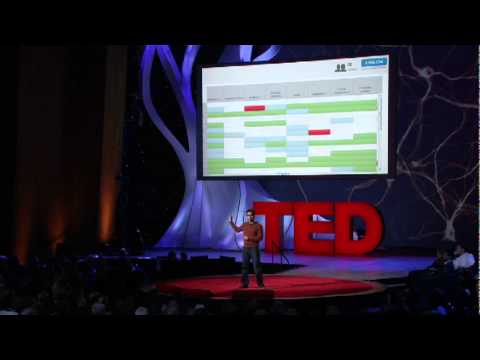
- The live dashboard displays each student as a row and different concepts as columns.
- Green indicates proficiency, blue means the student is working on it, and red indicates they are stuck.
- Teachers can easily identify which students need intervention or assistance.
- Proficient students can also be enlisted to tutor their peers.
New Section
In this section, the speaker highlights the importance of data in empowering teachers to provide effective support.
Empowering Teachers with Data
- The speaker believes in arming teachers with as much data as possible.
- Teachers have access to information about students' daily activities such as time spent, videos watched, exercises attempted, etc.
- This data helps teachers diagnose areas of difficulty and tailor their interactions with students accordingly.
New Section
In this section, the speaker demonstrates how granular data can provide insights into student learning progression.
Granular Data Analysis
- The live dashboard provides detailed information about the specific problems students got right or wrong.
- Red indicates incorrect answers, while blue indicates correct ones.
- The dashboard also shows the sequence of exercises attempted and videos watched.
- It becomes evident how students learn and improve over time through their problem-solving patterns.
New Section
In this section, the speaker discusses the benefits of self-paced learning and how it challenges traditional notions of student abilities.
Self-Paced Learning
- Students working at their own pace often show different rates of progress.
- Traditional models may label some students as "gifted" or "slow," but self-paced learning reveals that these labels can change over time.
- Students who initially struggled with a concept can eventually excel in it, challenging preconceived notions of ability.
New Section
In this section, the speaker expands on the potential impact of technology in humanizing education globally.
Humanizing Education with Technology
- The speaker believes that technology can humanize education not only in Los Altos but on a global scale.
- They emphasize that focusing on valuable human interaction between teachers and students is more important than student-to-teacher ratios.
- By leveraging technology, teachers can spend 100% of their time working directly with students, leading to a more personalized learning experience.
New Section
In this section, the speaker explores how technology can benefit adult learners and those facing barriers to education.
Benefits for Adult Learners and Underprivileged Students
- Technology can support adult learners who want to remediate or catch up on knowledge without feeling embarrassed.
- Students facing obstacles like family responsibilities or lack of access to traditional schooling can use technology to learn at their own pace.
- Peer-to-peer tutoring facilitated by technology has the potential to connect learners from different backgrounds and locations.
New Section
In this section, the speaker envisions a global classroom where students from different parts of the world can learn and tutor each other.
The Emergence of a Global Classroom
- The speaker suggests that technology can enable peer-to-peer tutoring beyond the boundaries of a single classroom.
- They propose a vision of a global one-world classroom, where students from different countries can connect and support each other in their learning journeys.
New Section
In this section, Bill Gates asks Salman Khan about the motivation and feedback system implemented in the Khan Academy platform.
Motivation and Feedback System
- Salman Khan mentions that they have an awesome team working on the motivation and feedback system.
- They have incorporated game mechanics such as badges and points into the platform.
- The badging system has shown interesting results, with thousands of students being motivated based on the badges they receive.
- Salman Khan talks about their collaboration with Los Altos school district, which initially seemed unlikely but eventually became a reality.
- The district was open to implementing a personalized learning approach where students work at their own pace with a dashboard to track progress.
- The collaboration is currently being implemented in fifth-grade math classes as well as seventh-grade classes at the district level.
- Teachers provide valuable feedback on student views and data, leading to continuous improvement of the platform.
- Salman Khan believes that the platform is ready for wider implementation in classrooms across America.
New Section
In this section, Bill Gates continues his conversation with Salman Khan about the implementation of Khan Academy in classrooms and its impact on student learning.
Implementation in Classrooms
- Salman Khan shares how someone from Los Altos school district approached him with an open-minded question about what he would do if given complete freedom in a classroom setting.
- He proposed a personalized learning approach where each student works at their own pace using a dashboard for tracking progress.
- Despite initial skepticism, Los Altos school district embraced this radical idea and requested implementation within two weeks.
- Currently, two fifth-grade classes and two seventh-grade classes are using Khan Academy at the district level.
- The platform allows tracking students' progress not only during school hours but also during holidays like Christmas, providing continuity of data throughout different teachers and periods.
New Section
In this section, Salman Khan discusses the collaboration with Los Altos school district and the role of teachers in shaping the platform.
Teacher Collaboration
- Salman Khan highlights the close collaboration between Khan Academy and teachers.
- Many features and specifications were suggested by teachers themselves to enhance student learning.
- One example is the focus graph, which was developed based on teachers' feedback about students jumping between topics without focusing on one.
- The design loop involves continuous feedback from teachers, making it a teacher-driven process.
New Section
In this section, Bill Gates asks Salman Khan about the readiness of Khan Academy for wider implementation in classrooms.
Readiness for Implementation
- Bill Gates inquires if Khan Academy is ready for prime time and if many classes should try it out next school year.
- Salman Khan confidently states that the platform is ready, with already a million people using it.
- He believes there is no reason why every classroom in America couldn't implement it tomorrow.
- The vision of tutoring within the user interface is discussed, where confused students can connect with volunteers who have expertise in specific topics.
- Salman encourages everyone to become mentors or tutors by utilizing the dashboards available to track progress and provide guidance to students.
Timestamps are provided at appropriate places as per instructions.
Turn any video into a summary like this
YouTube links, meetings, lectures. With transcripts, search, and chat.