ICT Precision Trading Concepts - 3
Precision Concepts Video Series: Trading Inside the Range
In this video, the speaker concludes the Precision Concepts video series by discussing the concept of trading inside a range. He explains how to trade within a predefined range and why it can be lucrative.
Understanding Trading Ranges
- The speaker introduces the concept of an L7 range and explains that it refers to trading inside a predetermined range.
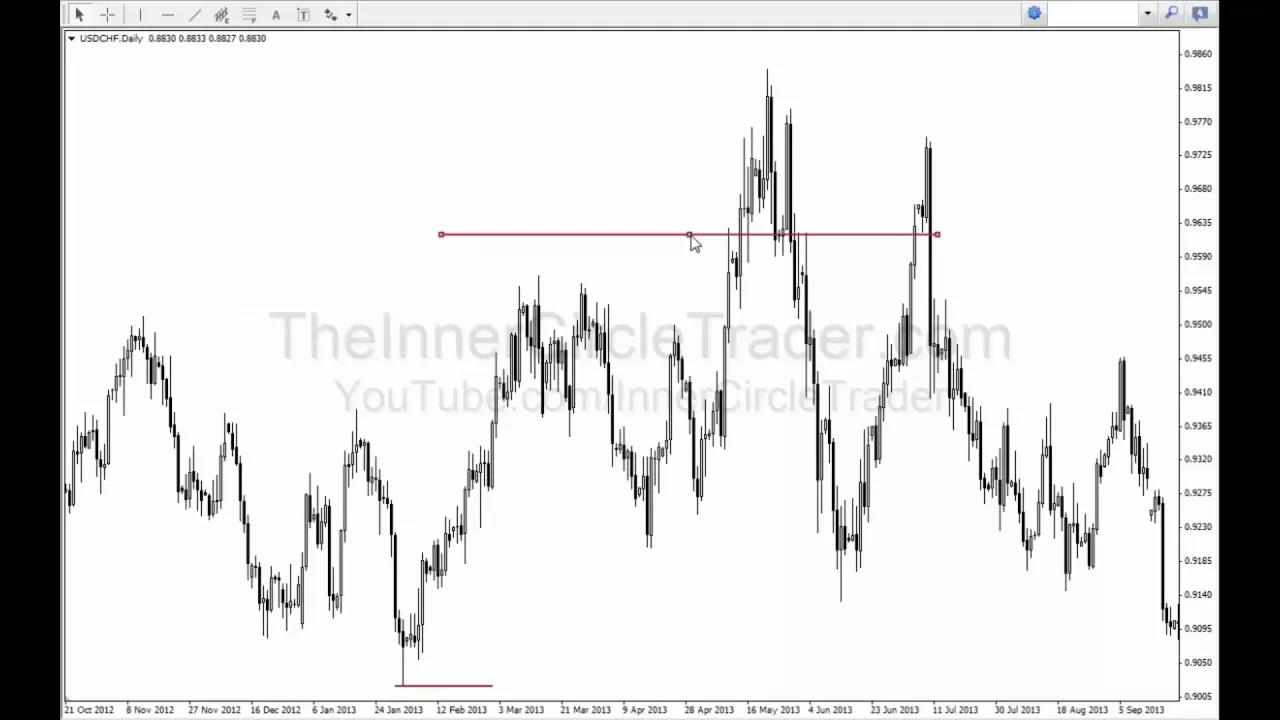
- Markets are 70% of the time in a trading range, which is defined by a high and low point on a price chart.
- Directional premise is not necessary for successful trading if you're comfortable trading inside of predetermined ranges.
- The speaker clarifies what is meant by "trading range" and how it differs from trending markets.
Applying Trading Range Information
- The likelihood of price moving out and continuing to move higher when at a high point in a trading range is rather low.
- As price begins to move outside of that range high, there's a 70% chance of failure to move to new highs.
- When at the lows in a trading range, there's less resistance for price to go higher than lower.
- Using order blocks that represent selling as reference points, traders can look for opportunities for price to rally back up within the defined range.
Final Thoughts
- There are many opportunities for profitable trades within predetermined ranges if traders understand what they're doing.
- Traders should focus on understanding market ebb and flow rather than trying to predict directional movement.
Trading Strategies within a Predetermined Range
The speaker discusses how to trade within a predetermined range and identifies key objectives for traders.
Identifying Initial Objectives
- Traders can look for initial objectives within the predetermined range.
- If the highs take out, it is reasonable to expect the order block to be retested.
- If the order block continues to contain even higher, traders could retest the high.
Retesting Bearish ICT Order Block
- Traders should look for the counter order block that saw price drop down if they are longer here.
- The objective would be to shade back up into it as this would be a known level of institutional selling.
Understanding Dealing Ranges in Trading
The speaker explains dealing ranges and how they impact trading strategies.
Identifying Dealing Ranges
- Price works within several ranges while trading.
- These ranges include highs, reaction lows, and other points of reference.
- Traders need to identify which dealing range they are currently in before making trades.
Path of Least Resistance
- The path of least resistance is on the upside because prices have been dropping lower continuously.
- Traders need to consider where stops are located as prices will seek liquidity above short-term highs and see if there are any stops.
Seeking Liquidity Above Short-Term Highs
- Even with an aggressive bounce and rally higher, prices still run back to previous order blocks.
- Traders can use bullish candles prior to drops lower as well as previous ranges when making trades.
Trading Strategies for the Swiss Franc
In this section, the speaker discusses trading strategies for the Swiss Franc and how to identify short-term intraday scalps and price swings.
Identifying Sell Scenarios
- When moving back into dual bearish order blocks, expect the market to look for sell scenarios or sell patterns.
- The range is between a high and low point, with a 70% chance that prices will stay within this range.
Understanding Short-Term Highs and Lows
- A short-term high minus a short-term low determines the range.
- If price moves down from this point but does not break the low, it rallies back up above the short-term highs taking out any liquidity in resting in the marketplace.
New Range Formation
- Price violates an old reference point low and sweeps back into a new range.
- A new range is formed between a high and low point.
Trading Within Ranges
- By understanding where you are in terms of present trading ranges, you can trade very short term either intraday or day trading with a premise in mind that as long as you know you're not going to overstay your welcome, you have the likelihood of taking short term intraday scalps, price swings, and capturing many little moves here.
- The Swiss Franc is volatile but provides many opportunities to trade setups within its characteristic range-bound nature.
Taking Profits at Logical Places of Resistance
- It's nicer as a trader to take some profits at logical places of resistance where we could potentially see retracement rather than riding through all that which could blow out your stock.
Trading Inside the Range
In this section, the speaker discusses how to trade inside a range and minimize risk while maximizing profit.
Trade-Offs
- When trading inside a range, take 80% off at the high and leave 20% on.
- This strategy allows you to make more money on the remaining 20% than you did on your initial 80%, while minimizing risk.
Dealing Ranges
- A dealing range has a low and a high.
- There is a 70% likelihood that the range low and high will maintain.
- You can buy at the order block high and take profits at the order block low.
- Take out 80% of your position at the order block low, leaving 20%.
Fib Levels
- Use Fibonacci retracements in conjunction with dealing ranges.
- Look for sweet spots where old lows have been broken to the downside and then retested.
Bearish Order Block
In this section, the speaker discusses bearish order blocks and why it's not advisable to assume new long positions when trading up against them.
Fractal Low
- Look for fractal lows that have been broken to the downside and then retested.
- Behind price consolidation, look for an order block.
Dealing Range Highs
- We're off the lows here with a 70% likelihood that price will maintain.
- As we get up into higher levels, be cautious about buying up against bearish order blocks.
Trading Within a Range
In this section, the speaker discusses the benefits of trading within a range and how to identify key levels within that range.
Benefits of Trading Within a Range
- Identifying where we are in the current range can provide valuable insights for trading.
- By defining where we are in terms of the current trading range, traders can trade counter swing trades both directions.
- Trading at the far extreme of each range is more likely to be successful than trading in the middle of the range.
Identifying Key Levels Within a Range
- Look for bullish and bearish order blocks within the range.
- Spend time going through every pair you want to trade and look at old highs and lows to see where prices retraced back to those levels.
- Look for bearish scenarios if you're a harmonic trader or look for bullish patterns if you're looking for an exit point.
Understanding Mechanics of Trading Within a Range
- Understand that 70% of time price stays in a range.
- Keep profits concise and objective by identifying areas where selling or buying is expected based on previous market behavior.
Trading Inside the Range
In this section, the speaker emphasizes that trading is not about getting every high and low but rather about getting portions of these moves. The goal is to bank them and compound the growth of your equity over time. The speaker encourages viewers to spend time looking at charts and studying them to identify more opportunities for trading inside the range.
Importance of Trading Inside the Range
- Trading is not about capturing every high and low.
- It's about getting portions of these moves.
- The goal is to bank them and compound the growth of your equity over time.
Studying Charts for More Opportunities
- Spend time looking at charts.
- Study charts to identify more opportunities for trading inside the range.
Turn any video into a summary like this
YouTube links, meetings, lectures. With transcripts, search, and chat.