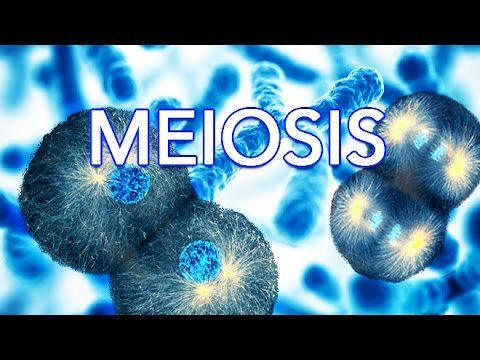
MEIOSIS - MADE SUPER EASY - ANIMATION
Understanding Meiosis: The Process of Gamete Formation
Overview of Sexual Reproduction
- Organisms pass genes to offspring through sexual reproduction, starting with the union of two gametes to form a genetically unique embryo.
- The embryo develops into an adult that can then reproduce, continuing the cycle of genetic transmission.
Germline Cells and Gamete Formation
- Germline cells undergo meiosis to produce haploid gametes, which contain one copy of each chromosome. In diploid organisms, these germline cells have two copies per chromosome.
- The fusion of haploid gametes results in a diploid embryo, marking the beginning of a new organism's life cycle.
Stages Leading to Meiosis
- Before meiosis begins, germline cells go through interphase stages: G1, S (DNA duplication), and G2. Sister chromatids are formed during the S phase when DNA is duplicated.
- These sister chromatids remain attached until the second division event in meiosis occurs. There are two main divisions in meiosis: Meiosis I and Meiosis II.
Detailed Breakdown of Meiosis I
- Prophase I: Chromosomes condense; homologous chromosomes undergo synapsis and crossing over occurs, leading to genetic variation among siblings.
- Metaphase I: Synapsed chromosomes align randomly at the cell equator, contributing to genetic diversity in gametes produced during meiosis.
- Anaphase I: Homologous chromosomes separate while sister chromatids remain attached at their centromeres as they migrate towards opposite poles.
Completion of Meiosis I
- Final steps include Telophase I and Cytokinesis where the cell divides into two daughter cells that will proceed to Meiosis II for further division into haploid cells.
Transitioning to Meiosis II
- Prophase II: Chromosomes condense again; nuclear envelope breaks down without synapsis or crossing over since daughter cells already have one copy per homologous chromosome from previous division.
Key Events in Meiosis II
- Metaphase II: Chromosomes align randomly at the equator again; this random alignment leads to diverse combinations due to non-identical sister chromatids post-crossing over from Prophase I.
- Anaphase II: Sister chromatids are pulled apart as microtubules shorten; elongation pushes cell ends apart preparing for final division into haploid cells.
Conclusion of Meiosis Process