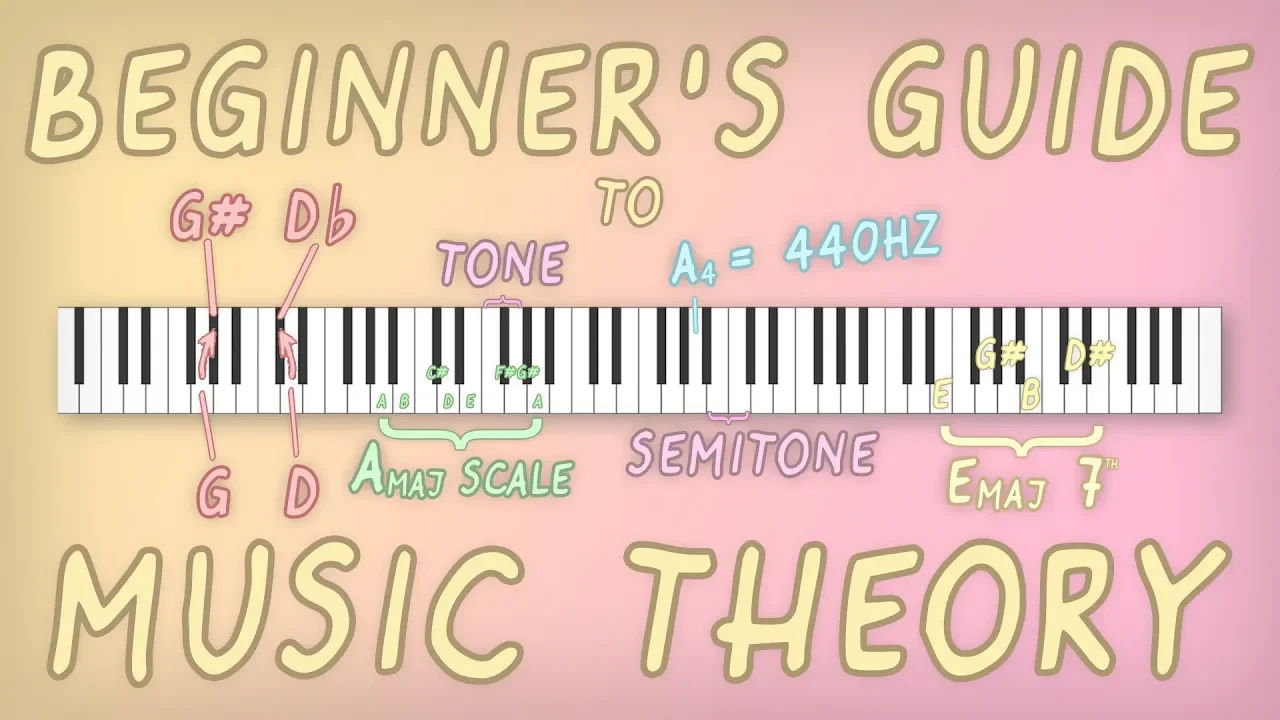
A Beginner's Guide to Music Theory
Music Theory Basics
In this section, the speaker introduces their self-taught music theory knowledge and aims to guide beginners through the basics of music theory.
Self-Taught Music Theory Knowledge
- The speaker learned music theory through online videos rather than formal education.
- Expresses empathy for beginners starting without prior knowledge and aims to guide them through learning music theory basics.
Understanding Tempo and Time Signatures
This section covers tempo, beats per minute (BPM), time signatures, and how they influence the pace and structure of music.
Tempo and BPM
- Defines tempo as the pace of a song, determined by BPM (beats per minute).
- Higher BPM results in faster songs while lower BPM leads to slower songs.
Time Signatures
- Time signatures indicate how music is counted, with common ones like 4/4 specifying four beats in a bar.
- Explains that notes and rests can be combined within a bar as long as they add up to the specified count.
Pitch, Octaves, and Notes
This part delves into pitch frequencies, octaves, notes on a piano keyboard, sharps/flats, semitones/half steps, and scales in music theory.
Pitch Frequencies and Octaves
- Describes pitch as frequency measured in Hertz determining note height.
- Introduces octave concept where notes double or halve in frequency.
Piano Keyboard Notes
- Discusses piano keys from A to G with black keys named based on adjacent white keys using sharps (#) or flats (b).
Scales in Music Theory
- Defines scales as groups of harmonious notes; major scales sound happy while minor scales evoke sadness.
Music Theory Basics: Understanding Scales and Chords
In this section, the speaker explains the concept of scales and chords in music theory, focusing on major and minor scales, as well as triad chords.
Major and Minor Scales
- Drawing all white notes from D to D results in a Dorian scale.
- Recommended for beginners to start with major and minor scales only.
- Chords are multiple notes played simultaneously in harmony.
Triad Chords and Major Chords
- A chord consists of three notes, known as a triad.
- Major chords are formed by selecting the root note and adding notes four and seven semitones above it.
- The major chord pattern is one-three-five, representing the root, third, and fifth notes in the scale.
Creating Major and Minor Triads
This section delves into creating major and minor triad chords by adjusting specific intervals within the scale.
Major Triads
- To create a major chord, add notes four and seven semitones above the root note.
- The gap between the root note and second note is four semitones.
Minor Triads
- Minor triads differ from major triads by lowering the second note by one semitone.
- Form a B minor chord by moving up three semitones from the root for the second note.
Expanding Chords: Major Seventh Chords
Expanding on basic chords to include additional tones like seventh notes to enhance musical complexity.
Adding Seventh Notes
- A C major seventh chord includes C-E-G-B notes from the major scale.