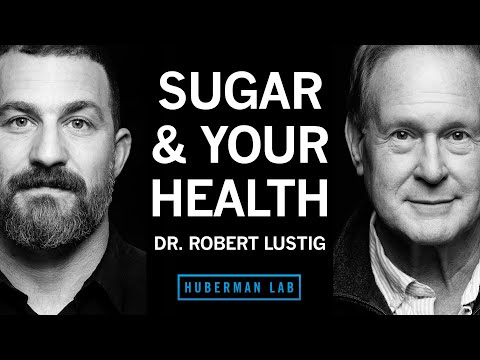
How Sugar & Processed Foods Impact Your Health | Dr. Robert Lustig
Introduction
In this section, Andrew Huberman introduces the podcast and his guest, Dr. Robert Lustig. They discuss the topics that will be covered in the podcast.
Welcome to the Huberman Lab Podcast
- Andrew Huberman is a professor of neurobiology and Ophthalmology at Stanford School of Medicine.
- The podcast focuses on science and science-based tools for everyday life.
Introduction to Dr. Robert Lustig
- Dr. Robert Lustig is an endocrinologist and a professor of Pediatric Endocrinology at the University of California San Francisco.
- He has authored numerous peer-reviewed studies on how different nutrients impact cellular functioning, organ functioning, and overall health.
Discussion Topics
- Is a calorie truly just a calorie?
- Does body weight and composition solely depend on calories consumed versus calories burned?
- How are different macronutrients (protein, fat, carbohydrates) processed in the body?
- The role of fiber and gut microbiome in food processing.
- The addictive nature of sugars, particularly fructose, on the brain.
- How sugar affects liver health, kidney health, hormones (such as insulin), and overall cellular and organ health.
- The impact of the food industry on our eating habits and cravings.
Sponsors
In this section, Andrew Huberman thanks the sponsors of the podcast episode.
Sponsor 1: Eight Sleep
- Eight Sleep makes Smart mattress covers with cooling, heating, and sleep tracking capabilities.
- Controlling your sleeping environment temperature can improve sleep quality.
- Falling asleep requires a drop in body temperature by about 1 to 3 degrees.
- Waking up feeling refreshed requires an increase in body temperature by about 1 to 3 degrees.
Sponsor 2: Levels
- Levels is a program that uses continuous glucose monitoring to provide real-time feedback on how different foods, exercise, and sleep patterns impact blood glucose levels.
- Blood sugar regulation is crucial for immediate and long-term health.
- The program allows users to see the effects of their diet choices on blood glucose levels.
Sponsor 3: Aeropress
- Aeropress is a coffee-making device developed by Allan Adler, an engineer at Stanford.
- It offers a better way to make coffee compared to traditional methods like French press.
- Andrew Huberman personally enjoys using Aeropress for his daily coffee routine.
Summary
In this podcast episode, Andrew Huberman interviews Dr. Robert Lustig, an endocrinologist specializing in hormones and pediatric endocrinology. They discuss various topics related to nutrition, including whether all calories are equal, the processing of macronutrients in the body, the addictive nature of sugars (especially fructose), and the impact of the food industry on our eating habits. The sponsors of the episode include Eight Sleep (smart mattress covers), Levels (continuous glucose monitoring program), and Aeropress (coffee-making device).
New Section
This section discusses the traditional French press and the Aero press.
Traditional French Press and Aero Press
- The traditional French press and the Aero press are two different methods of making coffee.
New Section
This section explains the percentage of calories actually consumed from food and the thermic effect of food.
Calories Consumed and Thermic Effect of Food
- Only about 10% of what is eaten contributes to total caloric intake.
- The thermic effect of food refers to the energy used in processing food. Approximately 10% of calories consumed are used for maintaining body temperature.
- Protein generates more heat during digestion compared to carbohydrates, resulting in a net loss of energy.
- Fat does not require as much energy for digestion, so it has a lower thermic effect compared to protein or carbohydrates.
New Section
This section explores the impact of protein on calorie intake.
Protein Intake and Calorie Counting
- In a hypothetical scenario with a 1600 calorie Porter House steak, approximately 1000 calories come from protein, while the remaining 600 calories come from fat.
- Due to the higher thermic effect of protein, it is estimated that around 25% (750 calories) will be lost during digestion.
- When considering weight loss or maintenance goals, it is important to account for this difference between ingested calories and actual calorie intake.
New Section
This section discusses the differences between healthy fats and trans fats.
Healthy Fats vs Trans Fats
- Omega-3 fatty acids are considered heart-healthy and anti-inflammatory, while trans fats are harmful and can lead to various health issues.
- Trans fats cannot be broken down due to their chemical structure, leading to accumulation in arteries and liver.
- Omega-3s are essential for brain and heart function, while trans fats have no nutritional value. Both contain nine calories per gram.
New Section
This section focuses on the importance of glucose as an energy source.
Glucose as an Energy Source
- Glucose is the primary energy source for cells and is crucial for brain function and hormone production.
- The body can produce glucose through gluconeogenesis by converting amino acids or glycerol from fatty acids.
- While ketones can also be used for energy, glucose is necessary for certain structural changes in proteins and hormones.
The Impact of Carbohydrates on Hormones
In this section, the speaker discusses how carbohydrates can affect hormone levels in individuals aged 65 and older. They mention that consuming excessive carbohydrates can lead to deficiencies in thyroid, testosterone, estrogen, and prolactin hormones.
Carbohydrates and Hormonal Deficiencies
- Consuming a high-carbohydrate diet can result in deficiencies of thyroid, testosterone, estrogen, and prolactin hormones.
- These hormonal imbalances are caused by the negative impact of carbohydrates on hormone regulation.
- Glycoproteins are affected by the consumption of carbohydrates.
Fructose and its Addictive Nature
This section focuses on fructose, a sweet molecule found in many foods. The speaker explains why the food industry adds sugar to products and highlights the addictive nature of fructose.
The Addictive Nature of Fructose
- Fructose is an addictive molecule that activates the reward center of the brain (nucleus accumbens) similar to cocaine, heroin, nicotine, and alcohol.
- Consumption of fructose leads to a decrease in dopamine receptors.
- Fructose is not essential for vertebrate life as there are no biochemical reactions that require dietary fructose.
Limited Capacity to Process Fructose
This section discusses our limited capacity to process fructose efficiently. The speaker compares it to our limited ability to metabolize alcohol.
Limited Processing Capacity for Fructose
- Our capacity to process fructose is limited similar to our ability to metabolize alcohol.
- Moderate consumption may be acceptable but excessive intake can have negative effects on health.
- Vertebrates do not require dietary fructose as it serves no purpose in the human body.
Fructose in Fruits and Fiber
This section explores the role of fructose in fruits and how fiber mitigates its absorption.
Fructose in Fruits and Fiber
- The fructose molecule is the same whether it is found in a berry, banana, or Coca-Cola.
- The difference lies in the presence of fiber, which is abundant in berries and less so in bananas.
- Fiber mitigates the absorption of fructose, making fruits with high fiber content (such as blueberries) a better choice.
Fructose and Microbiome Interaction
This section discusses how consuming fructose with fiber benefits our microbiome.
Fructose and Microbiome Interaction
- Consuming fructose with fiber feeds our microbiome rather than being directly utilized by our bodies.
- Blueberries, when consumed with their natural fiber content, provide nourishment for the microbiome.
- Fruit consumption can be beneficial when paired with high-fiber choices.
Negative Effects of Fructose on Mitochondrial Function
In this section, the speaker explains how fructose inhibits enzymes necessary for normal mitochondrial function.
Negative Effects on Mitochondrial Function
- Fructose inhibits three enzymes crucial for optimal mitochondrial function.
- One enzyme affected is AMP kinase (AMPK), which regulates mitochondrial biogenesis. Methylglyoxal (MGO), a metabolite of fructose, irreversibly inhibits AMPK by binding to arginines within its active site.
- Another enzyme inhibited by fructose is AAD L-asil COA dehydrogenase long-chain, which plays a role in fatty acid metabolism.
The transcript continues beyond this point, but the provided sections cover the main points related to carbohydrates, fructose, and their impact on hormones and mitochondrial function.
New Section
This section discusses the role of fructose and nitrates in causing leaky gut and systemic inflammation.
Fructose and Leaky Gut
- The intestine acts as a sewer, moving junk through to the anus while absorbing nutrients.
- Intestinal epithelial cells are bound together by tight junction proteins, such as zonulin, which form a barrier.
- Altering the phosphorylation or nitration status of tight junction proteins can make them transiently permeable.
- Fructose and nitrates can cause tight junction proteins to become transiently permeable, leading to leaky gut.
- Leaky gut results in inflammation at the liver level, which contributes to systemic inflammation.
New Section
This section explains the three barriers in the intestine that keep waste in the center and how fasting affects the gut microbiome.
Barriers in the Intestine
- There are three barriers in the intestine: mucin layer, tight junctions, and mucus-producing cells.
- The mucin layer is a polysaccharide that serves as a physical barrier between intestinal epithelial cells and bacteria.
- Fiber is essential for building up the mucin layer and supporting intestinal health.
Fasting and Gut Microbiome
- Intermittent fasting may lead to longer periods of fasting where one's own intestinal lining is consumed.
- However, when eating after fasting, consuming enough fiber and fermented foods can replenish the gut lining and microbiome.
New Section
This section explores how different dietary components affect gut health.
Impact of Dietary Choices
- Consuming highly processed foods with fructose disrupts tight junctions and makes the gut leaky.
- Eating fiber-rich foods like salads helps reinforce the tight junctions and support gut health.
- Fermented foods, low in sugar, provide short-chain fatty acids that nourish intestinal epithelial cells and the microbiome.
New Section
This section discusses the potential damage caused by ingesting fructose from highly processed foods.
Moderating Fructose Intake
- It is recommended to limit fructose intake to dessert rather than consuming it throughout the day.
- Consuming fiber-rich foods, probiotics, and fermented foods can help mitigate the negative effects of fructose on gut health.
The transcript provided does not cover all sections of the video.
Upper Limit for Children
This section discusses the upper limit of alcohol consumption for children.
Upper Limit for Children
- The upper limit for children should be 12.
Alcohol and Personal Responsibility
This section explores the role of alcohol in personal responsibility and public health.
Alcohol and Personal Responsibility
- There is no biochemical reaction in the body that requires alcohol, except for drinking. Alcohol is vestigal and not necessary for bodily functions.
- Social drinkers make up 40% of the population, while binge drinkers and chronic alcoholics make up 10% each.
- Depriving social drinkers because of the actions of binge drinkers and chronic alcoholics is not justified. People should have a choice but also be aware of what they are doing.
- It is important to understand the risks associated with alcohol consumption, such as more than two drinks per week requiring other measures to offset its effects. Personal responsibility alone may not be sufficient.
- Public health responses are often necessary to address personal health issues that become public health crises, such as syphilis, tuberculosis, teen pregnancy, and tobacco use.
Criteria for Exercising Personal Responsibility
This section outlines four criteria that need to be met in order to exercise personal responsibility.
Criteria for Exercising Personal Responsibility
- Four criteria must be met to exercise personal responsibility: knowledge, access, affordability, and societal response.
- Knowledge is crucial because without it, one cannot make informed choices or take responsibility for their actions.
- Access to healthier alternatives is important, including cost-effective options.
- Affordability is a key factor in personal responsibility, as individuals and society must be able to afford the choices made.
- Personal responsibility alone may not be effective if there are too many nodes of separation between immediate choices and long-term costs.
Chronic Diseases and Mitochondrial Dysfunction
This section discusses the relationship between chronic diseases, mitochondrial dysfunction, and the limitations of current medical treatments.
Chronic Diseases and Mitochondrial Dysfunction
- The majority of chronic diseases, such as type 2 diabetes, hypertension, cardiovascular disease, cancer, fatty liver disease, and polycystic ovarian disease, are caused by mitochondrial dysfunction.
- Current medical treatments do not directly target mitochondria. However, there is growing interest in studying metabolic health and mitochondrial health at institutions like Stanford and UCSF.
Challenges in Exercising Personal Responsibility
This section highlights challenges faced in exercising personal responsibility related to access and affordability.
Challenges in Exercising Personal Responsibility
- Access to healthier alternatives can be challenging for individuals living in food deserts or food swamps where unhealthy options dominate.
- Affordability plays a crucial role as individuals need to be able to afford their choices while considering societal healthcare costs that are currently at $4.1 trillion per year.
- Immediate choices often lead to higher costs down the road due to behavioral economics factors like time efficiency or volume preferences. It can be difficult for people to connect their immediate choices with long-term consequences on healthcare costs.
The Cost of Unhealthy Eating Habits
This section discusses the financial costs associated with unhealthy eating habits.
The Financial Impact of Unhealthy Eating
- Unhealthy eating habits cost approximately $1 trillion per year.
- These costs include healthcare expenses related to chronic diseases caused by poor nutrition.
A Recommendation Engine Based on Metabolic Effect
This section explores a recommendation engine that categorizes foods based on their metabolic effect rather than just their nutrient content.
Categorizing Foods Based on Metabolic Effect
- The recommendation engine categorizes foods based on their metabolic effect, not just their nutrient content.
- There is a Nova filter that can filter out Nova class 4 foods, providing recommendations for healthier options at the grocery store.
Staying Low Insulin with Food Choices
This section explains the concept of staying low insulin and making food choices accordingly.
Strategies for Staying Low Insulin
- Staying low insulin involves avoiding refined carbohydrates and sugars.
- Increasing fiber intake and eliminating branch chain amino acids can also help maintain low insulin levels.
- Choosing fish or pasture-fed steak as protein sources can be beneficial for staying low insulin.
The Impact of Meat Choice on Metabolic Health
This section discusses how the choice of meat can impact metabolic health.
Meat Choice and Metabolic Health
- Marbling in meat indicates intramyocellular lipid, which is associated with metabolic syndrome in corn-fed animals.
- Corn-fed animals have higher levels of branch chain amino acids, which can lead to hypertriglyceridemia, fatty liver disease, and insulin resistance.
- Grass-fed meat, such as in Argentina or New Zealand, may be less marbled but offers a different taste and texture.
The Role of Marbling and Branch Chain Amino Acids
This section explains the role of marbling and branch chain amino acids in meat.
Marbling and Branch Chain Amino Acids
- Marbling in meat is intramyocellular lipid associated with metabolic syndrome.
- Corn-fed animals have higher levels of branch chain amino acids due to their diet.
- Branch chain amino acids can be beneficial for muscle building but can lead to metabolic issues if consumed excessively.
The Impact of Excess Branch Chain Amino Acids
This section discusses the impact of excess branch chain amino acids on the body.
Consequences of Excess Branch Chain Amino Acids
- Excess branch chain amino acids are deamidated in the liver and converted into branch chain organic acids.
- These organic acids can overwhelm mitochondria, leading to fat storage, hypertriglyceridemia, fatty liver disease, and insulin resistance.
Eggs as a Source of Protein
This section focuses on eggs as a source of protein and their nutritional value.
Nutritional Value of Eggs
- Eggs are considered a near-perfect protein with high bioavailability.
- The color difference between yellow yolk eggs and orange yolk eggs may be due to the feed given to the chickens.
- Orange yolk eggs tend to have higher omega-3 content compared to yellow yolk eggs.
Sources of Omega-3 Fatty Acids
This section explores different sources of omega-3 fatty acids.
Sources of Omega-3 Fatty Acids
- Marine life, such as fish, is the primary source of omega-3 fatty acids.
- Other sources include fish oil, cod liver oil, and algal oil (suitable for vegans).
- The debate exists regarding the potential mercury content in fish versus the benefits of omega-3s.
Three Supplements for Optimal Health
This section discusses three supplements that can contribute to optimal health.
Recommended Supplements
- Fish oil: Taking fish oil supplements can help increase omega-3 intake.
- Vitamin C: Vitamin C supplements may be beneficial for certain conditions like rosacea.
- Vitamin D: The importance and controversy surrounding vitamin D supplementation are discussed.
Understanding Vitamin D Supplementation
This section delves into the complexities and controversies surrounding vitamin D supplementation.
Controversies Surrounding Vitamin D Supplementation
- There is a general consensus on the benefits of vitamin D supplementation.
- However, there are debates about its effectiveness and whether it truly serves as a cure-all.
- People tend to be more comfortable taking vitamin D gel caps compared to other supplements.
Metabolic
The speaker discusses the role of statins in metabolic health and their value for secondary prevention. They also mention the correlation between LDL levels and longevity, as well as the importance of triglycerides as a cardiovascular risk factor.
Statins for Secondary Prevention
- Statins have value in secondary prevention.
- Familial hypercholesterolemia requires both statins and a low-fat diet.
- However, statins are not necessary for primary prevention.
LDL Levels and Longevity
- An analysis of the UK population showed that higher LDL levels correlated with increased longevity among individuals aged 65 to 90.
- Large buoyant LDL is cardiovascularly neutral, while small dense LDL is atherogenic.
- Dietary fat primarily affects large buoyant LDL, while insulin and sugar intake impact small dense LDL.
Triglycerides as a Risk Factor
- Small dense LDL indicates poor peripheral clearance of triglycerides.
- Triglyceride production in the liver is influenced by insulin and sugar intake.
- Triglycerides are more important than LDL as a cardiovascular risk factor.
Knowledge Suppression by Big Pharma and Big Food
- Pharmaceutical companies and food industry giants are aware of these facts but prioritize profit over public health.
- Communication among the 51 federal agencies managing food would be beneficial.
Value of Statins for Secondary Prevention
The speaker emphasizes that there is value in using statins for secondary prevention. They discuss familial hypercholesterolemia, the correlation between high LDL levels and longevity, and differentiate between large buoyant and small dense LDL particles.
Statin Value for Secondary Prevention
- Statins have value in secondary prevention, especially for individuals with familial hypercholesterolemia (1 in 500).
- Familial hypercholesterolemia requires a low-fat diet and statin medication.
Correlation Between LDL Levels and Longevity
- An analysis of the UK population showed that higher LDL levels were associated with increased longevity among individuals aged 65 to 90.
- Large buoyant LDL is cardiovascularly neutral, while small dense LDL is atherogenic.
Importance of Triglycerides
- Small dense LDL indicates poor peripheral clearance of triglycerides.
- Dietary fat primarily affects large buoyant LDL, which is not a cardiovascular risk factor.
- Triglycerides are more important than LDL as a cardiovascular risk factor.
Revamping the System
The speaker discusses the broken healthcare system and the influence of the food industry. They suggest potential solutions such as improved communication among federal agencies and separating food regulation from drug regulation.
Broken Healthcare System
- The current healthcare system is completely broken due to profit-driven motives.
- The food industry benefits from the fragmented nature of the system, with 51 different federal agencies managing food independently.
Potential Solutions
- Improved communication among the 51 federal agencies managing food would be beneficial.
- Separating food regulation from drug regulation could lead to better focus on public health.
Cultural Shifts for Health Promotion
The speaker discusses successful cultural shifts in America, such as bicycle helmet usage, smoking restrictions in public places, and reducing drunk driving. They highlight how effective campaigns can drive behavior change.
Successful Cultural Shifts
- Bicycle helmets and seat belts have become widely used due to successful campaigns promoting their importance.
- Smoking in public places has significantly decreased through anti-smoking campaigns targeting youth by highlighting financial exploitation by tobacco companies.
Taxing Soda for Health Impact
The speaker discusses the impact of soda taxes, using Berkeley's soda tax as an example. They highlight the positive effects on health outcomes such as reduced gestational diabetes and slightly decreased obesity rates.
Berkeley's Soda Tax
- Berkeley implemented a soda tax in 2015, resulting in reduced gestational diabetes and slightly decreased obesity rates.
- Similar to cigarette taxes, making soda more expensive can drive behavior change.
Money as a Motivator for Change
The speaker emphasizes the role of financial incentives in driving behavior change. They discuss how making certain products more expensive can have a significant impact on consumption patterns.
Financial Incentives
- Increasing the cost of certain products, such as soda through taxation, can lead to behavior change.
- Money has a significant influence on consumer choices and can be used as a motivator for healthier behaviors.
Parliament and Duma
The speaker discusses the role of Parliament and the Duma.
Role of Parliament and Duma
- Parliament and the Duma play important roles in governance.
- The speaker mentions that discussions take place in these institutions.
Craving Ribeye Steaks
The speaker talks about craving ribeye steaks.
Craving Ribeye Steaks
- The speaker admits to frequently craving ribeye steaks.
- They mention that despite some people advising against it, their lipid levels are fine due to a low-starch, low-sugar diet.
- They consider reducing their intake of low-calorie sweeteners like Stevia based on health data suggesting it may not be beneficial.
Coffee Addiction and Toxicity
The speaker discusses coffee addiction and its potential toxicity.
Coffee Addiction and Toxicity
- The speaker acknowledges being addicted to coffee but states that it is not toxic on its own.
- They mention that caffeine is a classic addictive substance but not considered toxic unless mixed with alcohol.
- Data suggests that caffeine consumption should be limited, especially later in the day, to avoid excessive intake.
Caffeine's Effect on Gastric Emptying
The speaker explains how caffeine affects gastric emptying.
Caffeine's Effect on Gastric Emptying
- Caffeine has an impact on gastric emptying, which can help individuals feel fuller for longer periods.
- While caffeine is addictive, it is not considered toxic when consumed in moderation.
- Mixing coffee with alcohol can lead to toxicity, but coffee itself is not harmful.
GLP1 Agonists and Hunger Mechanisms
The speaker discusses GLP1 agonists and their effects on hunger mechanisms.
GLP1 Agonists and Hunger Mechanisms
- GLP1 agonists, such as those used in medications like semaglutide and tepati, act on both the brain and gut to increase satiety.
- These agonists reduce the rate of gastric emptying, leading to a feeling of fullness for longer periods.
- Consumption of yerba mate in South America, which modestly increases GLP1 levels, has been associated with reduced snacking and spaced-out meals.
Yerba Mate's Effects on Gastric Emptying
The speaker explains how yerba mate affects gastric emptying.
Yerba Mate's Effects on Gastric Emptying
- Yerba mate consumption in South America has been traditionally linked to its laxative effect at the colon level.
- It is used effectively by individuals to space out meals without snacking.
- While it is not clear if the effects are solely due to increased GLP1 levels or other factors, people are injecting themselves with GLP1 analogues for weight loss.
GP1 Analogues for Weight Loss
The speaker discusses GP1 analogues as a weight loss treatment option.
GP1 Analogues for Weight Loss
- GP1 analogues like semaglutide and tepati have shown effectiveness in inducing weight loss.
- Treatment with these analogues can lead to reduced food cravings and decreased calorie intake.
- However, there may be some muscle tissue loss along with fat loss during treatment.
Muscle Loss and Weight Loss
The speaker addresses the issue of muscle loss during weight loss.
Muscle Loss and Weight Loss
- While weight loss achieved through GP1 analogues is beneficial, it is important to note that both fat and muscle are lost.
- Losing muscle mass is not desirable, as it can have negative effects on overall health.
- Further discussion on the topic is needed.
Timestamps may not be accurate due to limitations in processing audio.
[t=2:50:06s] The Impact of Fermented Foods and Yogurt
In this section, the speaker discusses the benefits of fermented foods and the importance of choosing yogurts with live cultures. They also touch upon intermittent fasting and its potential benefits for patients with liver fat.
Fermented Foods
- Fermented foods, such as kimchi and live sauerkraut, are beneficial due to their short-chain fatty acids content.
- It is important to choose fermented foods that are made by trusted sources or artisans.
- Be cautious when selecting yogurt, as many commercially available options have dead cultures and high sugar content.
Intermittent Fasting
- Intermittent fasting can be beneficial for patients with liver fat because it allows the liver to burn stored fat.
- Zero-calorie soda should be avoided, while sugary soda is considered harmful.
Food Combinations and Fiber
- Combining fat with sugary foods, like ice cream, may result in a blunted insulin response compared to consuming pure sugar.
- Food combinations can be effective in blunting insulin response if they contain fiber.
- The speaker mentions being the chief medical officer of a fiber company called Biolumin that offers a proprietary fiber product.
Fiber Supplements
- There are two types of fiber: soluble and insoluble. Both have different benefits.
- Soluble fiber is commonly found in products like Fiber One bars, psyllium, inulin, and pectin.
- Insoluble fiber includes cellulose found in celery and other stringy vegetables.
- Consuming both types of fiber together forms a gel-like substance that provides various health benefits.
[t=3:13:27s] Reducing Glucose Response with Fiber Supplementation
In this section, the speaker explains how a specific fiber supplement called Munch Munch can reduce glucose absorption and insulin response, while increasing short-chain fatty acid production. They also discuss the availability of the product.
- Munch Munch is a fiber supplement that comes in sachets and can be sprinkled on food or mixed into drinks.
- Taking Munch Munch with meals can reduce glucose absorption by 36%, fructose absorption by 38%, sucrose absorption by 40%, and simple starch absorption by 9%.
- It increases short-chain fatty acid production by 60% without causing an increase in gas.
- The product is available commercially under the name "Munch Munch."
[t=3:16:07s] Differentiating Soluble and Insoluble Fiber
In this section, the speaker emphasizes the importance of consuming both soluble and insoluble fiber for optimal health benefits. They explain how soluble fiber is commonly added to processed foods, while insoluble fiber provides additional benefits.
- Soluble fiber is often added to processed foods because it mixes well, but it should not replace insoluble fiber.
- Insoluble fiber, such as cellulose found in celery, provides unique health benefits when consumed alongside soluble fiber.
- Consuming only soluble fiber does not provide the same benefits as consuming a combination of both types of fiber.
[t=3:17:16s] Understanding Nova System Food Classification
In this section, the speaker explains the Nova System food classification and discusses which types of foods are considered healthier choices.
- Nova class one foods are those without labels, including fruits like apples and eggs.
- Foods with labels should be approached with caution as they may have undergone processing or contain additives.
- The speaker suggests that approximately 95% of our food intake should come from Nova class one or two foods for better health outcomes.
The transcript provided does not include timestamps for all sections.
Creating a Comprehensive and Informative Markdown File
This section provides instructions on how to create a comprehensive and informative markdown file from a given transcript. The markdown file should be structured in a clear and concise manner, making use of timestamps when available to help others study the transcript.
Structuring the Markdown File
- Use headings to organize the content of the markdown file.
- Each heading should have a descriptive title that accurately summarizes the corresponding section of the transcript.
- Use subheadings to further divide the content into meaningful sections.
Using Timestamps
- When available, associate timestamps with bullet points to link them to specific parts of the video.
- Format timestamps using , where XXXX is an integer number of seconds.
- Avoid advancing with timestamps and ensure they are correctly associated with the corresponding part of the transcript.
Formatting Tips
- Keep each section concise, with no more than 4 bullet points per section.
- Limit each bullet point to 25 words or less for clarity and brevity.
- Use [] to denote timestamps and () to link them to the corresponding part of the video.
- Organize notes using subheadings and bullet points for easy readability.
Summary Tips
- Only include content from the transcript; do not add any additional information.
- Create informative titles or questions that reflect what is covered in each section.
- Do not draw conclusions based on limited information; focus on summarizing key points instead.
- Cite relevant timestamps by linking them using format within blocks, especially for bullet points.
- Be concise in your summaries and avoid creating excessive sections.
Ensure that both headings and content are written in English language as specified.