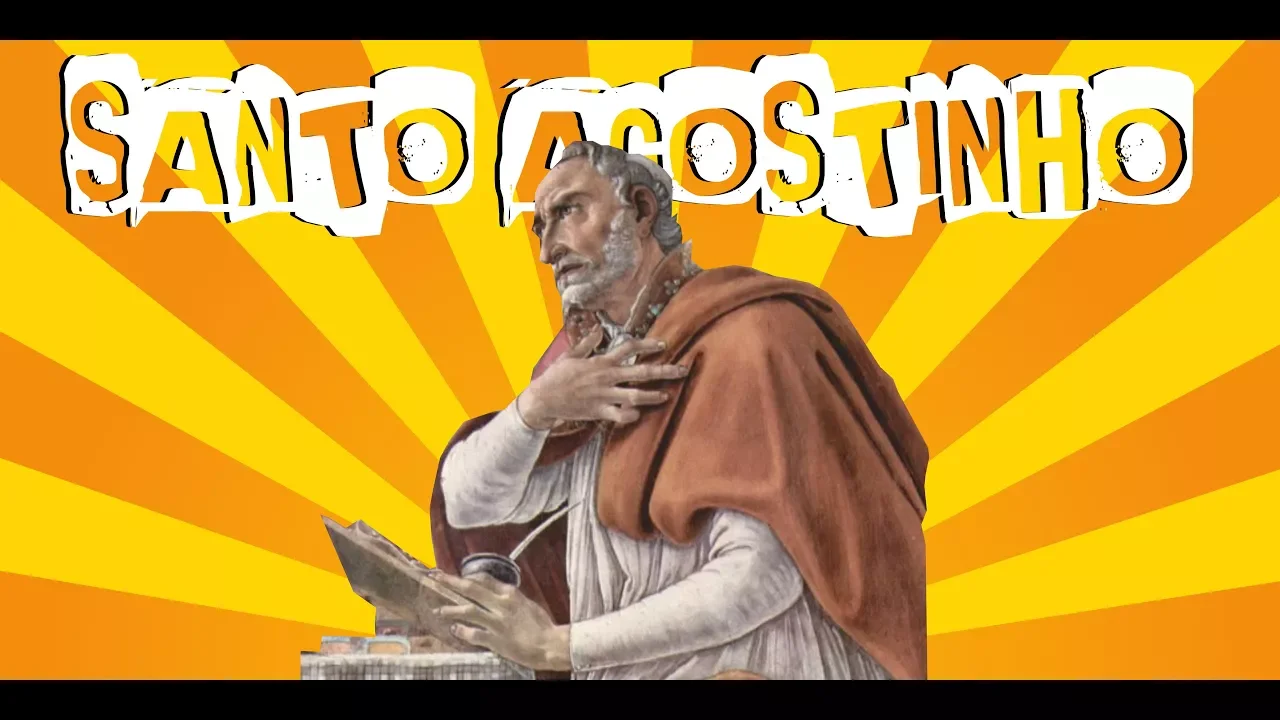
SANTO AGOSTINHO
Philosophy of the Medieval Era
Introduction to Medieval Philosophy
- The session begins with an invitation from Professor Patrick Thiele, introducing the topic of medieval philosophy and encouraging viewers to subscribe to related channels.
- The focus will be on studying medieval philosophy, which spans from the 5th to the 15th century, covering a millennium of thought.
Key Philosophical Schools
- Two central philosophical schools will be explored: one from the early medieval period and another from the late medieval period.
- The first school is identified as "Patristics," which is significant in understanding early Christian thought.
Saint Augustine's Influence
- A major figure in Patristics is Saint Augustine, also known as Augustine of Hippo. His contributions are pivotal for understanding medieval philosophy.
- Augustine was born in North Africa (modern-day Algeria) during the 5th century AD and later became a key philosopher within both Catholic and Anglican traditions.
Importance of Personal Context
- Understanding Augustine's personal life is crucial as it reflects his philosophical inquiries; he was not always a Christian but sought knowledge throughout his youth.
- He is referred to affectionately by Professor Thiele as "Agostinho Neto," emphasizing his humanity beyond just being a historical figure.
Early Life and Philosophical Journey
- Born into the Roman Empire, Augustine’s upbringing influenced his thoughts; he experienced a search for meaning that shaped his philosophical outlook.
- His personal struggles, including feelings of isolation and depression, are highlighted as essential elements that informed his later works.
Transitioning Beliefs
- Initially rejecting Christianity despite his mother’s influence, Augustine sought various philosophies before finding solace in faith.
- This phase of searching for truth led him through different theological currents until he ultimately embraced Christianity.
Rejection of Old Testament Views
- Augustine initially struggled with concepts presented in the Old Testament due to its portrayal of God as punitive, leading him away from those texts at first.
Understanding Manichaeism and Augustine's Philosophical Journey
The Concept of Good and Evil in Manichaeism
- Manichaeism presents a dualistic view of good and evil, suggesting that both are natural elements within our universe. Augustine struggles to comprehend why evil must be considered a natural aspect of existence.
- Augustine's exploration into Manichaeism leads him to question the inherent nature of good and evil, ultimately distancing himself from this philosophy as he seeks deeper understanding.
Transition to Christian Thought
- After extensive study across various philosophical and theological schools, Augustine encounters Paul's epistles, marking a significant shift towards understanding God through Christian texts rather than solely Old Testament teachings.
- His engagement with Platonic philosophy becomes pivotal; he begins to align his thoughts with both Platonic ideals and biblical writings, shaping his future contributions to Christian thought.
Conversion to Christianity
- Augustine’s conversion is not merely an acceptance of the New Testament but also involves recognizing his potential contributions through scholarly work within the Christian framework.
- He embraces both his past studies in Platonism and his new faith, leading him into a phase where he significantly influences Catholic doctrine despite not being recognized as a Doctor of the Church during his lifetime.
Integration of Platonic Ideas
- Augustine is characterized as a "Christianized" version of Plato; he adapts Platonic ideas about two realms—the sensible world (our current existence) and the intelligible world (the realm of heaven).
- He interprets Plato’s concept by defining the sensible world as humanity's current state while viewing the intelligible world as the ultimate goal for souls striving for goodness.
Faith vs. Reason in Augustine's Philosophy
- Unlike some strands of early Christianity that viewed sinners as eternally bound by sin, Augustine believes in the possibility of conversion—his own life exemplifies this transformative journey toward faith.
- While acknowledging Plato’s hierarchy favoring the intelligible over the sensible world, Augustine emphasizes that achieving heaven requires active conversion rather than mere philosophical reasoning.
Understanding Faith and Reason through Augustine
The Relationship between Faith and Reason
- The speaker discusses the importance of understanding faith through reason, emphasizing that while faith is paramount, reason plays a crucial role in its comprehension.
- A quote from Saint Augustine highlights the idea that "to believe is to know," suggesting that faith precedes knowledge and understanding.
- Augustine reflects on his pre-Christian life, where he possessed knowledge but felt an emptiness that was only filled upon embracing faith.
- The speaker notes Augustine's view of God as the ultimate creator, raising questions about the purpose of existence and creation itself.
- Augustine posits that God's creation is an act of goodness, which should not be questioned; this goodness underpins the existence of time and space.
Concepts of Time and Creation
- According to Augustine, life has a structure with a beginning (creation), a middle (human existence), and an end (conversion to heaven).
- He asserts that God created time before creating the universe; thus, time did not exist prior to God's will.
- The discussion includes how Augustine conceptualizes time travel philosophically, questioning what existed before creation.
Understanding Love in Relation to God
- The speaker shares insights on love according to Augustine, explaining how earthly love reflects a yearning for divine love rather than being perfect in itself.
- Personal anecdotes illustrate how human affection serves as a shadow or imitation of true love found in God.
- This notion aligns with Platonic philosophy where earthly experiences are seen as imperfect copies of higher truths.
Conversion and Influence
- Augustine emphasizes conversion through faith without excluding others based on their past actions or beliefs; he acknowledges his own journey towards faith.
- His philosophical contributions have significantly influenced Christian thought throughout history, particularly during the Middle Ages.
Legacy of Augustine's Ideas
- The speaker notes that many consider Augustine one of the early reformers within Christianity due to his profound impact on theological discussions during his era.
Understanding Augustine's Philosophy of Good and Evil
The Nature of Good and Evil
- Augustine argues that evil cannot be a creation of God, as it contradicts the notion of a benevolent creator. He emphasizes that God's creation is fundamentally good.
- According to Augustine, evil is defined as the absence of God. Where God is not present, evil can thrive, raising questions about divine omnipresence.
- Augustine introduces the concept of free will, suggesting that individuals who reject God are more susceptible to evil. This rejection leads to a lack of divine presence in their lives.
- He distances himself from Manichaeism by asserting that evil is not an inherent force but rather a deficiency where God's influence is absent.
Personal Reflections on Augustine