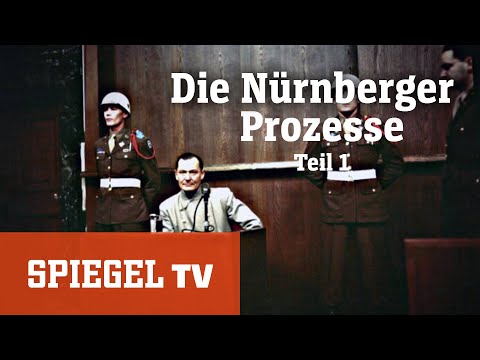
Die Nürnberger Prozesse (1/3): Das Dritte Reich vor Gericht | SPIEGEL TV
Introduction to the Nuremberg Trials
This section introduces the Nuremberg Trials, which took place after World War II. The trials were held in Nuremberg, Germany, and aimed to hold accountable those responsible for twelve years of dictatorship, aggressive wars, terrorism, and mass murder.
The Significance of the Trials
- The Nuremberg Trials were a response to the millennium crimes committed by the Nazis.
- The trials involved 200 defendants who were accused of conspiracy, waging aggressive wars, war crimes, and crimes against humanity.
- The defendants showed no remorse and believed they had done nothing wrong.
- It was an unprecedented trial where an entire state leadership was held accountable.
Objectives of the Trials
This section explores the ambitious goals of the Nuremberg Trials and their significance in preventing future tyranny.
Goals of the Prosecution
- The trials aimed to establish justice and prevent tyranny from happening again.
- They sought to bring about a new world order based on principles of justice.
- It was not just a trial against Germans but a trial in the name of humanity.
Post-War Germany and Göring's Expectations
This section discusses post-war Germany and Hermann Göring's expectations regarding his role in governing Germany after Hitler's death.
Post-War Situation in Germany
- Nazi Germany had unconditionally surrendered after almost six years of war.
- People were focused on overcoming hunger and misery rather than being interested in the fate of Nazi leaders.
Göring's Expectations
- Hermann Göring believed that he would be accepted as a negotiator by the Americans due to his charm and cunning.
- He aspired to become the new leader of the Nazis after Hitler's death.
- However, he was not accepted as a leader, even by his own comrades.
Dönitz's Government and Göring's Disappointment
This section explores Karl Dönitz's government and Göring's disappointment in not being recognized as the new Nazi leader.
Dönitz's Government
- Karl Dönitz formed a government in Flensburg with former high-ranking Nazis like Albert Speer and Alfred Jodl.
- They aimed to govern Germany despite lacking real power.
Göring's Disappointment
- Göring was disappointed that he was not recognized as Hitler's successor, despite considering himself the rightful heir.
- He believed he might be sent into luxurious exile like Napoleon but found himself rejected even by his own comrades.
Discovering Nazi Crimes
This section discusses the discovery of Nazi crimes by Allied forces and their efforts to gather evidence.
Liberation of Concentration Camps
- As American troops liberated concentration camps like Ohrdruf in Thuringia, they uncovered the monstrous crimes committed by the Nazis.
- The conditions were indescribable, with few survivors and piles of bodies.
Gathering Evidence
- Specialists were brought in to secure evidence for war crimes trials.
- The task of holding those responsible accountable was complicated due to the lack of existing laws on genocide and difficulties in prosecuting a terror state.
Making Nazi Regime a Criminal Matter
This section highlights how Allied forces used their authority over occupied countries to make the Nazi regime a criminal matter.
Holding Responsible Parties Accountable
- The majority of victims of Nazi crimes came from occupied countries, giving the Allies the opportunity to prosecute those responsible.
- The objective was to bring captured war criminals to trial for their actions.
Conclusion
The Nuremberg Trials were a significant event in history, aiming to hold accountable those responsible for Nazi crimes. The trials sought justice and aimed to prevent future tyranny. Post-war Germany saw the disappointment of former Nazi leaders like Göring, while Allied forces worked diligently to gather evidence and make the Nazi regime a criminal matter.
The Idea for the Nuremberg Trials
This section discusses the origins of the idea for the Nuremberg Trials and the initial reluctance among the Allied powers to agree on a method of punishment for war criminals.
The Origins of the Nuremberg Trials
- The idea for the Nuremberg Trials originated in the summer of 1944.
- US President Roosevelt tasked government officials in Washington with designing strategies to bring war criminals to justice.
- The Allied powers were initially divided on how to punish those responsible for Nazi crimes.
- British Prime Minister Winston Churchill suggested executing Hitler without trial, while Stalin proposed an international trial for German war criminals.
Developing the Plan for the Nuremberg Trials
This section explores how the plan for the Nuremberg Trials was developed and highlights initial skepticism and concerns about creating a fair and effective legal process.
Skepticism and Concerns
- There were concerns within Washington's War Department about legitimizing "lynch justice" through a trial process.
- Judge Robert Jackson, initially skeptical about a court proceeding, accepted President Truman's request to organize the trials.
- Jackson faced skepticism from colleagues, friends, and contacts in both legal circles and government regarding creating new laws and achieving successful outcomes.
Jackson's Vision for International Law
This section focuses on Robert Jackson's vision for international law and his belief that aggressive wars should be considered criminal acts.
Jackson's Vision
- Jackson believed that aggressive wars should be punishable under international law.
- He saw an opportunity to develop new principles of international law that would make starting wars a crime.
- His focus was not solely on prosecuting Holocaust crimes but also on holding accountable those responsible for planning and executing aggressive wars.
Arresting Nazi Leaders
This section discusses the arrest and internment of Nazi leaders, including Hermann Göring, and the challenges faced in gathering evidence against them.
Arrest and Internment
- Nazi leaders, including Hermann Göring, were captured and held at the Bad Mondorf internment camp in Luxembourg.
- The American chief prosecutor completed his preparations and traveled to London to convince the Allies of his vision for an international court.
- The prosecutor discovered that investigations were incomplete, with limited evidence against individual perpetrators.
- To succeed in court, he needed irrefutable evidence of guilt through witnesses, documents, and other means.
Denial and Ignorance among Nazi Leaders
This section explores the different responses from captured Nazi leaders regarding their knowledge or involvement in Nazi crimes.
Responses from Captured Nazis
- Some Nazis claimed ignorance about the extent of Nazi crimes or said they only learned about concentration camps after their capture.
- Others admitted suspicions but claimed no knowledge due to lack of reporting or fear of ending up in a concentration camp themselves.
Trevor Jackson's Preparations
This section focuses on Trevor Jackson's preparations as the American chief prosecutor for the Nuremberg Trials.
Preparations by Trevor Jackson
- Trevor Jackson completed his preparations as chief prosecutor before traveling to London to present his vision for an international court.
- He found that investigations were incomplete with limited evidence against individual perpetrators.
- He needed strong evidence such as witnesses and documents to ensure success in court.
Document Initiative Required
The speaker mentions that their task was to investigate Ernst Kaltenbrunner, the chief of the Reich Security Main Office, which included the Gestapo and the Security Service. They found incriminating documents signed by Kaltenbrunner, including execution orders.
Investigating Ernst Kaltenbrunner
- The speaker's task was to investigate Ernst Kaltenbrunner, who was the chief of the Reich Security Main Office.
- The office included organizations like the Gestapo and the Security Service.
- During their investigation, they found execution orders signed by Kaltenbrunner.
Political Background and Setting up an International Military Tribunal
The speaker discusses the political background behind organizing the trial and setting up an international military tribunal in Nuremberg. The Allies organized the trial but faced challenges due to retroactive legislation concerns.
Political Background and Retroactive Legislation Concerns
- The Allies organized the trial as they would not prosecute themselves.
- An international military tribunal was established to avoid creating new laws but rather applying existing ones.
- Stalin's involvement in selecting jurists became a handicap for the proceedings.
- The Soviets were also guilty of crimes against humanity and criminal aggression but these were not addressed in Nuremberg.
Choosing Nuremberg as Trial Location
Despite extensive destruction, Nuremberg was chosen as the location for the trial due to its symbolic significance as Hitler's city where anti-Jewish laws were announced. The courthouse remained intact amidst widespread devastation.
Selecting Nuremberg as Trial Location
- Nuremberg was chosen as it held symbolic significance for Nazis, being known for Hitler's speeches and anti-Jewish laws.
- The city was 90% destroyed, but the courthouse remained intact.
- Robert Jackson, the US chief prosecutor, was determined to hold the trial in Nuremberg.
Preparing the Courtroom and Bringing in the Defendants
The courtroom in Nuremberg was transformed into a suitable venue for the trial. The defendants were brought from various internment camps to Nuremberg's prison.
Preparing the Courtroom and Defendants' Arrival
- Room 600 in Nuremberg's courthouse was modified to accommodate hundreds of spectators and journalists.
- The back wall was removed to create more space.
- Initially, 24 major war criminals were selected for trial and brought from different internment camps to Nuremberg's prison.
Challenges in Interrogating the Defendants
Interrogating the defendants proved challenging as they claimed ignorance and innocence. Chief prosecutor Robert Jackson decided to rely heavily on documentary evidence to prevent them from using the trial as a platform for Nazi propaganda.
Challenges in Interrogating Defendants
- Interrogations were frustrating as defendants like Hermann Göring feigned ignorance and innocence.
- Chief prosecutor Robert Jackson made a significant decision to rely on documentary evidence instead of relying solely on interrogations.
- This approach aimed to prevent defendants from using the trial as a platform for promoting Nazism.
Rudolf Hess's Arrival and Loss of Memory Claim
Rudolf Hess, who had flown alone to Scotland during World War II, arrived in Nuremberg. However, he claimed to have lost his memory and refused to cooperate during questioning.
Rudolf Hess's Arrival and Memory Loss Claim
- Rudolf Hess, who had flown alone to Scotland during the war, arrived in Nuremberg.
- He claimed to have lost his memory and refused to cooperate during questioning by prosecutor Eamon.
The transcript provided does not contain any timestamps beyond this point.
The Role of Joachim von Ribbentrop in Hitler's Regime
This section discusses the role of Joachim von Ribbentrop, the former Reich Foreign Minister, in Hitler's regime and his alleged involvement in planning Hitler's aggressive wars and war crimes.
Joachim von Ribbentrop's Allegations
- Joachim von Ribbentrop is accused of planning Hitler's aggressive wars and being involved in war crimes and deportation orders.
- He claims to have had no knowledge or responsibility for these actions.
- Prior to becoming Hitler's Foreign Minister, Ribbentrop was an ambassador in London.
Personal Impressions of Ribbentrop
- The speaker initially believed that Ribbentrop was an important figure but discovered that he was only moderately intelligent during their encounter.
- In captivity, Ribbentrop became careless about his appearance and did not express himself eloquently.
- He was described as anything but a proud German.
Completing the List of Defendants
This section focuses on completing the list of defendants for the Nuremberg trials and the challenges faced by Chief Prosecutor Jackson.
Completion of Defendant List
- By late October 1945, the list of defendants for the Nuremberg trials is complete.
- Not all defendants are present in Nuremberg at this time. The whereabouts of Martin Bormann, Hitler's secretary, are unknown. Gustav Krupp von Bohlen und Halbach is unable to stand trial due to health reasons.
Challenges Faced by Chief Prosecutor Jackson
- Chief Prosecutor Jackson wants to make a significant impact with his choice of defendants but faces resistance from the British when he tries to substitute Alfried Krupp for his father.
- The British officer Airey Neave delivers the indictments to the defendants, and Ribbentrop believes they are targeting the wrong individuals.
The Beginning of the Trial
This section discusses the start of the trial and initial interactions with Hermann Göring, the main defendant.
Initial Interactions with Hermann Göring
- Hermann Göring is the primary defendant in the trial.
- When asked if he understands why he is standing before the court, Göring responds negatively, thinking that they are presenting him with an indictment. He requests a translator instead of a defense attorney.
Defense Attorneys and Karl Dönitz's Perspective
This section explores the selection of defense attorneys for the defendants and Karl Dönitz's perspective on the trial.
Defense Attorneys
- The defendants can choose their defense attorneys from provided lists or make their own suggestions.
- The attorneys can even be convinced Nazis as long as they ensure fairness in the proceedings.
Karl Dönitz's Perspective
- Karl Dönitz considers the trial to be an American whim that does not concern him personally.
- He appoints Flottenrichter Otto Kranzbühler as his defense attorney and expresses his readiness to face any consequences.
Ensuring Loyalty and Fairness
This section focuses on ensuring loyalty among defense attorneys and addressing concerns about fairness in the trial.
Ensuring Loyalty
- The speaker writes a letter to his wife, assuring her that he appointed certain individuals due to their loyalty during difficult times.
- Defendants have options for selecting their defense attorneys or making suggestions themselves.
Fairness Concerns
- The court aims to avoid any criticism of unfairness in the trial.
- Defense attorneys express concerns about the lack of resources and support, including the absence of staff and necessary documents.
Challenging Working Conditions
This section discusses the challenging working conditions faced by defense attorneys during the trial.
Primitiveness of Working Conditions
- Defense attorneys face primitive working conditions, including a lack of resources such as paper and office space.
- They have to procure basic supplies like paper and even hire secretaries.
- The entire defense team shares one telephone at the end of a long hallway.
The Nuremberg Courthouse
This section provides an overview of the Nuremberg courthouse and its security measures.
Nuremberg Courthouse
- The Nuremberg courthouse has become a high-security area, requiring special access passes.
- In courtroom 600, defendants will sit facing the judge's bench, with space for prosecutors' tables in between.
Perspectives from Albert Speer and Fritz Sauckel
This section explores the perspectives of Albert Speer and Fritz Sauckel on the upcoming trial.
Albert Speer's Perspective
- Albert Speer, Hitler's former favorite architect and Minister of Armaments, sees the trial as necessary. He distances himself from Hitler's actions through a strategy of separation.
Fritz Sauckel's Perspective
- Fritz Sauckel, responsible for forced labor as General Plenipotentiary for Labor Deployment, considers his knowledge to be a significant threat during the trial.
Reactions from Hans Frank, Robert Ley, and Julius Streicher
This section discusses the reactions of Hans Frank, Robert Ley, and Julius Streicher to the impending trial.
Hans Frank's Reaction
- Hans Frank, known as the Butcher of Warsaw, survived a suicide attempt and has converted to Catholicism. He sees the trial as a divine judgment.
Robert Ley's Reaction
- Robert Ley, former head of the German Labor Front, reacts with anger upon receiving the indictment. He suggests that they should all be lined up against a wall and shot.
Julius Streicher's Reaction
- Julius Streicher, referred to as a dirty old man who caused trouble in parks, views the trial as a triumph for world Jewry.
Conclusion of Transcript
This section concludes the transcript by highlighting the calmness in Block C of Nuremberg prison on October 25th, 1945.
The End of Robert Ley
This section discusses the suicide of Robert Ley, who had his underwear torn despite constant surveillance. It highlights the strict measures implemented in the prison to prevent further suicides.
Prison Measures and Suicide Prevention
- After Robert Ley's suicide, guards are stationed outside every cell door, even at night.
- The accused are only allowed to sleep on their backs with their hands on the blanket.
- Guards can quickly gain access to the cells within seconds to prevent further suicides.
Preparations for the Nuremberg Trials
This section focuses on the preparations for the International Military Tribunal of Nuremberg, which aimed to hold 22 representatives of the Third Reich accountable for their actions.
Security Measures and Trial Proceedings
- Stringent security checks are conducted around the courthouse.
- On November 20, 1945, the trial is set to begin against 22 representatives of the Third Reich.
- Journalist William Shirer describes this day as a significant moment where justice confronts evil and marks an end to a long nightmare.
The Defendants Take Their Seats
This section describes how defendants responsible for twelve years of dictatorship sit on trial. It also explores public perceptions and expectations surrounding these proceedings.
Courtroom Protocol and Public Perception
- Defendants are brought from prison directly into Courtroom 600 in groups of three via an elevator.
- Initially, only journalists from victorious nations are allowed in the courtroom.
- Many Germans believe that these trials are Allied propaganda or a continuation of war by other means.
A Political Affair
This section delves into the perception of the trials as a political affair and the motivations behind it.
Views on the Trials
- Some Germans view the trials as a political affair rather than a fair legal process.
- The trials are seen as a continuation of war with different means.
- The necessity and fairness of these proceedings are questioned by some, while others believe they are justified.
Reading of the Indictment
This section highlights the reading of the indictment, which summarizes German crimes against peace, war crimes, and crimes against humanity.
Indictment Summary
- The indictment consists of 85 pages listing numerous German crimes.
- Defendants are accused of crimes against peace, war crimes, and crimes against humanity.
- The charges include conspiracy to commit these crimes as defined in the court's statute.
Defendants' Pleas
This section covers the defendants' responses to the charges brought against them.
Defendants' Responses
- Hermann Göring is called first and declares himself not guilty after making an initial statement.
- General Alfred Jodl also pleads not guilty but acknowledges some degree of guilt.
- Franz von Papen is expected to plead not guilty due to his belief that it was a political trial.
Jackson's Opening Statement
This section focuses on Robert Jackson's opening statement as chief prosecutor and his perspective on international law.
Importance of Opening Statement
- Robert Jackson considers delivering the opening statement as one of the most crucial moments in his role as chief prosecutor.
- He believes that international law is based on customary practices followed worldwide.
- Jackson aims to convince the world about renewing international law through these trials.
Timestamps may not be exact due to limitations in the provided transcript.
Die Idee für den Nürnberger Prozess
In this section, the transcript discusses the origins of the idea for the Nuremberg Trials and how it came about.
Origins of the Idea
- The idea for the Nuremberg Trials originated in the summer of 1944.
- US President Roosevelt tasked government officials in Washington with designing strategies to bring war criminals to justice.
- There were disagreements among the Allies regarding the best way to punish those responsible for war crimes.
- Some suggested that Hitler and his inner circle should be executed without trial, while others even considered executing thousands of German war criminals.
- Soviet dictator Josef Stalin proposed an international criminal trial as a solution.
Disagreements Among the Allies
This section explores the disagreements among the Allied powers regarding how to punish those responsible for war crimes.
Disagreements on Punishment
- British Prime Minister Winston Churchill believed that Hitler should be executed without a trial.
- At the Tehran Conference, there was even discussion about executing 50,000 to 100,000 German war criminals.
- It took time for politicians to come to terms with the idea of a complex and meticulous legal process after such a long and brutal war.
- Mass executions would have violated American and British notions of justice.
Development of the Nuremberg Process
This section focuses on how plans for the Nuremberg Trials were developed at the War Department in Washington.
Planning at War Department
- The plan for the Nuremberg Trials was developed at the War Department in Washington.
- The Nazi leaders would be charged as part of a criminal conspiracy, accused of planning aggressive wars and committing numerous crimes and atrocities.
- The main idea was to hold the key defendants accountable for conspiring to seize control of the German government and subjecting the German people to their dictatorial rule.
- They had made the Germans their victims by depriving them of freedom and democracy.
Skepticism and Doubts
This section discusses the skepticism and doubts surrounding the Nuremberg Trials.
Skepticism at Supreme Court
- There was skepticism at the Supreme Court in Washington, with concerns about legitimizing a form of lynching through a trial process.
- Even Justice Robert Jackson, initially not in favor of a court proceeding, willingly took on the task of organizing the trials.
- Jackson faced skepticism from colleagues in the legal profession, including those in the Supreme Court, as well as friends and contacts within the government.
Jackson's Vision for New International Law
This section explores Robert Jackson's vision for creating new international law through the Nuremberg Trials.
Jackson's Vision
- Jackson believed that it was time to develop international law further, making war crimes punishable under international law.
- He wanted to brand aggressive wars as crimes rather than justifying them based on sovereign states' right to wage war.
- His focus was not primarily on the Holocaust but on prosecuting those responsible for planning aggressive wars like Hitler and his accomplices.
Preparation for Nuremberg Trials
This section highlights preparations made for the Nuremberg Trials after Germany's surrender.
Dissolution of Dönitz Government
- On May 23, 1945, Admiral Dönitz's puppet government in Flensburg was dissolved and arrested by Allied forces.
- The Allies compiled lists of wanted Nazi leaders, gradually capturing the top echelons of the Third Reich.
- The captured Nazi leaders were taken to the internment camp in Bad Mondorf, Luxembourg.
Capturing Nazi Leaders
This section focuses on the capture and imprisonment of high-ranking Nazi leaders.
Imprisonment in Bad Mondorf
- Hermann Göring is one of 86 high-ranking officials of the Third Reich held captive and interrogated in Bad Mondorf.
- While some were still fanatically loyal to Hitler, many claimed ignorance or lack of knowledge about the concentration camps and atrocities committed.
- The former Reich government, led by Karl Dönitz, refused to acknowledge their leadership role.
- The American chief prosecutor completed his preparations and traveled to London to convince the Allies about his vision for an international court.
Trevor Jackson's Preparations
This section discusses Trevor Jackson's preparations for the Nuremberg Trials.
Gathering Evidence
- Trevor Jackson discovers that investigations are incomplete and there is a lack of concrete evidence against individual defendants.
- He realizes that he needs irrefutable evidence such as witnesses and documents to prove guilt in court.
- His goal is to avoid accusations of victor's justice while presenting a strong case for justice and deterrence.
The transcript provided was in German. Therefore, all notes have been translated into English.
Document Initiative Required
The speaker mentions the need for initiative in handling documents.
Document Initiative
- Taking initiative is necessary when dealing with documents.
Ribbentrop's Involvement and Behavior
This section discusses Joachim von Ribbentrop's alleged involvement in Hitler's aggressive wars, war crimes, and deportation orders. It also highlights his behavior during captivity.
Ribbentrop's Allegations
- Joachim von Ribbentrop is accused of planning Hitler's aggressive wars, participating in war crimes, and issuing deportation orders.
- He claims to have had no knowledge or responsibility for these actions.
- Ribbentrop was previously an ambassador in London before becoming Hitler's foreign minister.
- His behavior during captivity reveals a lack of intelligence, care for his appearance, and eloquence.
Completion of the Accused List
The completion of the list of accused individuals is discussed, including the uncertainty surrounding Martin Bormann's whereabouts and Gustav Krupp von Bohlen und Halbach being transport incapacitated.
Completion of Accused List
- By the end of October 1945, the list of accused individuals is complete.
- Not all accused are present in Nuremberg; Martin Bormann's whereabouts remain unclear.
- Gustav Krupp von Bohlen und Halbach is unable to be transported due to health issues, causing frustration for Chief Prosecutor Jackson.
Göring's Response to Charges
Hermann Göring reacts to being presented with the charges against him and emphasizes his need for a translator.
Göring's Reaction
- Hermann Göring, the main defendant, questions if he is standing before a court.
- He is informed that the charges are being presented to him, not a court.
- Göring requests a translator in addition to his defense lawyer, considering it important for his case.
Selection of Defense Lawyers
The defendants have the option to choose their defense lawyers or make suggestions. The importance of maintaining fairness in the proceedings is emphasized.
Selection of Defense Lawyers
- Defendants can choose their defense lawyers from provided lists or suggest their own.
- The court allows even convinced Nazis to serve as defense lawyers to avoid criticism regarding fairness.
- The defense lawyers express concerns about the lack of resources and support for their work.
Challenges Faced by Defense Team
The challenges faced by the defense team are discussed, including limited resources and working conditions.
Challenges Faced by Defense Team
- Lack of resources and support hindered the defense team's work.
- They had to find their own staff members and secure basic supplies like paper.
- Working conditions were primitive, with shared spaces and limited access to facilities.
Defendants' Perspectives on the Trial
Various defendants share their perspectives on the upcoming trial and express different emotions towards it.
Defendants' Perspectives
- Albert Speer sees the trial as necessary but attempts to distance himself from certain accusations.
- Fritz Sauckel considers himself a scapegoat for slave labor issues and appoints a specific lawyer as his defender.
- Wilhelm Keitel believes that soldiers must follow orders without question, referring to himself as Hitler's useful tool.
Emotional Reactions of Defendants
The emotional reactions of defendants are highlighted, including crying, anger, and a suicide attempt.
Emotional Reactions
- Ernst Kaltenbrunner, chief of Himmler's Reichssicherheitshauptamt, breaks down in tears upon receiving the charges.
- Julius Streicher sees the trial as a triumph for world Jewry and is described as a "dirty old man" causing trouble.
- Hans Frank, known as the Butcher of Warsaw, survives a suicide attempt and has converted to Catholicism.
- Robert Ley reacts with anger and suggests executing all defendants instead of going through the trial process.
Quiet Night in Nuremberg Prison
The tranquility of Block C in Nuremberg prison is mentioned, with prisoners sleeping under constant surveillance.
Quiet Night in Prison
- On the evening of October 25th, 1945, Block C in Nuremberg prison appears calm.
- The prisoners sleep while being closely monitored by guards.
Bettdecke seine Unterwäsche zerrissen
The speaker mentions that someone's bedsheet and underwear were torn.
Torn Bedsheet and Underwear
- Someone's bedsheet and underwear were ripped or torn.
Verbrechen gegen den Frieden der Welt zu eröffnen liegt mir eine ernste Verantwortung auf die Untaten die wir zu verurteilen und zu bestrafen suchen waren so ausgeklügelt so böse und so vernichtend in ihrer Wirkung dass die menschliche Zivilisation es nicht dulden kann sie unbeachtet zu lassen sie würde sonst eine Wiederholung
The speaker talks about the responsibility to condemn and punish crimes against peace, emphasizing the severity of these acts and their destructive impact on civilization.
Crimes Against Peace
- There is a serious responsibility to condemn and punish crimes against peace.
- These crimes are described as sophisticated, evil, and devastating in their effects.
- The speaker emphasizes that human civilization cannot tolerate ignoring such crimes, as it would risk repetition.
Solchen Unheils nicht überleben
The speaker states that civilization cannot survive such calamities.
Survival of Civilization
- Civilization would not survive such calamities.
Es waren genau die richtigen Worte nicht nur für seine Rede sondern für das gesamte Verfahren es handelte sich nicht nur um einen Prozess gegen die Deutschen sondern um einen Prozess im Namen der Menschlichkeit dieser Prozess sollte verhindern dass die Tyrannei noch einmal irgendwo in der Welt ihr Haupt erhebt
The speaker highlights the importance of the words used in the trial, emphasizing that it was not just a process against Germans but a process in the name of humanity to prevent tyranny from rising again.
Trial for Humanity
- The words used in the trial were precisely chosen, not only for the speech but for the entire proceedings.
- It was not just a trial against Germans; it was a trial in the name of humanity.
- The purpose of this trial was to prevent tyranny from resurfacing anywhere in the world.
Das vier große Nationen erfüllt von ihrem Siegel und gepeinigt von dem geschehenen Unrecht nicht Rache üben sondern ihre gefangenen Feinde freiwillig dem Richtspruch des Gesetzes übergeben ist eines der bedeutsamsten Zugeständnisse dass die Macht jemals der Vernunft eingeräumt hat mein Blut pulsiert notiert Williams als Jackson
The speaker mentions an important concession made by four major nations involved in the trial, where they voluntarily handed over their captured enemies to be judged by law instead of seeking revenge.
Concession by Four Nations
- Four major nations, marked by their seal and tormented by past injustices, made a significant concession.
- Instead of seeking revenge, they voluntarily handed over their captured enemies to be judged according to the law.
- This is considered one of the most significant concessions ever granted by power to reason.
Die Macht der Worte benutzte um meisterlich seine Anklage gegen die Nazi-Barbarei aufzubauen
The speaker discusses how skillfully words were used to build the accusation against Nazi barbarism.
Power of Words
- The power of words was masterfully utilized to construct the accusation against Nazi barbarism.
Die Beredsamkeit die Kraft der Worte war unmittelbar und gewaltig die Angeklagten wurden davon in ihrer Bank gedrückt und waren sehr deprimiert als sie zum Mittagessen und am Abend in ihre Zellen ging es war ihre erste Erfahrung mit Jackson im Gerichtssaal erst jetzt verstanden sie gegen sie anzutreten
The speaker describes how the eloquence and power of words had an immediate and immense impact on the accused, leaving them feeling pressed in their seats and deeply depressed. It was their first experience with Jackson in the courtroom, and they now understood that they were up against him.
Impact of Words
- The eloquence and power of words had an immediate and tremendous effect.
- The accused felt pressed in their seats and were greatly depressed.
- It was their first encounter with Jackson in the courtroom, where they realized they were facing a formidable opponent.
Hatten die Zivilisation fragt sagt Jackson ob das Recht so zaudernd und träge sei dass es gegenüber so schweren Verbrechen begangen von Verbrechern von so hohem Rang völlig hilflos ist
Jackson questions whether civilization wonders if justice is hesitant and sluggish when it comes to severe crimes committed by high-ranking criminals, rendering it completely helpless.
Justice for Severe Crimes
- Jackson raises a question about whether justice is hesitant and sluggish when faced with severe crimes committed by high-ranking criminals.
- He wonders if justice becomes entirely helpless in such cases.
Einzig beim Mittagessen eine Treppe höher können die Angeklagten miteinander reden
The speaker mentions that the accused can only talk to each other during lunchtime, one flight of stairs above.
Communication During Lunch
- The accused can communicate with each other only during lunchtime, on a staircase one level above.
Hermann Göring nutzt jede Gelegenheit auf Schwankende einzuwirken Reichsjugendführer Baldur von Schirach als Gauleiter von Wien für Deportationen verantwortlich ist entsetzt über die Verbrechen Albert Speer gibt sich bescheiden bei dem Elend und den Entbehrungen die als Folge des Zusammenbruchs im deutschen Volk entstanden sind kommt es
The speaker mentions how Hermann Göring takes every opportunity to influence those who are wavering. Reich Youth Leader Baldur von Schirach, responsible for deportations as the Gauleiter of Vienna, is horrified by the crimes. Albert Speer appears humble in light of the suffering and hardships caused by the collapse within the German people.
Reactions of Individuals
- Hermann Göring seizes every chance to sway those who are uncertain.
- Baldur von Schirach, as Gauleiter of Vienna responsible for deportations, is appalled by the crimes.
- Albert Speer presents himself humbly considering the misery and deprivation resulting from the collapse within the German population.