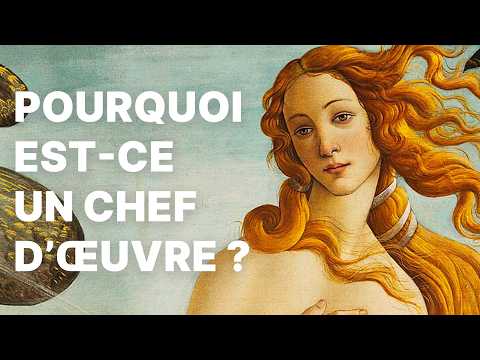
La Naissance de Vénus de Botticelli, expliquée. (Analyse)
The Birth of Venus: A Renaissance Masterpiece
The Context of the Artwork
- In an era where art served the Church, depictions of nude women were virtually absent for over 1000 years, as they symbolized lust, sin, and shame.
- Sandro Botticelli's "The Birth of Venus," painted in 1484, marked a significant departure from this norm by presenting a frontal nude female figure in a nearly life-sized format (1.72m x 2.78m).
- This painting represents not just artistic talent but also a shift in the role of art; it became an object of desire rather than merely ideological communication.
The Renaissance Revolution
- The Renaissance was characterized by unprecedented cultural, intellectual, and artistic revolutions with figures like Copernicus, Galileo, and Michelangelo shaping history.
- Gutenberg's introduction of printing facilitated wider dissemination of knowledge and humanism placed individuals at the center of discourse against the backdrop of medieval church authority.
- Artists began to gain recognition for their talents due to wealthy patrons like the Medici family in Florence; the Church was no longer the sole commissioner.
Artistic Innovations
- Prior to the Renaissance, architecture lacked depth and emotion; however, this period introduced clear perspectives and realistic characters that viewers could identify with.
- Botticelli’s work embodies these changes—Mary is depicted not only as a saint but also as a relatable mother figure.
Symbolism in "The Birth of Venus"
- The mythological narrative includes references to Greek mythology where Chronos castrates Ouranos leading to Venus's birth from sea foam—a subtle phallic reference appreciated by educated elites.
- Venus stands on a pearlescent shell with her body outlined by flowing lines; her expression conveys both softness and melancholy while modestly covering herself.
Artistic Techniques and Themes
- The pose known as "Venus pudica" highlights gracefulness through contrasting hip and shoulder positions while evoking movement reminiscent of Greek statues owned by the Medici.
- The shell symbolizes femininity and fertility; surrounding lush vegetation further emphasizes themes of growth and sensuality associated with Venus.
Dynamic Composition Elements
- Zéphyr (the god of wind), entwined with Chloris (the flower nymph), creates dynamic movement within the scene as they blow towards Venus onshore.
- On the right side stands one of the Hours representing seasonal change—likely spring—symbolizing love’s return after winter’s harshness.
Transitioning from Nature to Civilization
- As she arrives ashore covered in a red cloak, Venus transitions from wild nature (nudity) into civilized society (clothing), signifying beauty's journey into mortal realms.
The Artistic Intent of Botticelli's "The Birth of Venus"
The Composition and Style
- The characters in the painting are depicted on the same plane, resembling a tapestry. This creates a sense of weightlessness and absence of shadows, indicating Botticelli's deliberate artistic choice rather than an oversight.
- Botticelli’s style is intentionally non-realistic, emphasizing that these mythological scenes stem from imagination. Venus is portrayed as almost supernatural in beauty.
Historical Context and Symbolism
- The painting may have served as a wedding gift during a time when marriages were often political alliances. Women married at 12 and men at 14, raising questions about pleasure and desire between newlyweds.
- The erotic nature of the artwork could be interpreted as an invitation to procreation, aligning with societal expectations of marriage during that era.
Influence of Political Climate
- Between 1494 and 1498, after the Medici were expelled from Florence, Savonarola established a strict theocracy. His influence affected Botticelli’s work; he reportedly burned many mythological inspirations during this period.
- Despite falling into obscurity compared to Michelangelo or Leonardo da Vinci later in his career, Botticelli's impact remained significant. His depictions continued to inspire future artists.
Themes of Beauty and Desire