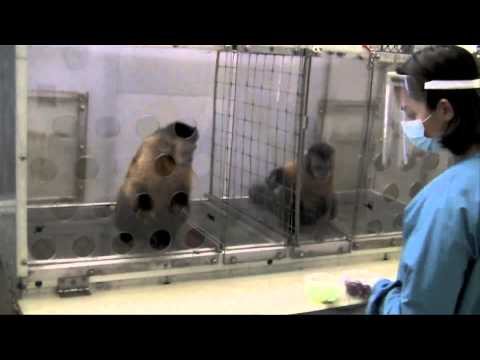
Two Monkeys Were Paid Unequally: Excerpt from Frans de Waal's TED Talk
Fairness Study with Capuchin Monkeys
In this section, the speaker discusses a fairness study conducted with capuchin monkeys and how it has been replicated with other animals such as dogs, birds, and chimpanzees.
The Experiment with Capuchin Monkeys
- Two capuchin monkeys were placed side by side in a test chamber.
- They were given a simple task to perform.
- Both monkeys were willing to perform the task when rewarded with cucumber.
- However, when one monkey was given grapes instead of cucumber, an inequity between them was created.
Reaction to Inequity
- The monkey receiving cucumber initially accepted it without any issue.
- However, upon seeing the other monkey receiving grapes, the first monkey became visibly upset.
- The upset monkey expressed its dissatisfaction by giving a rock back to the researchers.
- When given another piece of cucumber instead of grapes, the upset monkey continued to show frustration.
Replication and Observations
- This experiment has been replicated with different animals and similar reactions have been observed.
- The food preferences of these animals corresponded to their perceived value in terms of desirability or cost in supermarkets.
Conclusion
In this section, the speaker concludes the discussion on the fairness study with capuchin monkeys and highlights its implications for understanding fairness and inequity in various species.
Key Takeaways
- The fairness study involving capuchin monkeys demonstrated that they have a sense of fairness and react negatively when faced with inequitable treatment.
- This study has been replicated with other animals like dogs, birds, and chimpanzees, further supporting the idea that fairness is not unique to humans.
Overall, this research provides valuable insights into the evolution of fairness and the presence of a sense of fairness in non-human species. It raises questions about the origins and universality of fairness across different animals.