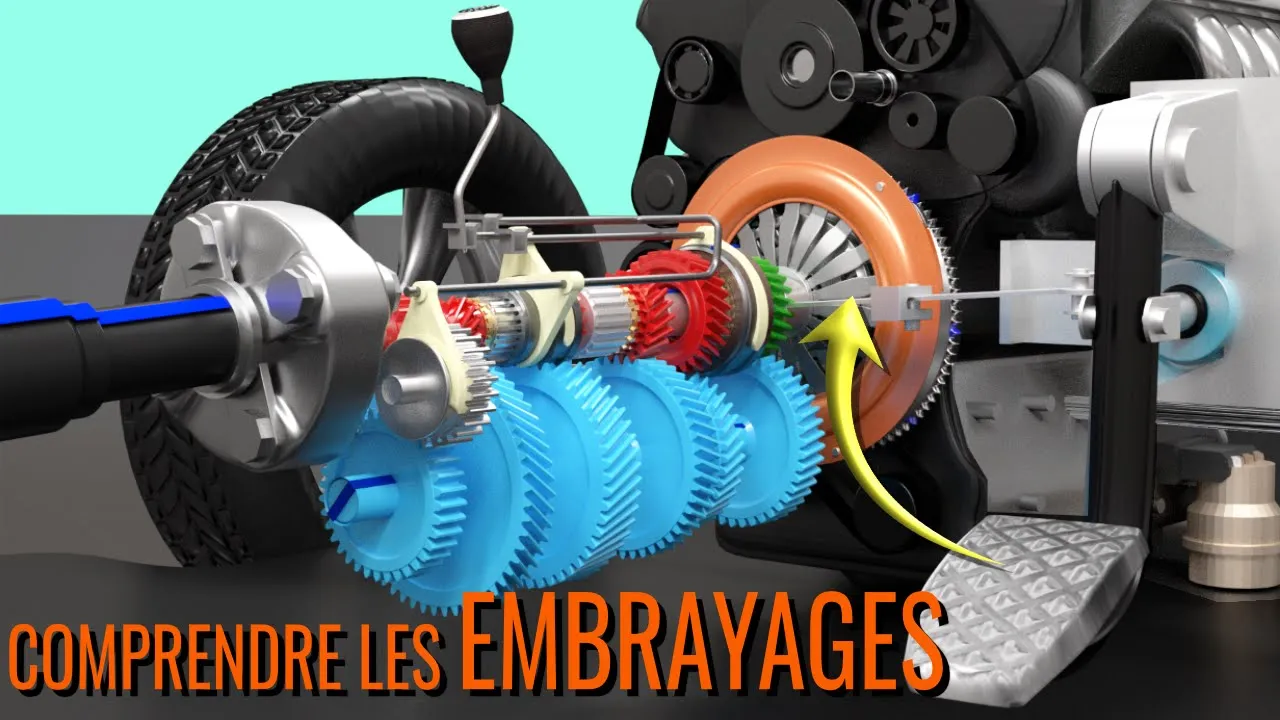
Un embrayage, comment ça marche ?
New Section
This section introduces the importance of understanding the functioning of a clutch in a manual transmission vehicle.
Understanding the Role of Clutch in Manual Transmission Vehicles
- The clutch plays a crucial role in hill starts, ensuring smooth power transfer.
- Transmission systems help maintain engine efficiency by adjusting wheel speed through gear changes.
- The clutch disconnects power flow without stopping the engine for gear shifts.
- Components like friction discs and pressure plates enable power transmission to the wheels.
- A diaphragm spring aids in power disconnection during gear changes.
New Section
This section delves into the mechanics of how power is disconnected using an automotive clutch system.
Mechanism Behind Power Disconnection with Clutch
- Diaphragm springs facilitate movement between pressure plates, enabling power interruption.
- Hydraulic systems transfer clutch motion to disengage power flow for gear changes.
- Helical springs on the clutch disc absorb engine power fluctuations for smoother operation.
- Springs ensure gradual power transfer from engine to wheels, reducing vibrations.
New Section
This part focuses on utilizing the clutch technique for uphill starts in manual transmission vehicles.
Uphill Start Technique Using Clutch
- Balancing brake and clutch pedals allows controlled uphill starts without rolling back.
- Partially engaging the clutch acts as a brake, preventing vehicle movement on slopes.