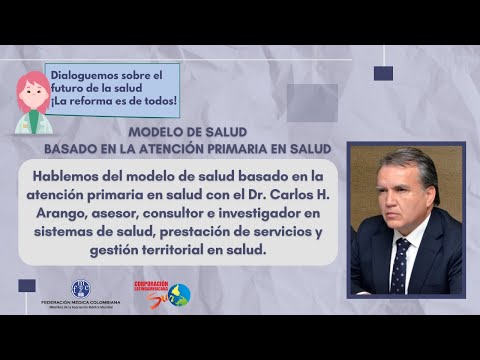
Modelo de salud basado en la atención primaria en salud | ¡La Reforma es de todos!
muy buenas noches un saludo muy especial a todos y todas quienes nos acompañan en el círculo de pensamiento sobre la reforma en la salud
Introduction to the upcoming debate on healthcare reform in the Senate, emphasizing public participation and understanding of the proposed changes.
Key Points:
- The healthcare reform debate is set to begin in the Senate on February 16.
- Public hearings are being conducted nationwide to engage citizens in the process.
- Focus on enhancing citizen participation and understanding of the proposed reforms.
importance of primary health care in healthcare reform
Discussion on the significance of primary health care within the healthcare reform agenda.
Key Points:
- Primary health care is a central aspect of healthcare reform.
- Dr. Carlos Arango, an expert in public health, will discuss primary health care implementation.
- Emphasis on understanding the role of primary health care in shaping healthcare systems.
professor Carlos Arango's expertise and contribution to healthcare reform
Highlighting Dr. Carlos Arango's background and involvement in shaping healthcare policies.
Key Points:
- Dr. Carlos Arango has extensive experience in public health research and system characterization.
- He contributed to fiscal impact studies and design of healthcare reforms.
- His insights will shed light on how primary health care is conceptualized within the reform agenda.
invitation to discuss primary health care implementation
Welcoming Dr. Carlos Arango for a detailed discussion on implementing primary health care reforms.
Key Points:
- Acknowledgment of various medical organizations for their participation.
- Dr. Carlos Arango will present for an hour followed by a Q&A session with the audience.
- Focus on gaining insights into primary health care implementation strategies.
Dr. Carlos Arango's role in shaping healthcare policies
Exploring Dr. Carlos Arango's contributions to recent studies influencing healthcare policy decisions.
Key Points:
- Dr. Carlos Arango participated in studies supporting technical aspects of proposed reforms.
- His involvement in strategic discussions shaped key elements presented in the current reform project.
- Emphasis on leveraging technical expertise to inform policy-making processes.
discussion on attention to detail regarding primary health care provisions
Delving into specific provisions related to primary health care within the proposed legislation.
Key Points:
- Detailed examination of technical foundations supporting primary health care provisions.
- Reviewing key elements that underpin the legislative framework for primary health care services.
Debate on Healthcare Models
In this section, the discussion revolves around the technical elements of healthcare models and their financial implications.
Technical Elements of Healthcare Models
- The debate continues on how to model a proposed healthcare model and evaluate its implementation.
- Public hospitals and workers' involvement in the model are discussed, along with its budgetary impact.
- Exploring the values proposed for healthcare reform and financing methods is highlighted.
- Territorial organization for healthcare services and functional structuring are considered for regional health system development.
Evolution of Primary Healthcare
This part delves into the evolution and significance of primary healthcare concepts over time.
Significance of Primary Healthcare Evolution
- Introduction to primary healthcare's approach in the 21st century is discussed.
- Evolution of primary healthcare policies from the 1970s to current times is explored.
- Importance of understanding primary healthcare's role in modern health systems is emphasized.
New Section
The importance of primary healthcare services and their role in addressing health inequalities is discussed.
Understanding Primary Healthcare
- Primary healthcare refers to essential, fundamental, and prioritized health interventions for all individuals, especially the most vulnerable populations.
- The concept of primary healthcare emphasizes the significance of actions that are essential, substantive, and central to achieving overall health goals within a society.
- Primary healthcare is not just about being the first point of contact but rather about emphasizing interventions that are integral to comprehensive healthcare delivery.
- Recognizing health as a fundamental human right has shifted the focus towards achieving the highest possible level of health for all individuals through multi-sectoral collaboration.
Evolution of Primary Healthcare
The evolution of primary healthcare from its inception to present-day considerations is explored.
Declaration of Astana
- Addressing health inequities has been a core aspect since the inception of primary healthcare initiatives globally.
- Efforts in primary healthcare aim not only to improve health outcomes but also to alleviate various forms of inequities prevalent within societies.
Ongoing Developments
- Declarations such as the Astana Declaration in 2018 mark significant milestones in advancing primary healthcare principles on a global scale.
New Section
The section discusses the evolution of healthcare systems and the importance of primary care in addressing various health challenges.
Evolution of Healthcare Systems
- In the 21st century, there is a growing focus on addressing issues related to equitable access to healthcare services, quality of care, patient safety, and workforce optimization.
- Challenges include suboptimal workforce utilization and the need to reform healthcare systems globally.
- Emphasis is placed on the significance of primary care as a cornerstone for healthcare systems worldwide.
- The Astana Declaration highlights primary healthcare as a fundamental right, emphasizing social justice, solidarity, peace, security, and economic development.
Another New Section
This section delves into the concept of universal health coverage and the burden of non-communicable diseases on global health.
Universal Health Coverage and Non-Communicable Diseases
- Universal health coverage aims at ensuring financial protection and aligning with sustainable development goals.
- Efforts are being made to strengthen primary care services in alignment with global objectives.
- Addressing non-communicable diseases like cardiovascular issues and metabolic disorders remains a significant challenge for healthcare systems worldwide.
Continuation Title
This part focuses on chronic conditions associated with aging populations and mental health challenges.
Chronic Conditions and Mental Health
- Over 80% of illnesses are attributed to non-transmissible diseases linked to aging, chronicity, oncological issues, cardiovascular problems, metabolic disorders, respiratory ailments, mental health conditions, and other biological system deteriorations.
- Aging-related health concerns contribute to chronic problems affecting various biological systems.
Final Section Title
The final segment emphasizes factors impacting premature mortality rates such as wars, violence, epidemics, natural disasters, climate change effects.
Premature Mortality Factors
- Premature deaths are influenced by environmental phenomena like wars, violence epidemics natural disasters climate change.
New Section
The speaker discusses the importance of focusing on promoting health and preventing diseases within various life contexts, emphasizing the need for practical implementation.
Importance of Health Promotion and Disease Prevention
- Emphasizes promoting health and preventing diseases in self-care, collective, and social participation contexts.
- Urges transitioning from discussing to implementing health promotion and disease prevention practices.
- Highlights the challenge of balancing resources between treating severe illnesses and prioritizing preventive measures.
- Stresses the need for practical emphasis on health promotion, prevention, well-being, and quality of life.
New Section
The speaker delves into the necessity of involving specialized medical care alongside primary care for effective health promotion and disease prevention strategies.
Integrating Specialized Medical Care for Health Promotion
- Advocates for collaboration between generalists and specialists in providing comprehensive healthcare services.
New Section
Discussion on allocating resources to primary care services for effective health promotion and disease prevention.
Resource Allocation in Primary Care
- Raises concerns about the proportion of resources allocated to primary care compared to overall healthcare spending.
New Section
Addressing the importance of aligning resource allocation with the significance of health promotion and disease prevention efforts.
Balancing Resources for Effective Healthcare
- Emphasizes the necessity of aligning resources with priorities such as primary care, prevention, and promotion.
New Section
Exploring challenges in balancing healthcare resources between primary care needs and high-cost medical interventions.
Challenges in Healthcare Resource Allocation
Desafíos en el Sistema de Salud
The speaker discusses challenges in the healthcare system, including regulatory processes, global shortage of healthcare workers, labor dignification issues, and rising healthcare costs.
Regulatory Processes and Integration
- Emphasizes the importance of a comprehensive regulatory process that integrates all essential elements harmoniously.
Global Healthcare Worker Shortage
- Highlights the worldwide problem of healthcare worker shortages affecting many countries.
Labor Dignification and Quality Issues
- Addresses the lack of labor dignification and quality employment within both public and private healthcare sectors.
Rising Healthcare Costs
- Discusses the challenge faced by healthcare systems globally due to increasing costs driven by biomedical advancements.
Impact of Technology on Healthcare Costs
The speaker delves into how technological innovations impact rising healthcare costs and the need for equitable resource allocation.
Inequity in Healthcare Systems
- Points out that inequity arises when resources are insufficient to address health issues adequately.
Collaboration for Cost Management
- Advocates for collaborative efforts from all stakeholders to manage costs effectively without compromising quality care.
Utilizing Technology for Common Goals
- Stresses the importance of leveraging technology within a common purpose to benefit individuals while maintaining cost-effectiveness.
Regulatory Framework for Technological Advancements
The speaker emphasizes the necessity of a robust regulatory framework to govern technological implementations in healthcare.
Effective Regulatory Measures
- Calls for an efficient regulatory framework with continuous monitoring and evaluation to ensure technology's appropriate use.
Resource Allocation Challenges
- Acknowledges the need for specialized funds or arrangements for high-cost, low-frequency medical interventions like rare diseases treatment.
Industry Best Practices
New Section
The speaker discusses limitations related to increasing healthcare costs and the concept of pooling resources to manage risks effectively.
Limitations in Healthcare Costs
- The speaker mentions limitations associated with rising healthcare costs.
- Illustrates the concept of pooling resources as a contemporary strategy to manage risks and resources effectively.
- Emphasizes the importance of ensuring universal coverage for all individuals, regardless of their financial situation.
- Highlights the progress made in allocating more resources to healthcare over the years, aiming for an average level compared to other regions.
New Section
The discussion continues on utilizing available resources efficiently within the healthcare system.
Efficient Resource Allocation
- Acknowledges the need to ensure access to healthcare services without financial barriers.
- Discusses the current model focusing on pooling resources and financing sources for effective resource management.
New Section
Addressing challenges faced by certain segments of the population in accessing healthcare services due to financial constraints.
Financial Constraints in Accessing Healthcare
- Mentions a segment of the population lacking proper access due to financial limitations.
Desafíos en el Sistema de Salud
The speaker discusses challenges within the healthcare system, focusing on issues related to financial protection and access to services.
Financial Protection and Access
- Approval processes have been streamlined, but challenges remain in recouping funds efficiently over the years.
- Concerns arise regarding the financial burden on individuals for services not covered by the current system.
- Emphasis is placed on finding mechanisms to address current benefit plan limitations and budget constraints affecting citizens' out-of-pocket expenses.
- Structural flaws in the healthcare system over the past 30 years have led to significant failures, hindering people's access to essential services.
Garantizar el Derecho a la Salud
Ensuring individuals' right to health is discussed, highlighting the need for effective service access despite financial protections.
Ensuring Right to Health
- Despite having financial coverage, many Colombians face challenges accessing quality healthcare due to operational issues within entities.
- It is deemed morally unacceptable that citizens cannot access services effectively due to operational failures within healthcare entities.
- The success of healthcare entities directly impacts individuals' health access, raising concerns about the current institutional framework's effectiveness.
Reformas Necesarias en el Sistema de Salud
The discussion shifts towards necessary reforms in the healthcare system to align incentives and improve primary care services.
Necessary Reforms
- Reforms are needed to ensure universal coverage while aligning incentives between insurers and providers for effective service delivery.
- Attention is drawn towards restructuring primary care models to enhance overall healthcare service organization effectively.
Modelo de Atención Primaria y Organización del Sistema de Salud
Exploring primary care models and organizational structures within the healthcare system for optimal service delivery.
Primary Care Model
New Section
Discusses the importance of addressing various issues simultaneously within a territorial framework to ensure essential healthcare services.
Understanding Territorial Framework
- The territory encompasses a population and an ecological framework where humans interact, highlighting the need to address multiple issues simultaneously within the healthcare system.
- Emphasizes the significance of redefining the concept of primary care within a well-structured territorial design to ensure effective governance and service delivery.
- Addresses the challenges in ensuring access to healthcare services for all citizens by identifying and overcoming barriers through effective territorial governance.
- Advocates for governmental intervention in organizing and regulating healthcare services within a territory to bridge accessibility gaps and improve service delivery.
Territorial Governance for Healthcare
Explores the role of territorial governance in facilitating access to healthcare services and addressing barriers effectively.
Role of Territorial Governance
- Highlights the fundamental role of territorial governance in coordinating diverse stakeholders, including public and private entities, to enhance access to healthcare services.
- Stresses the importance of collaborative efforts among various actors within a territory to identify and eliminate barriers hindering healthcare access for many individuals.
Challenges in Service Organization
Discusses the necessity for state intervention in organizing healthcare services within territories due to systemic challenges.
Addressing Systemic Challenges
- Critiques existing service organization models that rely heavily on third-party involvement, leading to inefficiencies and potential service disruptions during crises.
New Section
The speaker discusses the connectivity between municipalities and the importance of efficient connections for meeting various needs.
Municipality Connectivity
- Municipalities connect unidirectionally with each other.
- Emphasis on finding the most frequent and cost-effective connections to fulfill needs efficiently.
- Highlighting the significance of accessing services and facilities in different locations based on requirements.
New Section
The concept of clustering municipalities based on geographical proximity is explained, focusing on central hubs within these clusters.
Geographical Clustering
- Utilizing a mathematical and statistical model to cluster municipalities based on spatial geography.
- Identifying central hubs within micro clusters of municipalities.
- Discussing Girón's centrality within a group of municipalities compared to Bucaramanga.
New Section
The discussion revolves around the flow of Colombian citizens between municipalities, emphasizing primary healthcare services and social participation.
Flow of Citizens
- Exploring how Colombian citizens move between municipalities for various services primarily through road transportation.
- Stressing the importance of integrating primary healthcare services with social participation activities.
New Section
Addressing community involvement in improving living conditions, focusing on providing essential services and continuous monitoring.
Community Involvement
- Highlighting the necessity of engaging communities in addressing societal challenges effectively.
New Section
The speaker discusses the mandatory regulations related to health promotion and maintenance, maternal health, and the required healthcare services in different regions.
Mandatory Health Regulations
- Mandatory regulations focus on promoting and maintaining health, including maternal health.
- Specific healthcare services such as cervical cytologies and prostate antigen tests are required as per regulations.
- Planning healthcare services involves assessing the population in each subregion to determine service needs.
- Challenges exist in integrating various healthcare services effectively due to financial constraints.
New Section
The discussion shifts towards the need for a structured approach by the government to ensure access to healthcare services for all citizens.
Structured Approach for Healthcare Services
- There is a need for state-led organization of healthcare services at national and subnational levels.
- Collaboration between national, departmental, municipal authorities is essential for effective service planning.
New Section
The speaker elaborates on functional regions within the country based on clustering analysis.
Functional Regions Analysis
- The country is divided into nine functional regions with distinct centralities like Bogotá or other major cities.
- Further subdivision leads to 92 subregions based on clustering municipalities for better service planning.
New Section
Detailed models are discussed concerning territorial organization for social policies like healthcare.
Territorial Organization Models
- Various models are developed to aid in territorial organization, serving as inputs for future policy implementations.
- Mapping exercises help visualize territories and their interconnections using detailed cartography.
New Section
The focus shifts towards modeling primary healthcare services through public hospitals transformation.
Modeling Primary Healthcare Services
- Initial efforts involve modeling primary care through transforming public hospitals into state-owned enterprises.
New Section
Discusses the challenges faced by companies due to lack of direct regulation by the state in decision-making processes.
Challenges Faced by Companies
- Companies struggle with decision-making processes as the state no longer directly regulates them.
- Lack of regulatory mechanisms leads to issues in decision-making regarding services and portfolios.
- Companies face challenges without controls from the market or the state, resulting in institutional design flaws.
- Public hospitals are transformed into pseudo markets without proper mechanisms, leading to inefficiencies.
New Section
Analyzes a model classifying public hospitals based on services provided and locations.
Classification of Public Hospitals
- A model is created to classify public hospitals based on primary services offered and their distribution across the country.
- Identifies municipalities where most primary services are provided by public hospitals, creating a natural public monopoly.
- Focuses on municipalities with limited healthcare options, emphasizing the dominance of public hospitals in service provision.
New Section
In this section, the speaker discusses the dynamics of markets in relation to competition and healthcare services provided by public hospitals.
Dynamics of Markets and Healthcare Services
- Public hospitals serve 6 million people across 156 municipalities in Bogotá.
- Detailed work was done over 5 years to analyze primary services offered by public hospitals.
- A distinction is made between essential and complementary healthcare services.
- Primary services include generalist professionals, specialized clinical services, and ambulatory care.
New Section
Explanation of the services that should be provided to the population in terms of primary care, ranging from basic to specialized services.
Municipality Services
- Municipalities should provide a range of services based on primary care needs.
- Services are categorized from basic at the bottom to more specialized and sub-specialized at higher levels within the healthcare team.
Primary Care Structure
- Basic and generalist care teams address various demands, including emergencies and community health needs.
- The structure includes primary nodes for childbirth and emergencies, followed by basic hospitalization support.
- Specialized consultations are added based on population size and distributed across different healthcare facilities.
Service Distribution
- Services are allocated based on population sizes in each region.
- Different levels of healthcare facilities receive specific service portfolios according to their role in the healthcare system.
New Section
Discussion on how services increase in complexity based on population size, territorial organization, and healthcare needs.
Service Complexity
- Healthcare services become more complex as populations grow, reflecting regional or national scope for advanced procedures.
- Services vary from municipal to district levels based on population density and territorial organization.
Service Offerings
- A variety of medical procedures such as prostate biopsies, colonoscopies, cervical screenings, HIV tests, and nursing care are provided across different life stages.
New Section
The speaker discusses the importance of coordinating specialized healthcare services efficiently.
Coordinating Healthcare Services
- Specialized services are provided by hospitals and clinics, both public and private.
- Decisions on healthcare services should be made locally, not by third parties.
- Itinerant services can be organized to reach different regions efficiently.
Ordenamiento de Servicios de Salud
The speaker discusses the need to learn from successful health models in urban and rural areas to improve healthcare services.
Harmonizing Health Models
- In public hospitals, the lack of experienced staff leads to higher referral rates compared to when rural professionals work with experienced individuals.
- Having a mix of medical professionals, including those with experience, is crucial for handling diverse medical situations effectively.
- Strengthening generalist teams in primary public hospitals is essential by providing incentives for experienced medical professionals.
Modelación y Costeo en Hospitales Públicos
Detailed cost analysis and modeling were conducted for primary public hospitals to ensure adequate staffing and resources.
Cost Analysis
- A detailed cost analysis was performed, estimating the workforce needed in primary hospitals across 1122 municipalities.
- Formalizing all mission-critical workers in public hospitals was a key rule applied during the cost modeling exercise.
Financing Primary Healthcare
The discussion focuses on the financial aspects of providing quality primary healthcare services.
Financial Considerations
- The total cost estimation for restructuring and enhancing primary healthcare services in public hospitals amounted to 7.52 trillion pesos.
- Breakdown of costs included direct labor, indirect labor, operational expenses, medication costs, and general expenses within the hospital structure.
Healthcare System Funding
Exploring the funding sources and financial trends within the healthcare system.
Funding Sources
- Analysis of funding sources revealed that a significant portion (44%) of funds came from direct labor costs supported by all Colombians through national budget allocations.
Future Financial Projections
Future financial projections and considerations for expanding healthcare coverage are discussed.
Projections
Implications of Current Health System Financing
The speaker discusses the financing sources of the health system, emphasizing the contributions made by citizens and the challenges faced in maintaining the current contributory regime.
Understanding Citizens' Contributions
- The health system relies significantly on citizens' contributions, explaining a substantial portion of the funding.
- Contributors expect ownership rights over benefits and accountability from the system, leading to concerns about its sustainability.
Challenges in Health System Financing
The speaker presents graphs illustrating the growth in contributions and highlights concerns regarding future sustainability due to population dynamics.
Growth in Contributions
- Contributions are projected to grow mainly due to population size without an expected increase in job opportunities.
- Predictions suggest a shift towards higher contributions and reduced subsidies based on population growth trends.
Factors Influencing Financial Behavior
The speaker discusses consistent financial behaviors within the health system and potential influences that could alter these patterns.
Financial Behavior Patterns
- Both citizen contributions and national funding exhibit regular behavior patterns regardless of reforms or external factors.
- Anticipated market pressures from pharmaceutical innovations may disrupt current financial trends.
Future Projections and External Influences
Future projections consider technological advancements, changing consumer behaviors, and potential exceptional events impacting financial stability.
Projected Trends
- Technological advancements and societal shifts could introduce unforeseen variables affecting financial stability.
- Consumer behavior changes or unexpected events like pandemics may lead to fluctuations in financial projections.
Role of General Participation Systems
Exploring how general participation systems allocate funds between national and local levels for healthcare financing purposes.
Fund Allocation Dynamics
- Funds transferred through general participation systems play a crucial role in healthcare financing at both national and local levels.
Adapting Resources to Potential Reforms
The discussion revolves around adapting resources to potential reforms in the context of a specific calculation related to healthcare expenditure.
Adapting to Potential Reforms
- Resources need adaptation to align with potential reforms and competencies.
- Incremental adjustments are made to justify increased primary healthcare funding.
- Increased funding aims at developing primary care services, including specialized outpatient care.
- Specialized medical teams are planned for subregions based on health profiles.
Efficiency and Resource Allocation
This section delves into the importance of efficient resource allocation and strategies for safeguarding funds in the healthcare system.
Efficient Resource Allocation
- Funds must protect high-complexity services through efficient allocation strategies.
- Emphasis is placed on specialized services for specific populations requiring costly technologies.
- Proposals include managing high-cost technologies through a dedicated fund supported by national initiatives.
Enhancing Primary Care Services
The focus shifts towards enhancing primary care services through strategic financial planning and service optimization.
Enhancing Primary Care
- Models like the rotating fund with OPS support are suggested for procuring vaccines efficiently.
- Examples of successful fund models can be extended to manage rare diseases effectively.
Investment in Primary Healthcare
This part emphasizes the investment in primary healthcare services and workforce development for comprehensive care delivery.
Investment Focus
- Approximately one-fourth of total health expenditure is allocated to primary care enhancement.
New Section
Discusses the role of mental health and alternative therapies in primary care.
Role of Mental Health and Alternative Therapies
- Integrating mental health into primary care is essential.
- Exploring the incorporation of alternative therapies alongside traditional medicine in primary care settings.
New Section
Questions related to primary care, territories, and financial flows are discussed.
Primary Care Questions
- Addressing the role of mental health in primary care and integrating alternative therapies.
New Section
Discussing the interaction with control entities, audits, and service quality expectations in healthcare management.
Tackling Control Entities and Audits
- The need to engage with regulatory bodies and internal audits of the healthcare provider to assess compliance with service quality standards.
Service Quality Expectations
- Emphasizing the importance of meeting specified service quantity, type, and delivery standards in healthcare provision.
Exploring Regional Healthcare Characteristics
Analyzing similarities in lifestyle, culture, and economic activities within subregions for tailored healthcare services.
Subregional Characteristics
- Identifying commonalities in lifestyle, customs, language, and economic activities among municipalities within subregions.
Tailored Healthcare Services
- Adapting healthcare services based on unique characteristics of subregions to address specific population needs effectively.
Customized Healthcare Approaches
Addressing the need for personalized healthcare strategies based on regional demographics and requirements.
Population Diversity Impact
- Tailoring medical services according to ethnic group concentrations or urban-rural dynamics within subregions.
Equitable Distribution of Healthcare Resources
Ensuring fair allocation of resources based on varying needs across different regions.
Resource Allocation Strategies