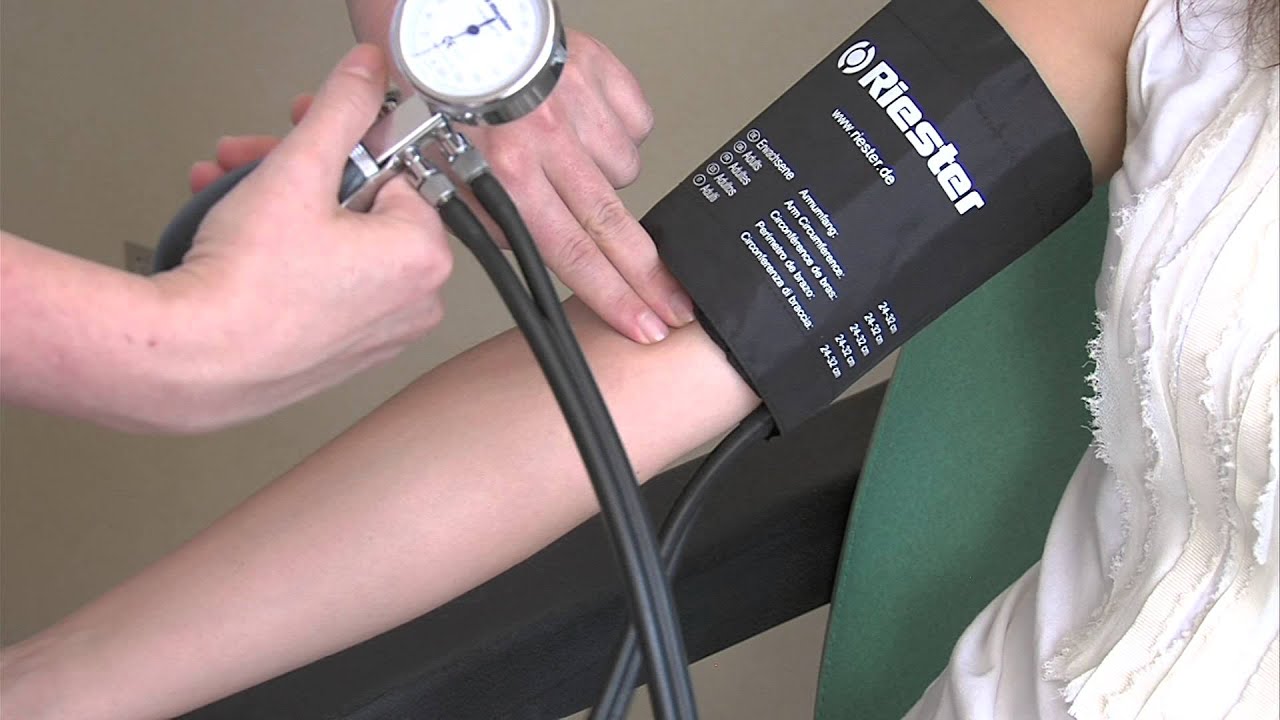
C. Vitales. Procedimientos para la toma de la presión arterial en la práctica clínica. Vídeo 4
Vital Signs and Blood Pressure Measurement
Introduction to Vital Signs
- Vital signs include pulse, respiratory rate, blood pressure, and temperature, serving as basic indicators of a patient's health status.
- This video focuses on blood pressure as part of a series discussing vital signs.
Importance of Monitoring Vital Signs
- Regular observation and measurement of vital signs are crucial for assessing an individual's physical condition or clinical evolution.
- Normal ranges for vital signs vary based on age and physical condition; thus, initial examinations provide essential information about patients' overall health.
Understanding Blood Pressure
- Blood pressure is the force exerted by circulating blood against artery walls, necessary for delivering oxygen and nutrients throughout the body.
- It consists of two components:
- Systolic Pressure: The maximum pressure during heartbeats (systole).
- Diastolic Pressure: The minimum pressure when the heart rests between beats (diastole), influenced by vascular resistance.
Measuring Blood Pressure
- The difference between systolic and diastolic pressures is known as pulse pressure. A sphygmomanometer is used to measure blood pressure, typically at the arm. Normal readings are below 120/80 mmHg; hypertension is diagnosed at or above 140/90 mmHg.
Components of a Sphygmomanometer
- A sphygmomanometer includes:
- A manometer (mercury or aneroid) to measure air pressure.
- An inflatable cuff that wraps around the patient's arm.
- A rubber bulb for inflating the cuff.
- Connecting tubes linking these components together.
Types of Sphygmomanometers
- There are three types:
- Mercury Column: Most reliable but being phased out due to EU regulations.
- Aneroid Dial: Commonly used in clinics; requires periodic calibration.
- Electronic Devices: Automate inflation and measurement processes.
Best Practices for Taking Blood Pressure
- Preferably taken by nursing staff to reduce anxiety-related spikes in readings; ensure all materials are ready beforehand and wash hands before proceeding. The environment should be quiet to minimize stress factors during measurement.
Patient Preparation
- Patients should be physically relaxed, avoiding anxiety-inducing situations prior to measurement (e.g., waiting times or pain). They should refrain from smoking, alcohol, or caffeine half an hour before testing and have an empty bladder if possible. Ideal positioning involves sitting comfortably with their back supported and legs uncrossed while keeping their arm at heart level without constrictive clothing over it.
Procedure for Measurement
- Allow at least five minutes of rest before taking measurements using mercury sphygmomanometers positioned at eye level with the observer's line of sight aligned with the gauge reading.( t =417 s )
Korotkoff Sounds in Measurement
How to Measure Blood Pressure Accurately
Understanding Blood Pressure Measurement
- The process of measuring blood pressure involves monitoring the sounds produced as pressure in the cuff decreases, indicating turbulent blood flow between systolic and diastolic pressures.
- Proper preparation is essential: wash hands, ensure patient is seated comfortably with their back supported, and expose the upper arm for accurate measurement.
- Positioning the arm correctly is crucial; it should be flexed with the palm facing up at heart level. The cuff must be placed 2-3 cm above the elbow crease.
Steps for Accurate Measurement
- Begin by palpating the brachial pulse to locate it accurately before inflating the cuff. This helps in determining when to stop inflating based on pulse disappearance.
- After noting where the pulse disappears, fully deflate the cuff and wait one or two minutes before taking another reading to ensure accuracy.
- When using a stethoscope, position it over the brachial artery while inflating the cuff until it's about 30 mmHg above where you felt no pulse.
Interpreting Results
- As air is released from the cuff slowly, listen for Korotkoff sounds; these indicate systolic pressure when they first appear and diastolic pressure when they disappear.
- Record both systolic and diastolic pressures accurately. If there are discrepancies between arms greater than specified limits, further investigation may be needed.
Common Errors in Measurement
- Despite its simplicity, blood pressure measurement can often be unreliable due to common errors such as improper stethoscope placement or using an incorrectly sized cuff.
- Other frequent mistakes include leaving clothing on that compresses arteries or holding onto the cuff during measurement which can affect readings significantly.
Factors Influencing Blood Pressure Readings
- Blood pressure fluctuates throughout daily activities; it typically rises during exercise or emotional stress and decreases during rest periods.