13. Jacques Lacan in Theory
Understanding Lacan's Desire and Narrative
Introduction to the Lecture
- Prof. begins by acknowledging the audience's potential post-paper depression, suggesting that many may not have had time to engage with Lacan's complex essay.
- He encourages attendees to take notes and revisit Lacan’s text for deeper understanding, emphasizing the importance of participation.
Connection Between Brooks and Lacan
- The professor highlights a significant link between Peter Brooks' work and Lacan’s essay, focusing on how both address desire in narrative structures.
- Brooks views fictional narratives as sustaining desire through detours, leading to proper endings that resonate with Freud's ideas about death drive.
Metonymy and Unity in Narrative
- Brooks describes metonymy as a sequence of narrative events that create a sense of unity despite being marked by delays in desire fulfillment. This is linked to Jakobson’s theories on sign combination.
- The concept of metaphor is introduced as an effect that provides unity within plots, allowing readers to perceive coherence amidst diverse events.
Desire and Its Deferral
- The lecture discusses how both Brooks and Lacan explore the deferral of desire; for Lacan, this reflects a fundamental aspect of human experience where desires remain unfulfilled.
- The professor draws parallels between Freudian concepts of dream work (condensation/metaphor & displacement/metonymy) and their relevance in understanding unconscious desires according to Lacan.
Distinction Between Need and Desire
- A critical distinction is made by Lacan between what we need versus what we desire; he posits that while needs can be satisfied sociobiologically, true desires remain elusive psychoanalytically.
Understanding Lacan: Desire vs. Need
The Distinction Between Desire and Need
- The speaker emphasizes the importance of distinguishing between desire and need, suggesting it is a crucial concept to grasp when feeling confused about these terms.
- The discussion introduces Jacques Lacan's structuralist and psychoanalytic perspectives, indicating that further exploration of his ideas is necessary for deeper understanding.
Different Facets of Lacan
- There are multiple interpretations of Lacan; one relevant to literary studies is represented in the current text, though it lacks some key concepts like his triadic distinction among the real, imaginary, and symbolic.
- Another interpretation relates to film studies, particularly concerning "the gaze," which involves complex negotiations among Lacan's three realms (real, imaginary, symbolic).
Tone and Hostility in Lacan's Work
- The essay exhibits a tone filled with hostility and condescension from Lacan towards others in the field, especially those he believes distort Freud’s legacy.
- Ego psychologists are critiqued by Lacan; they start with Freud’s idea that a stable ego should emerge from unconscious drives but this notion is rejected by him.
Critique of Ego Psychology
- Lacan challenges the belief that psychoanalysis leads to a stable sense of self or identity through maturation or analysis.
- He argues against the presupposition of stable human subjectivity inherent in traditional psychoanalytic thought.
Conceptualizing Subjectivity
- For Lacan, consciousness does not equate to individual uniqueness; rather, there exists continuity within consciousness that complicates notions of individuality.
- While he acknowledges limited individual subjectivity due to unconscious complexity, he denies that this can lead to an autonomous sense of self.
Clinical Work: Mirror Stage
- Despite being speculative in nature regarding psychoanalytic philosophy, one significant clinical contribution from Lacan is his work on the mirror stage conducted in the 1930s.
Understanding Lacan's Mirror Stage
The Concept of the Mirror Stage
- The mirror stage occurs when a baby, in the anal phase, recognizes itself in a mirror. This moment signifies a shift from identifying with the mother to recognizing its own existence as separate.
- The baby sees a coherent and coordinated image of itself in the mirror, contrasting its fragmented physical state. This recognition brings about feelings of self-acceptance.
- In this moment, the baby acknowledges itself as an object of desire, particularly that of the mother. It realizes it is worthy of being desired, marking a pivotal point in identity formation.
Transition into Language and Identity
- Following this recognition, the baby enters language, which complicates its sense of self. It no longer perceives itself as an idealized version but rather confronts its lack of identity and name.
- The introduction of "the name of the father" symbolizes authority and societal structure but also highlights competition in desire. The child begins to recognize what it lacks compared to others.
Lacan's Revision of Freud
- Lacan revises Freudian concepts by asserting that desire is not rooted in physical objects but is symbolic. This distinction emphasizes that what one desires is often unattainable.
- Desire manifests through symbolic forms rather than tangible ones; it reflects an ego ideal shaped by language and social constructs rather than mere physicality.
Language's Role in Desire
- Lacan discusses how language introduces complexities into desire through an asymptotic structure—desire curves toward fulfillment but never fully reaches it.
- He notes that moments where metaphor reveals symptoms are crucial for understanding desire’s elusive nature; these moments act as points where meaning can be constructed despite ongoing lack.
Structure of the Unconscious
- Lacan posits that "the unconscious is structured like a language," indicating that while it operates similarly to linguistic systems, it does not equate to human language directly.
Understanding Lacan's Concept of the Unconscious
The Structure of the Unconscious
- Lacan posits that the unconscious is structured like a language, differing from traditional views that see it as instinctual or primal. This suggests that language plays a crucial role in shaping our unconscious thoughts and desires.
Language and Thought
- According to Lacan, language does not merely express thought; rather, it constitutes thought itself. This means consciousness and meaning arise through linguistic structures, challenging materialist perspectives that prioritize physical reality over language.
Critique of Philosophical Traditions
- Lacan critiques both Marxism and positivism for their emphasis on material conditions or external realities as determinants of consciousness. He argues instead for the primacy of language in shaping our understanding of reality.
The Role of Signifiers
- In Lacanian theory, what we typically refer to as "instinctual drives" are actually signifiers within a linguistic framework. He emphasizes that consciousness begins with these signifiers—what he refers to as "the letter." This challenges conventional notions about the relationship between language and meaning.
Metaphor and Metonymy in Discourse
- Lacan aligns with Jakobson’s ideas regarding metaphor and metonymy, suggesting they play significant roles in both everyday communication and psychopathology. These concepts illustrate how unconscious processes manifest linguistically, often leading to forms of aphasia when taken to extremes.
Saussure vs. Lacan: Signifier Dynamics
- Unlike Saussure's model where the signified is prioritized over the signifier, Lacan asserts that the signifier generates meaning while access to the signified remains barred or unattainable. This distinction highlights a fundamental difference in their theories regarding how meaning is constructed within language systems.
Conclusion on Signification
Understanding Desire and Signification
The Nature of Desire
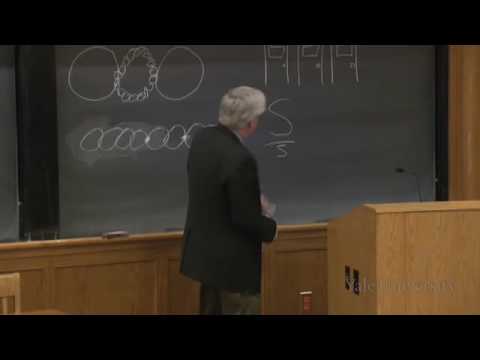
- The concept of desire is explored through the metaphor of a "red light over a door," which signifies desire but raises questions about what exactly is desired.
- A dialogue between children about arriving at "Gentlemen" and "Ladies" suggests an initial understanding of hetero-normative desire, yet it prompts deeper inquiry into the meaning behind these terms.
- The discussion highlights that the visible signified (the door) does not equate to true desire; rather, it reflects personal comfort rather than genuine longing for "hommes" or "femmes."
Language and Signifiers
- Lacan's anecdote introduces characters reminiscent of Nabokov's work, illustrating how individuals are barred from their desires due to reliance on substitutes that do not fulfill true needs.
- This leads to the conclusion that what appears as expressions of desire are often mere expressions of need, as individuals cannot fully grasp or articulate their true objects of desire.
Metonymy and Metaphor in Discourse
- Desire is characterized by an endless deferral within discourse, where signifiers shift without ever reaching the object they signify.
- Lacan’s model illustrates how signifiers connect in concentric rings, reflecting Saussure's associative structure in language—showing how certain signifiers cluster together while others do not.
The Role of Symptoms
- Moments when metaphor occurs are significant; they represent poetic manifestations and symptoms revealing awareness of lacking an object of desire.
- Symptoms express this lack in a displaced manner, allowing for moments where one can recognize but not possess their object of desire.
Quilting Points in Signification
- Lacan uses the analogy of quilting buttons to describe how metonymic signification is held together by key points (points de capiton), which help stabilize meaning for analysts and interpreters.
Lacan's Insights on Possession and Desire
The Nature of Possession
- Lacan discusses the implications of the word "his" in relation to possession, suggesting that it introduces themes of miserliness and spitefulness inherent in capitalist competition.
- Boaz is symbolically substituted by "his sheaves," indicating a complex relationship between identity and objectification during the Oedipal phase.
- The line presents both metonymic and metaphoric readings, highlighting an irreducible tension in interpreting Boaz's character as either generous or miserly.
Metaphor vs. Metonymy
- Lacan's perspective aligns more closely with de Man than with Jakobson or Brooks regarding the conflict between metaphor and metonymy, despite Jakobson being a primary influence on Lacan’s thought.
- Language is described as a rebus; the movement of signifiers reflects desire but also articulates a fundamental lack, complicating our understanding of meaning.
The Role of Language
- Lacan posits that language shapes our thinking: "I think where I am not, therefore I am where I do not think," emphasizing that our self-awareness is mediated through discourse.
- This leads to the realization that we cannot fully identify ourselves within language; our identities are constructed through discourse rather than direct self-recognition.
Desire vs. Need
- The distinction between desire and need is crucial in understanding human experience; while we may be satisfied with what we need, desire remains elusive.
- Fictional narratives often illustrate this distinction, revealing how characters confront unattainable desires despite achieving certain objects.
Analysis of Film and Fiction
- Å―iÅūek’s essay "Courtly Love" explores how fictional plots reflect Lacanian concepts, particularly regarding the impossibility of attaining the Big Other.