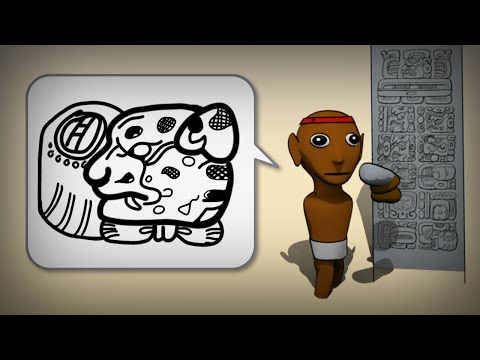
What's hiding inside Maya glyphs - History of Writing Systems #6 (Syllabary)
What Can Ancient Mesoamerican Scripts Teach Us About Writing?
The Nature of Maya Glyphs
- The Maya script, initially perceived as ancient art, is a sophisticated written language that reveals insights into the history of writing.
- A specific glyph represents "mountain" not as a logograph but through sound symbols spelling "witz," showcasing the phonetic nature of the script.
- The Classical Maya script employs a full syllabary, allowing for efficient representation of sounds with fewer characters compared to logographic systems.
Challenges in Syllable Writing
- Syllable-based writing presents challenges, particularly in representing final consonants; for example, "balam" (jaguar) ends with "-lam."
- Two solutions exist for this issue: underspelling (ignoring the final letter) and using an echo vowel to indicate pronunciation without fully spelling it out.
Creative Use of Logographs and Syllables
- The Maya scribe demonstrates creativity by writing "balam" in various forms—using logographs and syllables interchangeably.
- This flexibility highlights the tension between sound writing and meaning writing, where both systems can coexist to enhance clarity.
Phonetic Complements in Writing
- Phonetic complements serve as pronunciation clues alongside logographs; they clarify how to read glyphs like “jaguar” as “balama,” minus the echo vowel.