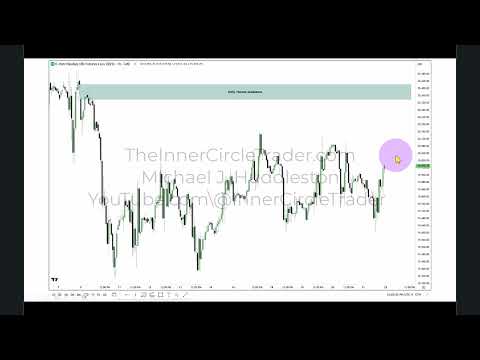
2025 Lecture Series - Algorithmic Timing & Journaling \ 03/22/2025
Weekly Summary: March 21st, 2025
Overview of the Week
- The session begins with a welcome and an introduction to the weekly summary for the week ending March 21st, 2025. The speaker mentions plans for future sessions on Saturdays or Sundays depending on their health.
Personal Health Update
- The speaker expresses gratitude for audience patience due to infrequent video uploads caused by health issues. They are currently experiencing significant pain which affects their ability to produce content.
Market Focus: Nasdaq Analysis
- The discussion shifts to analyzing the Nasdaq market using a continuous chart from TradingView, specifically focusing on futures contracts for June 2025.
Opening Price Considerations
- Emphasis is placed on the uncertainty surrounding Sunday’s opening price, which will dictate market analysis and projections for the upcoming week.
Technical vs. Fundamental Analysis
- The speaker discusses their preference for technical analysis over fundamental data due to its reliability in providing actionable insights despite complexities in interpreting fundamentals.
Volume Imbalance Insights
Market Analysis and Predictions
Current Market Sentiment
- The speaker believes that if Thursday's high is surpassed, it could lead to further upward movement in the market. They anticipate a potential gravitation towards higher prices unless there is a rejection at that level.
- The speaker emphasizes their approach of monitoring financial headlines for significant dates or events, such as tariffs, which may influence market sentiment. They prefer to fade these headlines rather than follow them blindly.
Tariff Implications and Price Expectations
- The speaker expresses skepticism about reaching previous highs, suggesting that current technical indicators do not support a bullish outlook. They expect lower prices leading up to April 2nd due to ongoing uncertainties.
- A detailed analysis of price action indicates that the current trading range has weak links; thus, there might be an attempt to revisit certain price levels before potentially rolling over.
Trading Strategy Insights
- The speaker discusses the importance of understanding price action dynamics and suggests that revisiting specific candlestick formations could provide insights into future movements.
- If the market does not rebound next week, it would indicate weakness with targets set below 19,000. This highlights the need for careful observation of Sunday’s opening prices.
Technical Analysis Overview
- An hourly chart illustrates daily volume imbalances and trading ranges throughout March. Trusting past trading experiences is crucial for making informed decisions moving forward.
- The speaker identifies key areas within the trading range where they expect potential rejections or breakouts based on historical price behavior.
Risk Management and Precision in Trading
- Emphasizing nimbleness in trading strategies within prolonged ranges allows traders to capitalize on smaller fluctuations without needing extreme movements outside established boundaries.
- The discussion includes using Fibonacci retracement levels (80% and 20%) as critical markers for identifying entry points or targets during intraday trades.
Conclusion on Trade Execution
- The speaker reflects on their precision in setting limit orders near identified lows but acknowledges the challenges when orders are not filled despite favorable conditions.
Understanding Trading Dynamics
The Nature of Trading and Liquidity
- The speaker emphasizes that a trader's inability to fill an order is not a weakness but rather a common occurrence in real-money trading, highlighting the importance of understanding liquidity pools.
Analyzing Price Movements
- A specific price action is discussed where the market traded just below a low before moving higher, indicating significant trading opportunities. Viewers are encouraged to pause and analyze this movement interactively.
Interactive Learning Approach
- The speaker stresses the importance of active participation in learning by pausing the video to reflect on price movements instead of passively watching, which can lead to missed opportunities.
Importance of Note-Taking
- Emphasizing effective learning strategies, the speaker urges viewers to take notes during lectures for better retention and application of information in their trading practices.
Candlestick Analysis
- A specific candlestick at 10:00 AM on Thursday is highlighted as crucial for future analysis. Viewers are advised to annotate this moment for reference later in the review.
Price Action Insights
Understanding Balance Price Ranges
- The discussion focuses on identifying balance price ranges and how they relate to market lows and highs, encouraging traders to think critically about these levels.
Algorithmic Trading Considerations
- The speaker challenges skeptics regarding algorithmic trading by suggesting that there may be underlying mechanisms influencing price actions, prompting viewers to consider how algorithms might operate within market dynamics.
Timing and Market Behavior
- Questions are raised about when algorithms would influence prices, suggesting that both bullish and bearish phases could reveal patterns observable even in intraday charts.
Engagement with Audience Queries
Understanding Algorithms in Trading
The Role of Comments and Engagement
- The speaker expresses a desire to engage with positive comments on their YouTube channel, emphasizing that they are not hiding from criticism but rather want to appreciate supportive feedback.
- They encourage viewers to interact directly via social media platforms, indicating openness to discussion and critique.
Challenging the Concept of Randomness in Market Algorithms
- The speaker prompts listeners to consider the implications of having an algorithm in trading, suggesting that it should lead to predictable price movements rather than randomness.
- They argue that if algorithms exist, there should be observable patterns or signatures in market behavior that can be analyzed over time.
Time-Based Signatures and Market Behavior
- The speaker discusses the importance of recognizing time-based price runs as evidence of algorithmic trading, asserting that these patterns can serve as a litmus test for their theory.
- They differentiate between various types of algorithms used by institutions, stressing the need for identifiable time-based signatures in trading data.
Real-Life Applications and Success Stories
- The speaker shares success stories from students who have effectively utilized their teachings to achieve significant financial gains through regulated brokers.
- They express satisfaction with seeing students succeed using their methods, reinforcing the effectiveness of their educational approach.
Addressing Skepticism About Algorithmic Trading
- The speaker challenges skeptics by stating that if one cannot disprove the existence of algorithms influencing market prices, they lack a valid argument against it.
- They highlight concerns about random markets being unpredictable and potentially dangerous compared to structured algorithm-driven environments.
Specific Trading Macros and Patterns
- Discussion includes specific macros within trading hours (e.g., lunch macro), which are critical times when price movements are more pronounced due to algorithmic influences.
- The speaker recounts personal experiences where they accurately predicted market movements during crucial trading periods, showcasing practical applications of their theories.
Motivation Behind Teaching Trading Strategies
- Despite personal health struggles, the speaker remains committed to sharing knowledge about trading strategies and encourages viewer feedback for motivation.
Understanding Market Dynamics and Trading Strategies
The Importance of Feedback in Learning
- The speaker emphasizes that providing feedback is a valuable currency exchange in the learning process, encouraging participants to express their appreciation or critique.
- Acknowledges that while not everyone can be convinced about market dynamics, there is a strong push against the belief that no algorithm exists in trading.
New York Kill Zone Explained
- Introduction to the "New York Kill Zone," which spans from 7:00 AM to 9:00 AM Eastern Time, crucial for Forex trading.
- Clarifies that this period represents pre-market trading ahead of the official market opening at 9:30 AM Eastern Time.
Analyzing Market Movements
- Discusses analyzing NASDAQ movements during the specified time frame, highlighting relative equal highs and liquidity challenges.
- Mentions leaving out certain chart details intentionally to focus on journaling practices that enhance trading skills.
Liquidity and Market Shifts
- Explains how breaking below short-term lows indicates a shift towards bearish market conditions.
- Describes an "institutional order flow entry drill," where candlestick patterns indicate potential price movements based on previous candle behavior.
Fair Value Gaps and Price Ranges
- Introduces concepts of fair value gaps and balanced price ranges as critical indicators for anticipating market behavior.
- Highlights how displacement below certain price levels can signal significant market shifts, emphasizing the importance of monitoring these changes closely.
Drawing Liquidity Insights
- Discusses prior communications about expected market behaviors shared via Telegram, indicating a community approach to understanding liquidity draws.
Understanding Market Dynamics During FOMC Week
The Impact of FOMC on Market Predictions
- The speaker discusses the unpredictability of market movements during FOMC week, emphasizing that not all predictions will be accurate despite established concepts.
- Acknowledges that imperfections in analysis are common, especially after significant events like the FOMC meeting.
Analyzing Price Movements and Gaps
- Introduces the concept of a measuring gap as the market breaks down, referencing specific price levels from previous trading ranges.
- Highlights the importance of Fibonacci retracement levels, particularly focusing on aligning these with key price points to identify potential gaps.
Identifying Implied Dealing Ranges
- Discusses how to anticipate where measuring gaps may form based on liquidity draws and equilibrium points within price swings.
- Defines "implied dealing range" as an incomplete price run, suggesting it can help traders set targets for future movements.
Practical Application of Concepts
- Emphasizes the significance of understanding breakaway gaps and their relation to anticipated price ranges, noting that they often occur near 20% to 30% thresholds.
- Shares personal insights into developing new concepts like implied dealing ranges while acknowledging traditional gap types discussed in literature.
Confirmation Through Price Action
- Explains how bodies (closing prices) align with Fibonacci levels to confirm measuring gaps, indicating successful projections in market behavior.
- Describes a scenario where market wicks indicate minor deviations below expected levels but ultimately return to projected areas, reinforcing analysis accuracy.
Anticipating Future Market Movements
- Concludes by discussing shifts in market structure following confirmed measurements and how this can signal potential upward trends if certain highs are broken.
Understanding the 30-Minute Opening Range
The Concept of Opening Range
- The opening range is defined as the period from 9:30 to 10:00 AM Eastern Time, emphasizing a 30-minute window for analysis.
- Other interpretations exist (5 or 15 minutes), but the speaker insists that only the 30-minute range provides valid insights.
Importance of Fair Value Gaps
- Identifying the high and low of this range is crucial for determining fair value gaps, which are essential for trading strategies.
- Traders should focus on first presented fair value gaps within this timeframe, as they represent significant market opportunities.
Trading Strategies and Models
- Various trading models can be employed, including order blocks and volume imbalances; however, fair value gaps are highlighted as particularly effective.
- The algorithmic nature of market movements ensures that smart money leaves traces in these gaps during the initial half-hour.
Critique of Alternative Methods
- The speaker dismisses single print methods used by others in trading discussions, asserting their ineffectiveness compared to his approach.
- He argues that if alternative methods were truly effective, more traders would demonstrate similar precision in their results.
Community Perception and Misunderstandings
- There’s a concern about followers blindly accepting opinions from influencers without conducting personal research into his methodologies.
Understanding Fair Value Gaps in Market Structure
Introduction to Fair Value Gaps
- The discussion begins with the importance of recognizing algorithms in trading, emphasizing that understanding fair value gaps is crucial for market analysis.
- A small fair value gap is identified on a one-minute timeframe, which did not significantly impact price movement or create lower lows.
Market Structure and Price Action
- The speaker notes that the market structure remains intact within the opening range from 9:30 to 10:00 AM Eastern Time, indicating a potential upward movement after testing previous lows.
- It’s highlighted that algorithms control price delivery, and understanding their logic can provide insights into market behavior.
Analyzing Trading Dynamics
- The absence of selling pressure below certain lows suggests a shift towards buying activity, indicating more buyers are entering the market.
- The speaker emphasizes that their observations are based on factual data rather than opinions, aiming to inspire viewers to journal their findings.
Identifying Significant Fair Value Gaps
- A specific fair value gap from March 21st, 2025, is discussed as an example of how these gaps typically behave when prices trade back into them.
- The concept of larger fair value gaps being more significant than smaller ones is introduced; this relates to overall market sentiment and direction.
Breakouts and Market Behavior
- When the market breaks above the opening range high without closing above it, it indicates bullish potential but requires careful observation.
- The "silver bullet" phenomenon occurs daily at around 10:00 AM; this consistent pattern highlights algorithmic trading's reliability in predicting price movements.
Conclusion on Market Analysis Techniques
Market Dynamics and Trading Strategies
Understanding Market Shifts
- The market is transitioning to a bullish phase, indicated by breaking above the opening range high and visible liquidity in charts.
- An inversion fair value gap forms as the market retraces, creating a pseudo market maker buy model that signals potential buying opportunities.
- A significant trade occurs when the market displaces upwards, running buy-side liquidity within the inversion fair value gap.
Opening Range Analysis
- The opening range is consistently defined as the first 30 minutes of trading (9:30 to 10:00 AM Eastern Time), crucial for algorithmic trading strategies.
- Fibonacci levels are applied to analyze price movements within the opening range, particularly focusing on upper and lower quadrants for bullish setups.
Lunch Macro Timing
- The lunch macro begins at 11:30 AM Eastern Time, marking a period where previous price actions influence future movements.
- Anticipating retracement during this time can lead to strategic entries based on prior price behavior and resting buy-side liquidity.
Trade Execution Strategies
- Traders can utilize various strategies such as inversion fair value gaps or turtle soup patterns to capitalize on upward momentum after hitting key levels.
- Standard deviations from the opening range help identify potential targets; trades often reach these levels after taking out buy-side liquidity.
Closing Insights on Market Structure
- After reaching standard deviation targets, attention shifts back to previously established gaps for further analysis of bullish trends.
Market Analysis and Trading Insights
Understanding Fair Value Gaps
- The speaker discusses the significance of the opening range high and identifies a fair value gap, suggesting a narrative behind market movements that some may overlook.
- There is speculation about opposition trying to dilute attention on these concepts, emphasizing that criticisms are unfounded and can be proven wrong through consistent analysis.
Market Movements and Trading Strategies
- The market's behavior is analyzed as it trades down into a fair value gap before rallying, indicating potential trading opportunities during specific time frames.
- The speaker highlights unique trading times (3:15 to 3:45 PM), claiming no one else has discussed these patterns, which can be verified through past Twitter spaces.
Importance of Timing in Trading
- Emphasizing the final hour of regular trading hours, the speaker notes how this period creates buying opportunities aligned with previous price actions.
- A critique of traditional pivot points is presented; the speaker argues for focusing on time-based strategies rather than ambiguous numerical calculations.
Algorithmic Trading Insights
- The discussion shifts to algorithmic trading, stressing that algorithms operate based on specific times and prices rather than general zones or averages.
- During critical windows like 3:15 to 3:45 PM, traders should look for setups leading to significant market moves at close.
Final Hour Dynamics
- The importance of observing price runs during specific time frames is reiterated; these runs often lead to higher highs or retracements within established ranges.
Journaling in Trading: Why It Matters
Importance of Journaling
- Journaling allows traders to measure their progress daily and weekly, which is crucial for both new and experienced traders who may have inconsistent results.
- It aids in organizing thoughts, refining trading models, and providing encouragement during challenging times, especially when facing drawdowns.
Encouragement Through Reflection
- Traders should maintain a positive mindset in their journals; reflecting on past successes can counteract negative feelings during tough periods.
- Acknowledging that setbacks are normal helps maintain motivation; data from journaling can validate the effectiveness of strategies despite occasional losses.
Understanding Market Dynamics
- Effective journaling involves analyzing charts post-trade to identify patterns and market turning points, enhancing understanding of market behavior.
- Recognizing consistent timeframes (e.g., hourly marks) where market movements occur can provide comfort and confidence in holding trades longer.
The Value of Original Concepts
- Unique insights into trading strategies are often not found in traditional educational resources; many concepts may be rebranded by others without proper credit.
- Acknowledging the source of knowledge is important; there’s no shame in learning from established educators within the trading community.
Transparency and Authenticity
- The speaker emphasizes the importance of transparency regarding their track record while also addressing skepticism about their credibility.
Understanding Trading Without Live Accounts
The Approach to Trading
- The speaker emphasizes that trading can be approached without needing to see live or demo accounts, focusing instead on knowledge and understanding.
- A specific time frame is highlighted: the first and last 10 minutes of each hour (20-minute macro intervals) are crucial for marking significant market movements.
Key Timeframes in Trading
- Important opening ranges are defined for morning (9:30 a.m. - 10:00 a.m.) and afternoon sessions (1:30 p.m. - 2:00 p.m. Eastern Time), which remain static.
- The speaker encourages backtesting strategies using Personal Data Records (PDRs), noting the importance of documenting price runs during these key times.
Learning Through Repetition
- By observing how price behaves at specific times, traders can learn patterns through repetition, enhancing their ability to read price action effectively.
- The focus is on time-based analysis rather than indicators; smart money looks for specific price actions at certain times.
Analyzing Price Movements
- Traders should track standard deviations within opening ranges and analyze drawdowns in setups to understand market behavior better.
- Keeping detailed journals of trades helps identify recurring signatures in price movements over time.
Teaching Philosophy and Student Development
- The speaker expresses reluctance to provide further public lessons on time-based trading, emphasizing self-learning through practice.
- There’s an acknowledgment that becoming comfortable with reading candlestick formations does not guarantee profitability but is essential for development as a trader.
Challenges in Content Creation
- The speaker discusses personal challenges affecting content production, indicating a desire to share more insights but facing energy limitations.
Insights on Journaling Practices and Tools
Personal Approach to Journaling
- The speaker emphasizes the importance of being content with the information shared, indicating that they will provide insights when possible but may not always have extensive details.
- They express hope that their insights are beneficial for those interested in journaling, highlighting the necessity of data collection in personal practices.
Community Engagement and Tool Recommendations
- A post was made on X (formerly Twitter), inviting community members to share their journaling methods and tools, fostering a collaborative environment.
- The speaker acknowledges various journaling products that appear promising based on user feedback but refrains from naming them to avoid any perception of endorsement or advertisement.
Integrity in Opinions
- The speaker asserts their commitment to honesty regarding product opinions, stating they do not engage in affiliate marketing and will always provide unbiased feedback.
Turn any video into a summary like this
YouTube links, meetings, lectures. With transcripts, search, and chat.