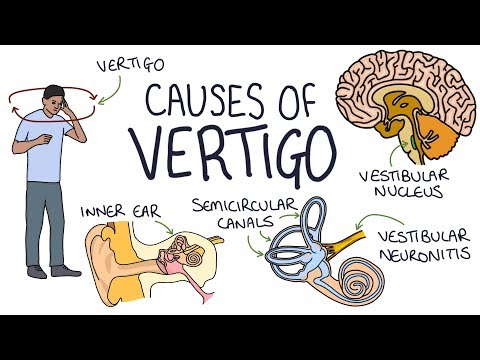
Understanding the Causes of Vertigo
Introduction to Vertigo
In this section, Tom introduces the topic of vertigo and discusses its causes. Vertigo is described as a sensation of movement between the patient and their environment, often accompanied by nausea, vomiting, sweating, and feeling unwell.
Understanding the Pathophysiology of Vertigo
- Vertigo is caused by a mismatch between sensory inputs responsible for maintaining posture.
- The sensory inputs include vision from the eyes, proprioception from the joints, and signals from the vestibular system.
- The vestibular system, located in the inner ear, consists of three semicircular canals filled with endolymph fluid.
- These canals detect different movements of the head through shifts in fluid detected by stereocilia (small hairs) in the ampulla section.
- Vestibular signals are transmitted to the brain via the vestibular nerve to coordinate eye movements and movements throughout the body.
Causes of Vertigo
This section explores various causes of vertigo. The three most common vestibular causes are benign paroxysmal positional vertigo (BPPV), Meniere's disease, and vestibular neuritis. Additionally, there are peripheral causes related to trauma or infections and central causes involving pathology in the cerebellum or brainstem.
Vestibular Causes
Benign Paroxysmal Positional Vertigo (BPPV)
- Caused by displaced crystals called Auto Konya in semicircular canals.
- Triggers include viral infection, head trauma, aging, or unknown reasons.
- Symptoms are usually positional and triggered by movement but settle when still.
- Attacks last around a minute and may recur weeks or months later.
Meniere's Disease
- Excessive buildup of endolymph in semicircular canals.
- Causes hearing loss, tinnitus, vertigo, and ear fullness.
- Attacks last several hours and occur in middle-aged adults without positional triggers.
Vestibular Neuritis
- Inflammation of the vestibular nerve, often due to viral infection.
- Acute onset vertigo lasting weeks before gradually resolving.
Peripheral Causes
- Trauma to the vestibular nerve
- Vestibular nerve tumors (acoustic neuromas)
- Otosclerosis
- Hyperviscosity syndrome
- Herpes zoster infection (Ramsay Hunt syndrome)
Central Causes
- Pathology affecting the cerebellum or brainstem disrupts vestibular signals.
- Posterior circulation infarction (stroke) is a common cause.
Posterior Circulation Infarction and Other Causes of Vertigo
This section discusses posterior circulation infarction and other causes of vertigo, including their symptoms and characteristics.
Posterior Circulation Infarction
- Sudden onset of vertigo
- May be associated with other symptoms such as taxi er diplopia (double vision), cranial nerve defects, or limb weakness
- Indicates a potential posterior circulation infarction
Tumors in the Cerebellum or Brainstem
- Gradual onset of vertigo
- Associated symptoms include cerebellar or brainstem dysfunction
- Suggests the presence of tumors in the cerebellum or brainstem
Multiple Sclerosis (MS)
- Relapsing and remitting symptoms
- Other features may include optic neuritis, transverse myelitis, and vestibular migraine-like symptoms
Vestibular Migraine
- Symptoms last minutes to hours
- Often associated with visual aura and headache
Summary of Causes of Vertigo
This section provides a brief summary of the main causes of vertigo.
Peripheral Causes:
- Benign Paroxysmal Positional Vertigo (BPPV)
- Meniere's Disease
- Acute Vestibular Neuritis
Central Causes:
- Posterior Circulation Infarction
- Tumors in the Cerebellum or Brainstem
- Multiple Sclerosis (MS)
- Vestibular Migraine
Conclusion and Additional Resources
This section concludes the video and provides information about additional resources for further learning.
- Consider giving the video a thumbs up and subscribing to the channel
- Written notes with illustrations can be found on the Zero to Finals website at zero to finals dot com
- A podcast is also available on the website for learning on the go
- The Zero to Finals Medicine book contains detailed and concise notes on 10 specialties in medicine, designed specifically for key information
Timestamps are provided in seconds (s) format.