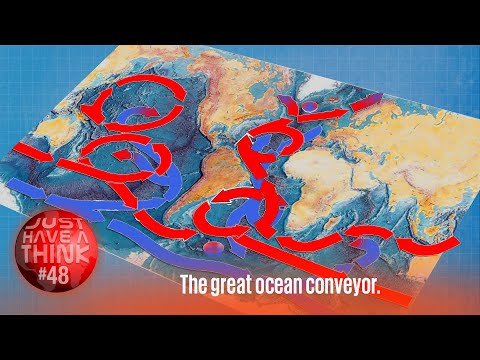
Climate Change and The Great Ocean Conveyor
Understanding Thermohaline Circulation
Introduction to Chris Packham and Blue Planet Live
- The speaker introduces Chris Packham, who is turning 58 on May 4th, and recommends watching "Blue Planet Live," a program focused on the health of oceans.
Key Insights from Chris Packham
- Packham emphasizes that while oceans have different names (Atlantic, Pacific, Indian), they are interconnected ecosystems that depend on each other for health and sustainability.
- The speaker reflects on their own lack of understanding regarding oceanic connections and announces an exploration into Thermohaline Circulation.
Exploring Thermohaline Circulation
- The speaker mentions previous discussions about a potential ice-free Arctic, known as a blue ocean event (BOE), prompting further investigation into ocean currents.
- Defines "Thermohaline" as derived from Greek words meaning heat ("thermo") and saltiness ("haline"), explaining why scientists use this term instead of simpler alternatives.
Mechanisms Behind Ocean Currents
- Introduces surface currents driven by wind; early misconceptions suggested deep oceans were static until modern instruments revealed significant underwater currents.
- Explains how water density differences—affected by temperature and salinity—drive these currents. Warm water is less dense than cold water.
Importance of Salinity in Water Density
- Discusses how salt increases water density; Bill Nye's demonstration illustrates that saltwater sinks below freshwater due to its weight.
North Atlantic Deep Water Formation
- Describes the process where warm Gulf Stream waters cool in the North Atlantic, leading to increased salinity and density which causes sinking—termed North Atlantic Deep Water formation.
Journey of Cold Dense Water
- Cold dense water spreads southward into the depths of the Atlantic after sinking; it cannot move into the Pacific due to narrow straits but flows around South Africa towards Antarctica.
Antarctic Circumpolar Current Dynamics
- Highlights the Antarctic Circumpolar Current's role in moving vast amounts of water around Antarctica at high rates, crucial for global circulation patterns.
Nutrient Cycling in Antarctic Waters
- Discusses 'Overturning' processes in Antarctica where cold surface waters sink, bringing nutrient-rich deep waters up to support marine life like phytoplankton essential for ocean ecosystems.
Upwelling Effects Beyond Antarctica
- As parts of the circumpolar current flow northward toward Pacific and Indian Oceans, warming occurs alongside upwelling effects that enrich surface waters with nutrients vital for marine biodiversity.
Thermohaline Circulation and Its Impact on Climate
Overview of Ocean Circulation
- The top layer of warm ocean water circulates around the southern tip of Africa, contributing to a global conveyor belt that takes approximately 500 years to complete one full circuit.
- This system is essential for supplying nutrients to the ocean food chain and redistributing heat across the planet.
Distinction Between Thermohaline Circulation and AMOC
- Thermohaline circulation is driven by temperature and salinity differences, while the Atlantic Meridional Overturning Current (AMOC) encompasses both deep water currents and surface currents influenced by wind.
- The Gulf Stream, which originates in the Gulf of Mexico, plays a significant role in this system but is not part of thermohaline circulation.
Effects of the Gulf Stream on European Climate
- The Gulf Stream contributes to Europe being about 5 degrees Celsius warmer than Canada at similar latitudes due to its warm water flow.
- Recent studies indicate that the Gulf Stream is currently at its weakest in 1,600 years, raising concerns about potential climate impacts on Europe.
Consequences of Weakening Gulf Stream
- A collapse of the Gulf Stream could lead to extreme winters in Western Europe, rapid sea-level rise along the US eastern seaboard, and disruption of tropical rain patterns.
- Current research shows a 15% weakening since around 400 AD attributed significantly to human-induced global warming.
Cyclical Nature of AMOC and Climate Change Implications
- Some scientists suggest that while human-induced climate change may weaken AMOC, it could also paradoxically minimize cooling effects in Europe over time.
- Professor Kakit Tung's theory posits that AMOC speed may be cyclical; faster currents lead to more glacier melting which can slow down future current speeds.
Complex Interactions Affecting Global Weather Patterns
- The slowdown in AMOC since 2004 correlates with increased atmospheric heat rather than oceanic heat absorption—compounding global warming challenges.
- If AMOC accelerates again, it might help sequester more atmospheric heat into oceans; however, uncertainties remain regarding future acceleration possibilities.
Arctic Sea Ice Loss and Global Climate Impact
- Research indicates that declining Arctic sea ice will significantly affect global weather patterns by further influencing AMOC dynamics as anthropogenic climate change intensifies.
Threat of a Blue Ocean Event in the Arctic
Upcoming Program Overview
- The speaker introduces an upcoming program focused on the potential threat posed by a Blue Ocean Event in the Arctic, indicating a significant environmental concern.
- The mention of "Blue Ocean Event" suggests discussions around climate change impacts, particularly regarding ice melting and its implications for global ecosystems.
- The speaker expresses a need to take a break, highlighting the mental toll that such complex topics can have on individuals engaged in research or discussion.
- A call to action is made for viewers to like and share the content if they found it useful, emphasizing community engagement and support for educational content.
- Viewers are encouraged to subscribe to the channel for more updates, reinforcing the importance of staying informed about critical environmental issues without any cost involved.