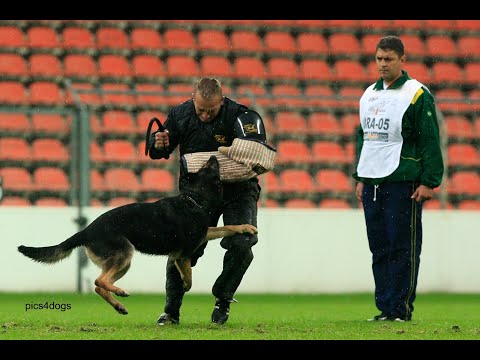
Fundamentos da proteção - AULA 04: Caça? Na proteção?
Understanding Aggression in Canine Training
Introduction to Aggression
- Max Macedo introduces the topic of aggression in canine training, emphasizing its importance for understanding protection training.
- The term "aggression" is defined scientifically as behavior aimed at causing harm to another individual, which can have various semantic connotations.
Types of Aggression
Social Aggression
- Social aggression is directed towards individuals within a social sphere, not limited to the same species; for example, dogs may show aggression towards humans due to socialization during their critical development period (21 to 100 days).
- This type of aggression can be triggered by other social beings and is often a reaction to perceived threats.
Predatory Aggression
- Predatory aggression, referred to as "hunting" in training jargon, involves innate emotional responses related to predation.
- It originates from the limbic system and becomes more controlled by the prefrontal cortex when it transitions from reactive (impulsive) to active (intentional).
Mechanisms Behind Aggression
- Hunting behavior is primarily activated by visual stimuli indicating prey movement and involves specific brain structures like the central nucleus of the amygdala.
- Defensive reactions are categorized under social aggression's reactive phase, where an individual responds aggressively to any perceived threat.
Evolution of Terminology and Training Approaches
- The terminology around aggressive behaviors has evolved; what was once termed "social aggression" now encompasses both reactive defense and active forms.
- In protection training, methods can begin with social aggression but may yield better results when incorporating predatory instincts developed through historical practices in Belgian dog training.
Training Techniques
- Different approaches exist for teaching protection skills: starting with social aggression or focusing on predatory instincts.
- Frustration techniques can enhance emotional intensity during training sessions by withholding rewards or goals.
Understanding Frustration and Aggression in Dogs
The Relationship Between Hunting, Frustration, and Aggression
- High expectations during hunting can lead to frustration if the opportunity to bite is not provided. This frustration can escalate into aggressive responses.
- A gradual escalation of frustration may result in aggression that appears social but originates from hunting instincts. This confusion often misleads trainers into misinterpreting the dog's behavior.
- Many trainers mistakenly view high-frustration aggression as pure social aggression; however, it is rooted in predatory behavior linked to hunting.
- Pure social aggression typically arises from defensive or reactive behaviors rather than being directly tied to hunting instincts, which complicates understanding canine aggression.
- While rare genetic predispositions for active social aggression exist, they are uncommon. Most aggressive behaviors stem from reactivity rather than inherent traits.
Misconceptions About Hunting Behavior
- There is a misconception that all forms of hunting are negative; however, 100% of IGP dogs in Brazil engage in hunting activities as part of their training.
- The quality of training and handling influences whether a dog’s hunting instinct escalates into socially directed aggression due to frustration.
- Although some aggressive displays may seem like pure social aggression, they often have roots in predatory behavior stemming from the hunt.
- Effective performance often comes from utilizing hunting instincts as a foundation for developing controlled expressions of frustration and aggression towards humans.
Training Techniques and Behavioral Responses
- Trainers sometimes provoke dogs during training scenarios (e.g., using sticks or whips), leading to reactive behaviors that can be mistaken for social aggression when they are actually responses to perceived threats.
- When a dog experiences high levels of frustration mixed with behavioral expressions related to social aggression, it becomes easier for trainers to redirect this energy effectively.
- Understanding the nuances between reactivity and predatory behavior allows trainers to manage dogs better during high-stress situations while maintaining focus on their original tasks.
Advanced Training Strategies
- More sophisticated methods involve sustaining a dog's engagement longer within a socially aggressive context before redirecting them back to their primary task (hunting).
- By extending periods where dogs exhibit social aggression through specific stimuli, trainers can enhance control over these behaviors while ensuring the underlying predatory drive remains intact.
The Importance of Hunting Instinct
- It’s crucial not to demonize the concept of hunting; when properly harnessed, it provides significant advantages in training effectiveness and overall canine well-being.
- Historical insights from ethology have revolutionized dog training by applying scientific principles that improve both technical skills and animal welfare within training environments.
This structured approach highlights key concepts regarding canine behavior related to frustration and aggression while providing timestamps for easy reference.
Understanding Canine Behavior in Training
The Response of Dogs to Pressure
- When pressure is applied during training, a dog may initially respond defensively but will revert to its normal behavior once the pressure is removed. This illustrates the importance of understanding canine reactions in different contexts.
- It’s crucial to develop techniques that teach dogs that they should not return to their previous state (like hunting) simply by removing pressure. Instead, they should learn to continue acting even when the pressure is lifted.
- The transition from reaction to action occurs when a dog continues its behavior after pressure is released. This shift marks the beginning of what is termed "active aggression," which is particularly desirable in working dogs such as police and military canines.
- The goal in training these dogs is not just about managing their reactions but fostering proactive behaviors that align with their roles, enhancing their effectiveness in various tasks.
- Engaging with this content can provide deeper insights into effective canine training methodologies and behavioral conditioning strategies.