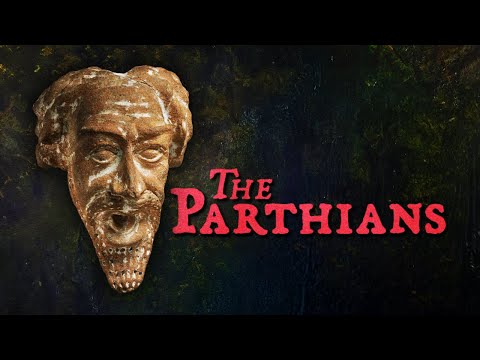
Who were the Parthians?
Who Were the Paththeians?
Introduction to the Paththeians
- The Paththeians are often recognized but not well understood, primarily known for their rivalry with Rome.
- Their conflict with Rome spanned hundreds of years, involving numerous military campaigns across border territories.
Origins and Rise of the Paththeians
- Emerging from Iranian nomadic tribes, the Paththeians filled a political vacuum after the fall of the Seucid Empire.
- They established a significant polity that dominated Iran and beyond for centuries through political maneuvering and military strength.
- The Assassined Dynasty ruled from the mid 3rd century BC to early 3rd century AD, positioning Paththeia as a great power rivaling Han China and Imperial Rome.
Wealth and Culture
- The wealth of Paththeia stemmed from agriculture, mineral resources, and trade along the Silk Road.
- Their Zoroastrian religion and eclectic art contribute to their historical significance as a fascinating yet underexplored civilization.
Geographical Context
- The region corresponding to ancient Paththeia is in modern northeastern Iran and parts of southwestern Turkmenistan. It was conquered by various empires throughout history.
- The origins of the Paththeians trace back to nomadic Iranian people called the Parni rather than within Paththeia itself.
Historical Sources on Parni
- Limited information exists about the Parni; Greek and Roman sources provide some insights but lack clarity on their details.
- Consensus suggests that they were part of a larger tribal grouping known as Dahigh, controlling lands between Caspian and Aral seas.
Migration Patterns
- Historical accounts indicate that Parni may have migrated due to military pressure from neighboring tribes like Cyians around 280 BC.
- Their name "Paththean" derives from "pathy," meaning exiles in Cyian language, hinting at their migratory past.
Invasion of Pathia
- In response to vulnerabilities within the Seucid Empire during Antiochus II's reign (261 BC), Parni began encroaching upon Pathia territory around 240 BC amidst political upheaval in Seucid provinces.
- A leader named Ases likely initiated an invasion into Pathia around 239 or 238 BC, marking a significant turning point in their history despite unclear conquest details.
The Rise of the Paththean Empire
Initial Conquests and Political Landscape
- The Pani likely captured a smaller northern region before expanding control over Paththeia and Hania over several years.
- Despite rapid conquests, the Panne's rule was insecure due to the volatile political atmosphere of the late 2nd century BC.
- Following Antiocus II's death in 246 BC, the Seucid Empire faced a succession crisis, limiting its ability to respond to Pani incursions.
- Ascles focused on solidifying his rule after conquering Paththeia, adopting local customs and language to establish authority.
- The conquest of all satropes in Paththeia occurred gradually, with significant campaigns starting in the 240s BC.
Authority and Governance
- Ascles is referred to as Alars's autocrat on early coinage, indicating a position of authority but not full independence from the Seucids.
- The first rulers of Paththeia did not claim kingship; their titles reflected a dependency on the Seucid Empire for legitimacy.
- Ascles successfully defended against a Seucid attempt to regain control around 228 BC and founded Nissa as a royal center.
- His governance included military organization, fortification building, and strengthening towns amidst external threats from the Seucids.
Challenges and Resurgence
- Ases II succeeded Ascles amid renewed efforts by Antious III of the Seucids to reclaim lost territories like Paththeia. He faced defeat at Mount Labus in 209 BC but later regained some autonomy due to Seucid weaknesses against Rome.
- The internal strife within the Seucid Empire allowed for further consolidation of power by subsequent rulers despite ongoing challenges from external forces.
Expansion Under Mithrates I
- Mithrates I is recognized as a pivotal figure who expanded Paththean territory significantly during his reign beginning around 165 or 164 BC.
- His aggressive campaigns targeted Bactrea and Media, capturing key cities such as Herat and Ecbatana which bolstered Paththean influence in both regions by damaging rival powers significantly.
- By 155 BC, Mithrates had extended control into Margana and Bactra while also defeating attempts by other kingdoms to reclaim lost territories like Babylon and Charisini around 241 BC.
Mithrates and the Expansion of the Paththean Empire
Mithrates' Early Achievements
- Mithrates captured young Seucid emperor Demetrius II, neutralizing Seucid threats temporarily.
- Coins minted in his name referred to him as "Basileos," meaning great king or emperor, showcasing his political dominance.
- His son, Freightes II, faced attempts by Antiocus IIIth to reclaim lost territories but managed to exploit civil unrest against the Seucids.
The Decline of Seucid Power
- Freightes II defeated Antiocus IIIth at the battle of Ecapatana, significantly weakening Seucid power and confining their rule to Syria.
- The reign of Mithrates II (121–91 BC) was marked by significant territorial expansion and consolidation over Media and Mesopotamia.
Conquests and Relations with Rome
- Mithrates II invaded Armenia in 97 BC, establishing himself as overlord over Tigranis II and expanding westward to the Euphrates.
- An agreement with Roman dictator Sula in 96 BC set borders at the Euphrates, a tenuous peace that lasted for decades.
The Paththean Dark Age
- From 90 to 57 BC, little is known about Paththeia during a period termed the "Paththean dark age."
- By early 1st century BC, Pathia emerged as a great power alongside Rome and Han China.
Governance Structure of Paththeia
- The decentralized nature of the Paththean Empire allowed vassal states significant autonomy under local dynasties acknowledging sovereignty.
- Over time, particularly under Mithrates II, local kings were replaced with Assassid family members for greater control.
Royal Authority and Symbolism
- The title "king of kings" indicated divine right to rule; succession typically followed through polygamous firstborn sons.
- Kings projected authority through coin imagery; early rulers wore bashlick caps reflecting nomadic origins while later kings adopted diadem symbols from Macedonian royalty.
Paththean Empire: Governance and Society
Governance Structure
- The Paththean Empire's governance involved a hierarchy where local clan heads and nobility played significant roles, alongside holy priests known as magi who advised the king.
- Over time, particularly from Voligaces I's rule, the influence of nobility on the monarchy diminished as rulers began to centralize power by appointing family members to key political positions.
Slavery and Social Hierarchy
- Evidence suggests that slavery existed in the Paththean Empire; Plutarch noted slaves in military entourages and captured Romans likely became enslaved after battles.
- A document from 121 AD illustrates an agreement for indentured servitude, indicating that some individuals could become slaves until debts were repaid under harsh conditions.
Role of Women in Society
- Sources about Paththean women are limited but indicate that noblewomen had significant roles; kings had multiple wives and concubines, with some sons ascending to power.
- Queen Musa stands out as a powerful figure who ruled jointly with her son after marrying King Freightes IV. She was one of only three women to hold full monarch status in Iranian history.
Cultural Identity and Influence
- The cultural identity of the Paththeans was shaped by Persian heritage combined with tribal roots, absorbing Greek influences during their empire's expansion.
- Rulers styled themselves after Persian kings while also adopting Greek elements; however, there was a revival of Iranian culture around Art Barnes II’s reign marked by changes in coin inscriptions.
Lifestyle and Customs
- Roman accounts describe Paththean nobles' indulgence in hunting for sustenance and excessive wine consumption. A recipe from a Roman cookbook highlights culinary practices associated with the Paththeans.
Cooking and Cultural Insights of the Paththeans
Cooking Instructions for Chicken
- The preparation begins with opening the chicken at the back end and dressing it on a board.
- A mixture of pepper, lovage, and cumin is prepared using a pestle, moistened with liquinmen and wine before being poured over the chicken in an earthen pot.
- Fresh laser is dissolved in lukewarm water and added to the chicken to let it stew.
- The dish is finished by sprinkling pepper before serving.
The Role of Theater in Paththean Culture
- The Paththeans had a strong appreciation for Greek theater, with historical theaters found in locations like Babylon and Dura Europos.
- Plutarch recounts that during a performance of Euripides' "Bakkey," King Arodis II was presented with Cassus' severed head as a prop, showcasing the intertwining of culture and politics.
Music's Influence on Paththean Life
- Music played an integral role in various aspects of Paththean life including weddings, festivals, public events, and military marches.
- Instruments such as trumpets, harps, tambourines, pan pipes, double reeds were commonly used; musicians even included women playing castanets during processions.
Military Structure of the Paththeans
- The long-standing rivalry between the Roman Empire and the Paththeans lasted approximately 270 years from mid-1st century BC to early 3rd century AD.
- Unlike Romans who maintained standing armies, Paththean kings relied on vassals for troops in a feudal-like system which allowed flexibility but posed risks for lengthy campaigns.
Cavalry Strength and Tactics
- Emphasis was placed on cavalry prowess; horses from Paththea were noted for their speed compared to Roman horses due to superior land quality for raising them.
- Nissian horses were particularly valued by royalty; they were large breeds known throughout ancient times but are now extinct.
Types of Cavalry Troops
- Two main forms of cavalry existed: lightly armored mounted archers known for agility and heavy cavalry called catifacts equipped with chain mail armor.
- Camel-mounted troops were also utilized but less frequently than horse cavalry due to camels’ slower pace yet greater endurance suited for arid terrains.
Unique Combat Techniques
- Light cavalry employed powerful recurve bows made from composite materials; they became famous for executing the "Paththeon shot," allowing them to shoot behind while riding without stirrups.
- Historian Justin described their hit-and-run tactics where cavalry would engage enemies directly or feign retreat to confuse pursuers.
Paththean Warfare and Economy
Paththean Cavalry Tactics
- The Paththean cavalry was equipped with chain mail or metal scale armor, wielding long lances and powerful swords, making them formidable in combat.
- Their heavy armor allowed for effective engagement in prolonged melee, demonstrating their tactical advantage over Roman forces during battles like the 53 BC battle of Karai.
- Roman legions faced significant casualties due to constant harassment from Paththean cavalry, which disrupted their formations and strategies.
- Casius Dio noted that Romans struggled to defend against both arrows and cavalry charges, leading to devastating losses when they attempted defensive formations.
- While less pivotal than cavalry, lightly armed infantry played a role in holding ground but were not central to the aggressive tactics employed by Paththean armies.
Economic Structure of Paththeia
- Trade was vital for the Paththean economy, particularly through routes like the Silk Road connecting major cities such as Ecatana and MV.
- The rivers of Mesopotamia facilitated maritime commerce, enhancing trade connections with regions like India via ports such as Charak Spazinu.
- Despite wealth from long-distance trade, there is little evidence of state-sponsored trade policies or tariffs benefiting the royal coffers significantly.
- The sparse knowledge about Paththean trade suggests possible toll levies on caravans; however, specific details remain unclear due to limited historical records.
- Key exports included specialized goods like horses and luxury items while imports consisted of silk and metals from other civilizations.
Natural Resources and Agriculture
- The Zagros mountains provided rich mineral resources essential for producing tools and weapons; these commodities were also traded extensively.
- Fertile regions supported agriculture with crops such as wheat and barley being staples alongside various vegetables forming part of daily diets.
- Innovative irrigation systems known as canats enabled farming in less fertile areas since ancient times, showcasing advanced agricultural practices.
- Olives thrived in certain regions; olive oil became an important commodity for cooking and body care within the culture.
- Animal husbandry flourished across Paththeia with livestock bred for meat production along with horses used extensively throughout the region.
Cultural Aspects
- Wine held significant economic importance; vineyards were taxed contributing revenue while wine served as a common beverage often diluted due to water scarcity.
Indo-European Language Family and the Paththean Empire
Overview of Paththean Language
- The Paththean language is part of the Indo-European family, specifically a northwestern Iranian language. It shares similarities with Middle Persian but remains distinct.
- The Pani adopted the local Paththean language after conquering the region in the 3rd century BC, leading to cultural formation within the Paththean polity.
Linguistic Diversity in the Empire
- Multiple languages were spoken within the Paththean Empire, including Aramaic and Greek, which were significant due to their administrative roles.
- Aramaic served as a lingua franca and was used by Achaemenid Persians, while Greek was adopted for administration under Seleucid emperors. Evidence includes Greek inscriptions on coins until the mid-1st century AD.
Writing System and Challenges
- Despite Aramaic and Greek's influence, Paththean eventually became dominant in administration, written using Palavi—a script derived from Aramaic that posed challenges for deciphering due to its Semitic roots.
- Understanding Paththean required comparison with Armenian, influenced by centuries of Assyrian rule; only a few texts survive today, including land sale parchments and poetry.
Religious Practices in the Empire
- The religious landscape of the Paththean Empire was diverse due to territorial expansion; kings promoted stability through religious tolerance among vassal states' practices.
- Limited contemporaneous sources hinder definitive claims about beliefs; however, trends suggest Zoroastrianism's presence alongside polytheistic traditions influenced by various cultures like Greek and Mesopotamian religions.
Zoroastrian Influence
- Prior to their empire's establishment, little is known about pre-Paththean religion; it likely had polytheistic elements with evidence suggesting Zoroastrianism as a prevalent faith during their reign.
- Zoroastrianism emphasized duality between good (Ahura Mazda) and evil (Angra Mainyu), influencing moral choices leading to heaven or hell based on one's actions in life.
Cultural Integration and Practices
- Debate exists regarding how much Zoroastrianism was adopted by ruling families; some cult practices conflicted with its teachings yet evidence shows worship of deities aligned with Zoroastrian beliefs through iconography on coinage and adherence to rituals like fire worship.
- Sacred fire held significance in Zoroastrianism as pure; prayers were directed towards Ahura Mazda only in its presence—this practice persisted across empires including Akamanid and Cisanian periods reflected through archaeological findings such as fire altars depicted on coins minted under Asid kings.
Mithraism and the Paththean Empire
The Role of Mithra in Paththean Kingship
- The name Mithrates among Paththean kings signifies a connection to authority, with Mithra worship being significant among Iranian peoples in Central Asia and Eastern Iran.
- Evidence suggests that the magi, Zoroastrian priests, played a crucial role in the Paththean Empire, often serving on royal councils to select or confirm new kings during crises.
Influence of Magi and Hellenistic Culture
- The New Testament's account of magi visiting Jesus may indicate their origins from the Paththean Empire, highlighting their historical significance.
- Following Alexander the Great's conquests, many Iranian deities were syncretized with Greek gods under the Seleucid dynasty to legitimize their rule.
Syncretism in Religion
- Notable associations include Zeus with Ahura Mazda and Mithra with Helios and Apollo, reflecting a blending of religious identities within the empire.
- Manichaeism emerged from this cultural melting pot; its founder Mani sought to unify various faith traditions while emphasizing an age-old struggle between good and evil.
Artistic Expression in Paththea
- The existence of a distinctively Paththean artistic style is debated; influences from Hellenistic art are evident but not singularly defining.
- Frontality in art—depicting figures facing viewers—may be uniquely Paththean despite potential external origins.
Hybrid Nature of Artworks
- Artifacts reflect diverse styles influenced by Greek, Roman, Iranian, and Syrian cultures due to the vastness of the empire.
- Sculptural works like ivory drinking horns showcase intricate designs merging local themes with Greek mythology.
Diverse Mediums and Techniques
- Bronze sculptures are limited but reveal hybrid artistic expressions; relief carvings depict sacrificial scenes involving identifiable figures wearing traditional attire.
- Frescoes across various locales illustrate hunting scenes and sacrifices; mosaics were also produced alongside terra cotta vessels shaped like animals.
Paththean Jewelry and Imperial Conflicts
Overview of Paththean Jewelry
- Paththean jewelry is primarily known through depictions on coinage and archaeological discoveries, indicating its association with the elite.
- Torques, spiral golden necklaces often featuring animal motifs, exemplify stepnomatic artistic influences; they were likely worn by the wealthy.
- Golden earrings varied from simple circular designs to elaborate styles, showcasing a range of craftsmanship in Paththean jewelry.
- Belt buckles also displayed diverse designs, including one notable buckle depicting an embracing couple.
The Roman-Pahthean Wars
- The conflicts between Rome and Paththeia began in 53 BC with Marcus Lucinius Cassus's attacks aimed at expanding Roman power and prestige.
- Eller Brock notes that the Paththeians rarely initiated conflict; instead, Roman expansionism often led to confrontations over buffer states like Armenia.
- Armenia became a focal point for both empires after it was turned into a Roman vassal state following military defeats of its kings.
Key Battles and Outcomes
- Cassus launched an assault on Paththeia intending to gain glory but faced Arodis II’s forces at the Battle of Karay in modern Turkey.
- The battle resulted in a catastrophic defeat for Cassus due to superior mobility of Paththean cavalry against Roman infantry tactics.
- Thousands of Romans died or were captured during this battle; many captives were forced into labor on fortifications still visible today.
Aftermath and Political Turmoil
- Although peace was established post-conflict, internal strife plagued the Paththean Empire, particularly regarding succession disputes among monarchs.
- Arodis's son Frees IVth reportedly murdered numerous family members in his quest for power around 38 BC amidst ongoing civil unrest.
Later Conflicts and Stability Attempts
- Mark Anthony's campaign against the Atropatini ended unsuccessfully due to effective resistance from Paththean cavalry forces in 36 BC.
- Augustus Caesar negotiated a lasting peace around 20 BC that defined borders at the Euphrates River while restoring lost Roman standards from previous defeats.
- Following relative stability under Artabbanis II’s reign, political instability resurfaced after his death, leading to further decline within the empire.
Conclusion: Decline of the Paththean Empire
- Despite early signs of political fracturing in the 1st century AD, the Paththean Empire endured for over 150 years until its eventual collapse in the early 3rd century AD.
Civil Conflict and Political Instability in Paththeia
The Death of Artbanis II and Its Aftermath
- Following the death of Artbanis II in 38 AD, a civil conflict arose between his sons Bardanis and Godzis, leading to years of instability that fractured the unity of Paththeia's realms.
- During this period, client rulers within the Paththean Empire sought greater independence due to the weakened central authority.
Stabilization Under Voligaces I
- The reign of Voligaces I (51-79 AD) marked a return to stability as he appointed family members and loyal princes to key positions across various vassal states.
- Notably, he placed his brother Tredates on the throne of Armenia, a region historically contested by Rome and Pathia.
Roman Relations and Territorial Changes
- In 66 AD, an agreement allowed Tiraates to remain king under Roman oversight; however, Rome continued its expansion into eastern territories.
- Economic prosperity characterized Voligaces' reign with urban growth and trade initiatives, including a delegation sent to China during Pakorus II's rule.
Challenges During Oligaces III’s Reign
- Oligaces III (105-147 AD) faced significant challenges from three rebel kings throughout his reign.
- The political volatility led to Roman Emperor Trajan launching campaigns from 114 to 117 AD, capturing key regions including Armenia and Mesopotamia.
Decline Due to Plague and Civil War
- A severe plague forced Romans to retreat from newly conquered lands while maintaining control over Nibis, Adiaben, and Armenia.
- By the late 190s AD, internal strife following Voligaces V's death resulted in civil war between his sons. This turmoil provided an opportunity for Roman incursions into Paththean territory.
Final Downfall: Ardashir’s Conquest
- Despite initial victories against Rome at Nibis in 217 AD by Artbanis IVth, ongoing civil unrest weakened Paththeia significantly.
- Ultimately, King Ardashir capitalized on this power vacuum in 221 AD by expanding into western Iran and Mesopotamia, marking the end of the Paththean Empire.
The Fall of the Paththean Empire
The End of an Era
- The death of Artbanis, the last true king of Paththeia, marked the end of the Assassin dynasty and the Paththean Empire, which had endured for over 400 years.
- Although Artbanis' brother, Voligaces V 6th, may have ruled briefly after him, his reign was limited to a minor successor state amidst the ruins of the once-great empire.
- Following their victory, Ardashir established the Cisanian Empire in Tesphon, incorporating elements of Paththean culture and imperialism into its framework.
Fate of the Paththeians
- The ultimate fate of the Paththeians remains uncertain; they were likely absorbed into the rapidly developing Cisanian Empire.
- In Armenia, a branch of the Assassinid family continued to rule for approximately 200 more years until being conquered by the Sassinids.