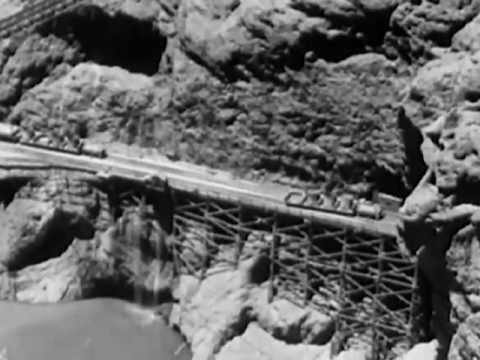
Hoover Dam Construction: Boulder Dam (Part I) (1931) - CharlieDeanArchives / Archival Footage
The Construction of Boulder Dam
Overview of the Colorado River
- The Colorado River has carved its way through canyons over centuries, primarily known to Native Americans and a few explorers.
- It drains a vast region and periodically floods agricultural areas near its mouth, posing challenges for engineers.
The Boulder Canyon Project Act
- Enacted in 1928, this act authorized the construction of Boulder Dam in Black Canyon, marking a significant engineering endeavor.
- The project required extensive materials including steel, cement, machinery, and oil from various parts of the country.
Development of Boulder City
- Boulder City was constructed within 15 months to accommodate 5,000 workers; it was designed as a model town with modern amenities.
- Facilities included churches, schools, recreational areas, and parks that provided comfort amidst harsh desert conditions.
Living Conditions for Workers
- The town featured well-maintained homes surrounded by gardens and air-cooled dormitories for single men.
- A large-scale food service operation catered to workers with high-quality meals prepared in sanitary kitchens.
Transportation and Work Schedule
- Transportation was organized via motor trucks to ferry workers between Boulder City and the dam site.
- A rigorous work schedule was established with three shifts per day; only major holidays were observed during construction.
Early Construction Challenges
- In March 1931, six companies were awarded contracts for construction; preliminary work began soon after.
- Initial transportation relied on boats or catwalks due to lack of roads into the canyon; later infrastructure improved access significantly.
Major Engineering Operations
- Diversion tunnels were among the first major operations; they allowed river flow management during dam construction.
Excavation and Construction of the Dam
Overview of Excavation Process
- Heavy-duty trucks were utilized to remove shattered material from the tunnels, each truck handling 8 to 10 tons of rock as they transported debris to adjacent gulches.
- The excavation phase involved over 1.5 million cubic yards of material, completed in 13 months, marking it as one of the most challenging tasks for both workers and machinery.
Tunnel Preparation and Concrete Lining
- Tunnels were lined with three-foot-thick concrete; special equipment was designed for this purpose, including a gantry crane that operated within the tunnel.
- A concrete gun powered by compressed air was used to place the top arch, while significant blasting operations removed loose rock from canyon walls.
Blasting Operations and Safety Measures
- Workers engaged in drilling and blasting traveled via cages suspended hundreds of feet above the river, which became routine despite its thrilling appearance to observers.
- Drilling involved using jackhammer drills to create powder holes loaded with dynamite; subsequent blasts caused significant earth shaking and rock fragmentation.
River Diversion Preparations
- In November 1932, preparations began to divert the Colorado River through newly excavated tunnels; a small blast opened a breach in a temporary dike allowing water flow into a concrete-lined channel.
- Within 24 hours, the river was successfully diverted around the dam site for the first time in history.
Foundation Excavation for Dam Structures
- After constructing copper dams to control river flow during construction, excavation continued down to 135 feet below old river levels, moving over two million yards of material.
- This process revealed ancient geological formations that provided insights into historical water flows and sediment layers.
Material Sourcing for Concrete Production
- Careful preparation ensured stability for dam foundations; sand and gravel needed for concrete were sourced from deposits located upstream on the Arizona side.
- The largest gravel screening plant ever built processed raw materials at a capacity of 20,000 tons per day.
Screening Plant Operations
- Raw materials underwent multiple stages of screening at the plant before being deemed suitable aggregate material for high-quality concrete production.
Concrete Manufacturing Process at Boulder Dam
Overview of Material Processing
- Raw gravel is processed through screens, with selected materials transported to stockpiles via conveyor belts, categorized by size for efficient access during concrete mixing.
- Sand is classified into three sizes after discarding undesirable fine sand; these are recombined to meet specific concrete specifications for the dam project.
- Conveyor belts load sand and gravel into railroad cars for transport to two concrete mixing plants located near the dam site, ensuring a steady supply of materials.
Concrete Mixing Operations
- The mixing plants are equipped with advanced machinery; materials are stored in separate bins upon arrival to maintain organization and quality control.
- Bulk cement is pneumatically unloaded from railroad cars into bins, where it is combined from various sources to ensure standardization in workability and strength of the concrete.
- The mixing plant has a maximum capacity of 24 cubic yards every 3.5 minutes, showcasing an efficient production process under strict inspection.
Automation in Concrete Production
- The high-level mixing plant utilizes automatic equipment for ingredient apportionment and maintains a graphic record of operations, minimizing human error in the process.
- Mechanical systems automatically select, measure, weigh, and record materials needed for each mix based on pre-set adjustments made by operators.
Transportation and Delivery Systems
- A conveyor belt system enhances efficiency by transporting mixed components directly into rotary mixers where water is added before thorough agitation occurs.
- Various transportation methods including motor trucks and electric trains are employed; containers range from bottom dump buckets to transit mixers designed for long hauls.
Construction Milestones
- Aerial cableways spanning the canyon facilitate movement of concrete from delivery points to construction sites; this innovative method supports large-scale operations effectively.
- On June 6, 1933, the first bucket of concrete was placed in the dam forms marking a significant milestone in constructing what would become the highest dam globally.
- As construction progressed with interlocking columns poured layer by layer, crews achieved record-breaking daily pours that showcased their growing expertise.
Equipment Utilization
- Transit mixers were used strategically on trucks for confined areas where larger buckets could not operate efficiently; this adaptability was crucial for effective placement within tight spaces.
Boulder Dam Construction Overview
The Initial Phases of Construction
- A massive rim, weighing 22 tons, is gracefully lowered into the gorge over a cable, showcasing the engineering precision involved in the construction of Boulder Dam.
- Safety locks are unlatched to add eight cubic yards of concrete to the dam; mechanical vibration ensures dense compression against adjacent surfaces for structural integrity.
- Laborers from diverse backgrounds worked continuously under various conditions, contributing significantly to the ambitious progress schedule set for the dam's construction.
Progress and Structural Developments
- Within a year, nearly two million cubic yards of concrete were placed, establishing Boulder Dam as a significant tourist attraction and an engineering marvel in the West.
- The power plant's U-shaped structure began taking form downstream from the dam while intake towers were constructed on both canyon walls to facilitate water flow.
Key Engineering Features
- The intake towers will serve as giant inlet valves and outlet conduits; their construction progressed alongside that of the dam itself.
- Spillways designed for overflow control were also being built simultaneously with other structures within the reservoir area.
Fabrication of Penstock Pipes
- A notable phase involved fabricating large steel penstock pipes essential for power and pressure systems; Babcock & Wilcox Company established a fabrication mill near the site due to unprecedented sizes required.
- Special machinery was designed to manufacture pipes ranging from 8.5 to 30 feet in diameter using steel plates varying in thickness, emphasizing innovative engineering solutions.
Precision Manufacturing Processes
- The manufacturing process included shaping edges for accuracy using advanced machinery capable of handling long strips of steel before rolling them into circular forms.
- Plates used for constructing 30-foot diameter penstocks underwent initial bending at high pressures to prepare them for subsequent rolling processes.
Quality Control Measures
- Each segment formed by joining curved plates was meticulously crafted; electric welding ensured strong joints while special machinery facilitated assembly due to their unprecedented size.
Boulder Dam Construction Process
Manufacturing and Handling of Pipe Units
- Heavy-duty rigging was essential for managing the size and weight of pipe units during manufacturing, requiring special design to handle sections through the shop.
- Individual pipe sections underwent extreme temperatures (1400°F) in a gigantic annealing furnace, using superheated gas rather than direct flame for heating.
- The ends of the pipe sections were machined on a large vertical lathe to ensure precise junctions when forming continuous penstocks in tunnels.
Transportation and Installation Challenges
- Transporting pipe sections from the plant to the dam site involved designing a specialized road trailer capable of carrying 200 tons, powered by caterpillar tractors.
- Rigid internal bracing maintained the conformation of pipe sections during transport; air brakes and power steering controlled heavy trucks.
Hoisting Mechanisms Over Canyon
- A permanent 200-ton capacity cableway was constructed over the gorge, with track cables anchored securely into canyon walls for stability.
- The hoisting machinery was noted as the largest ever built, spanning 1256 feet across at an elevation of 700 feet above the river.
Lowering Pipe Sections into Position
- A specially designed rig known as "moon beam" was used to lower massive tubes into place within the canyon while suspended by heavy steel cable slings.
- After securing lashings, pipes were carefully maneuvered over the cableway before being lowered under strict control into their designated positions.
Final Assembly and Project Completion
- Once positioned underground, separate units were joined with pressure pins to create continuous conduits between intake towers and powerhouse outlet works.
- Concrete pouring for Boulder Dam progressed steadily despite engineering limitations; construction reached full height (730 feet), surpassing any previous dam structures.
Dedication and Legacy of Boulder Dam
- In September 1935, President Franklin D. Roosevelt dedicated Boulder Dam ahead of schedule, praising its designers and builders for their efforts.
Boulder Dam: Engineering Marvel
Overview of Boulder Dam's Structure and Functionality
- The dam towers at 403 feet, surpassing the canyon's rim, with a combined water capacity of 400,000 cubic feet per second. Two spillways are positioned upstream on either side of the canyon to manage high water levels.
- Water flows through four 100-foot drum gates into the spillway basin, plunging 600 feet down through tunnels to rejoin the river downstream from the dam.
- The Boulder Dam power plant consists of two wings along each canyon wall and began operations on September 11, 1936. It features 17 generating units capable of producing between 40,000 to 80 megavolt amperes.
- Transmission lines radiate from Boulder Dam, primarily serving Los Angeles. These lines ascend over the canyon rim into a switchyard equipped with advanced power transmission technology.
- From the switchyard, power lines extend across the desert to supply energy to homes and factories. Additionally, water is supplied to Los Angeles via the Colorado River aqueduct and agricultural districts through the All-American Canal.
Significance of Boulder Dam
Turn any video into a summary like this
YouTube links, meetings, lectures — with transcripts, search, and chat.