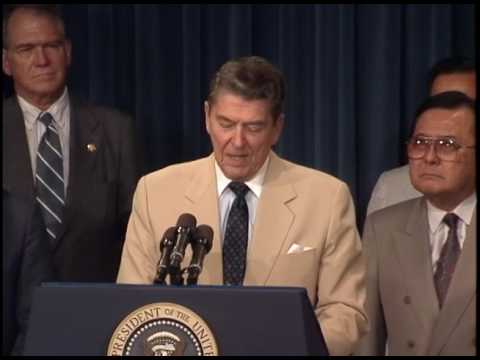
President Reagan's at the Japanese-American Internment Compensation Bill signing on August 10, 1988
Acknowledgment of Historical Injustice
Introduction to the Internment of Japanese Americans
- The President addresses Congress and guests, highlighting a significant historical wrong regarding the internment of Japanese Americans during World War II.
- Over 120,000 individuals of Japanese ancestry were forcibly removed from their homes without trial or jury, solely based on race.
Recognition of Loyalty Amidst Injustice
- Despite being interned, many Japanese Americans remained loyal to the United States; thousands volunteered for military service.
- The 442nd Regimental Combat Team, composed entirely of Japanese Americans, served with distinction in defense of the nation while their families faced internment at home.
Personal Testimony and Conditions in Camps
- Congressman Norman Mineta shares his personal experience as a child during internment, describing harsh living conditions in makeshift camps like Santa Anita racetrack and Hart Mountain Wyoming.
- Families lived under poor conditions for three years, emphasizing the long-lasting impact of this injustice.
Legislative Action for Restitution
Signing Legislation for Survivors
- The President announces legislation providing restitution payments to surviving Japanese American internees as an acknowledgment of past wrongdoings.
- While financial compensation is offered, it cannot fully compensate for lost years and experiences endured by those affected.
Broader Context: Alaskan Evacuees
- The bill also allocates funds for members of the Aleut community who were evacuated from their islands after a Japanese attack in 1942 due to similar injustices faced during wartime.
Personal Reminiscence and Reflection
Honoring Individual Stories
- The President reflects on a newspaper clipping about Mary Masuda's return from relocation centers and her brother Kazuo’s heroic service in the military while she was interned.
- Kazuo Masuda's bravery is highlighted through his actions that ultimately cost him his life while serving with honor in combat.
Tribute to Sacrifice and Unity
- Acknowledgment is made towards various personalities who paid tribute to the sacrifices made by soldiers like Kazuo Masuda, reinforcing themes of unity despite racial differences within America’s diverse fabric.
Conclusion: Embracing American Ideals
Affirmation of American Values
- The speech concludes with a reaffirmation that America stands unique as a nation founded not on race but on ideals such as liberty and justice for all people regardless of background.
Final Remarks
- As he prepares to sign HR 442 into law, there is an emphasis on recognizing past mistakes while moving forward together as one nation committed to equality and justice for all citizens.