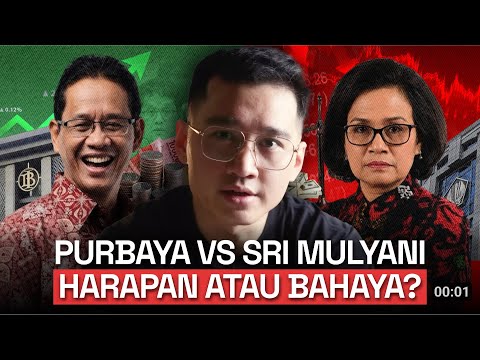
Purbaya Effect: Pertaruhan Ekonomi Indonesia
What to Expect from the New Minister of Finance?
Initial Reactions to Pak Purbaya's Appointment
- The appointment of Pak Purbaya as Minister of Finance was met with skepticism due to his initial comments and perceived lack of clarity, leading to immediate fluctuations in the Rupiah and stock market.
- Early netizen reactions highlighted concerns about his qualifications compared to former Minister Sri Mulyani, who had a long-standing reputation for fiscal credibility.
Understanding the Role of the Minister of Finance
- The role is crucial as it directly influences public finances, foreign investments, and daily costs such as food and fuel prices. Understanding macroeconomic concepts is essential for evaluating his effectiveness.
- The video aims to simplify complex economic discussions through storytelling, questioning whether Pak Purbaya represents a positive change or merely an illusion of progress.
Key Policy Initiatives by Pak Purbaya
- Within two weeks in office, he initiated significant policies including reallocating 200 trillion IDR in idle government funds to state-owned banks for economic stimulation. This aimed at increasing credit flow and supporting business growth.
- He proposed eliminating income tax for salaries below 10 million IDR, allowing lower-income workers more disposable income for spending. Additionally, he rejected a third round of tax amnesty which contrasts with previous approaches under Sri Mulyani.
Economic Context and Challenges Ahead
- Indonesia faces various economic challenges including high unemployment rates, inflationary pressures on food prices, and a tightening national budget (APBN). These factors necessitate stable financial branding internationally to attract foreign investment.
- A comparison between Pak Purbaya's aggressive approach versus Sri Mulyani’s conservative strategies reveals differing philosophies: while Sri Mulyani focused on stability through cautious measures, Pak Purbaya advocates for immediate action using available resources despite potential risks.
Conclusion: Implications for Future Economic Policies
- The contrasting styles between the two ministers raise questions about long-term sustainability versus short-term gains in economic policy-making.
Economic Strategies in Indonesia: A Shift in Leadership
Overview of Economic Perspectives
- The discussion highlights the contrasting economic philosophies between two key figures, Bu Sri Mulyani and Pak Purbaya, with a focus on investor confidence and domestic needs.
- Pak Purbaya's approach is characterized as populist, aiming to directly address the financial needs of the populace by injecting funds into banks for credit flow.
- Emphasis is placed on the importance of operational efficiency for businesses, suggesting that current economic conditions present an opportunity for growth despite existing challenges.
Business Integration and Technology
- Introduction of OD software as a comprehensive business solution featuring 70 integrated applications aimed at streamlining operations from sales to accounting.
- The use of AI technology within OD allows businesses to automate tasks such as financial reporting and workload assignment, enhancing decision-making based on data rather than intuition.
Policy Comparisons: Stability vs. Aggression
- Comparison between Bu Sri Mulyani’s cautious fiscal policies during the pandemic and Pak Purbaya’s aggressive funding strategies, highlighting differing approaches to economic management.
- Discussion on tax policies reveals contrasting views; while Bu Sri Mulyani seeks to increase taxes for stability, Pak Purbaya aims to reduce them to stimulate consumption among lower-income groups.
Economic Growth Potential
- An optimistic outlook under Pak Purbaya suggests a shift towards domestic-focused strategies that could lead to increased market sentiment and economic growth.
- Current statistics indicate steady growth in household consumption and investment rates, positioning Indonesia favorably compared to other G20 nations.
Future Implications of Economic Policies
- The effectiveness of Pak Purbaya's aggressive policies hinges on maintaining foundational stability established by previous leadership while fostering business growth through reduced taxation.
Economic Challenges in Indonesia: A Critical Analysis
Importance of Branding and Economic Policy
- The significance of branding in economic policy is emphasized, noting that while money circulation is crucial, the long-term perspective from experienced leaders like Pak Purbaya is essential.
- The discussion highlights the risks associated with rapid financial policies, suggesting that misallocation of funds could lead to negative outcomes despite initial intentions.
Early Warning Signs in Economic Management
- There are early indicators of potential issues under Pak Purbaya's leadership, particularly a chaotic approach to financial management causing investor anxiety and capital outflow.
- The contrast between the credibility of previous finance ministers and Pak Purbaya's newness raises concerns about foreign investment confidence due to inconsistent communication and policy execution.
Risks of Rapid Financial Policies
- The influx of money into society without proper checks may lead to consumerism rather than productive investments, risking economic stability similar to past U.S. experiences during the pandemic.
- Concerns are raised about funds being misused for non-productive purposes, which could result in increased defaults on loans and a loss of global investor trust.
Execution Challenges in Policy Implementation
- Emphasis on execution details reveals that rapid policy rollouts can lead to errors; effective implementation is critical for maintaining economic stability.
- While bold ideas are appreciated, skepticism remains regarding their practical execution; poor implementation could undermine public health initiatives related to tobacco taxation.
Potential Consequences of Poor Economic Management
- If policies fail or appear unstable, it could label Indonesia as a high-risk investment destination, leading to currency depreciation and inflation spikes affecting lower-income populations.
- A scenario where inflation rises sharply due to ineffective policies could exacerbate poverty levels instead of alleviating them, contradicting initial goals.
Conclusion: Navigating Uncertainty as Entrepreneurs
- Entrepreneurs must remain vigilant amidst seemingly positive news; understanding underlying uncertainties is crucial for financial planning.
Opportunities in Indonesia's Business Landscape
The Importance of Automation in Business
- The speaker emphasizes the significant potential for growth in Indonesia's industry, suggesting that businesses should focus on automation rather than manual operations.
- Collaboration with Odu is highlighted as a means to streamline operational tasks, such as inventory management and employee task assignments through AI technology.
Government Focus on Employment
- The speaker notes the necessity for the government to prioritize business initiatives that create job opportunities, reflecting a realistic view of current economic policies.
- There is an acknowledgment of rapid developments in various sectors, indicating a cautious optimism about the future of Indonesia’s economy.
Support for Economic Leadership
- The speaker expresses support for Purbaya over Sri Mulyani, highlighting high hopes for effective economic leadership under Purbaya’s tenure as Minister of Finance.
- Concerns are raised regarding maintaining credit stability (200 trillion IDR), urging careful management rather than reckless spending.
Conclusion and Call to Action