Part 4 - District Heating & Cooling Analysis with RETScreen Expert
New Section
This section introduces the feasibility analysis of a small-scale biomass district heating system using the RETScreen Expert software.
Introduction to Feasibility Analysis
- The power heating cooling feasibility analysis with RETScreen software is not limited to cogeneration but can analyze various combinations, including heating only.
- To analyze a district heating system with biomass fuel, users need to select multiple buildings in the load section to enable the district heating icon.
District Cooling System
- Users can add a cooling system by selecting the cooling icon and choosing multiple buildings in the cooling load section.
District Heating System Example
This part demonstrates an example of a typical biomass district heating system for a small community using the Virtual Energy Analyzer (VEA).
Using Virtual Energy Analyzer
- Accessing VEA from the home page and selecting power heating cooling as facility type and biomass system district 8 as description.
- The location sheet provides climate data like design temperature and degree days crucial for analyzing an eating-only system.
Facility Information and Energy Model
Details on entering general project information and configuring energy models within RETScreen Expert software.
Facility Information
- Users can replace default images with custom ones by clicking on 'select image' option in the ribbon.
Energy Model Configuration
Detailed Overview of District Heating System Design
In this section, the process of designing a district heating system is discussed, focusing on calculating the heating load, considering energy efficiency measures, and preparing a preliminary design and cost estimate for the proposed case.
Calculating Heating Load and Energy Efficiency Measures
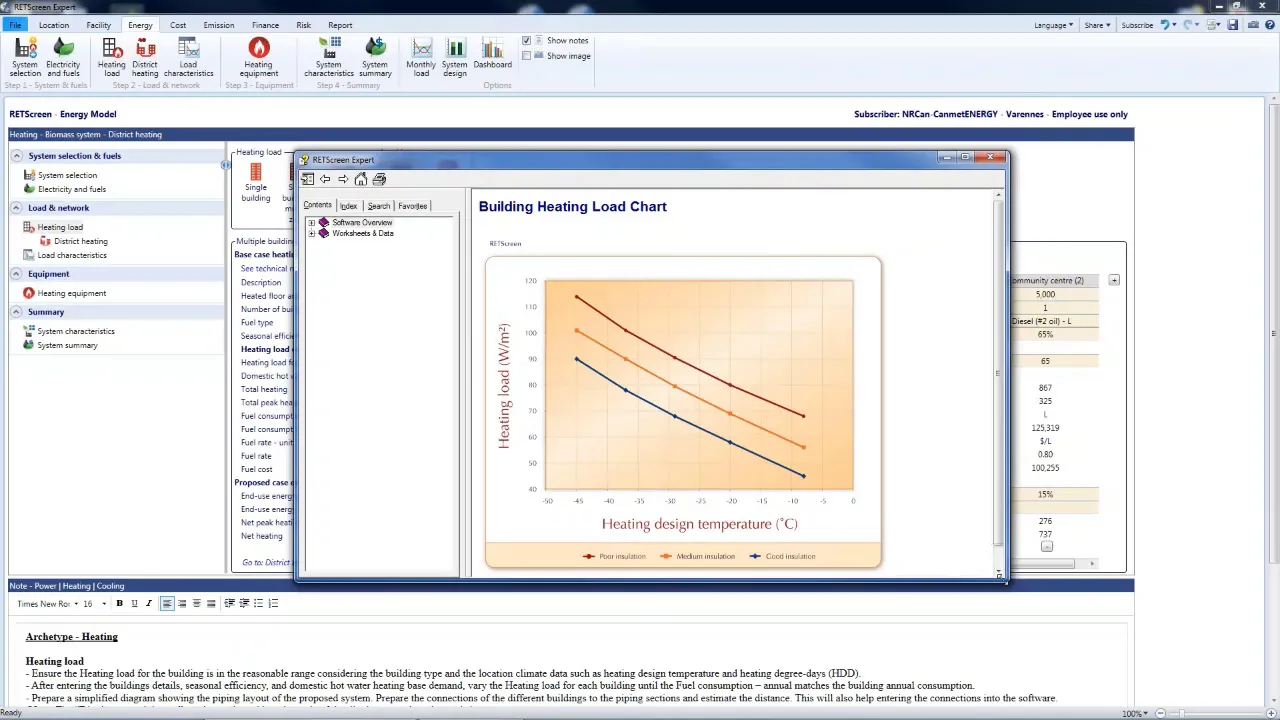
- The proposed case involves calculating the heating load by introducing energy efficiency measures to reduce it. This approach is cost-effective.
- It is recommended to reduce facility loads before installing costly systems like district heating. A 15% reduction in heating load is suggested for each building or building cluster.
Designing District Heating Network
- The user will prepare a preliminary design by entering supply and return temperatures, calculating differential temperature, and designing the main distribution line based on the district layout.
- Oversizing pipes is considered if future load increase is expected. The software calculates load, pipe size for each section accounting for oversizing.
Cost Estimation and Methodology Selection
- Total pipe length calculation is crucial in determining costs. Users select a methodology (e.g., formula costing method) to evaluate pipe and energy transfer station costs.
- Customization options are available; users can adjust costs using factors or enter individual costs through detailed methods.
Selection of Heating Equipment and System Characteristics
This part covers selecting heating equipment based on defined heating loads, choosing system types (e.g., biomass), setting seasonal efficiency rates, estimating delivered heat, boiler specifications, initial costs, operation & maintenance expenses.
Selecting Heating Equipment
- Users choose system type (e.g., biomass), fuel type (e.g., wood waste), capacity matching peak load requirements with set efficiencies.
- Boiler specifications include water/steam generation details with initial cost calculations from COS database. Operational & maintenance costs are estimated at $14 per megawatt-hour.
System Summary and Additional Costs
- System characteristics summarize base load systems with backup proposals. Wood waste requirements are calculated annually; users verify fuel availability with suppliers.
- Additional costs like construction expenses ($150k) are added to initial costs. Annual fuel costs for base case contribute to savings compared to proposed case's fuel expenses.
Financial Analysis and Environmental Impact Assessment
This segment delves into financial aspects such as premium rebates assumed in financial analysis along with environmental impact assessments focusing on greenhouse gas emission reductions.
Financial Analysis
- A premium rebate assumption of forty percent indicates end-users' willingness to pay more for biomass district heating energy than conventional sources.
Environmental Impact Assessment
- Greenhouse gas emissions show a reduction of six hundred sixty-four tonnes of CO2 equivalent to over one hundred fifty acres of forest carbon absorption due to project implementation.