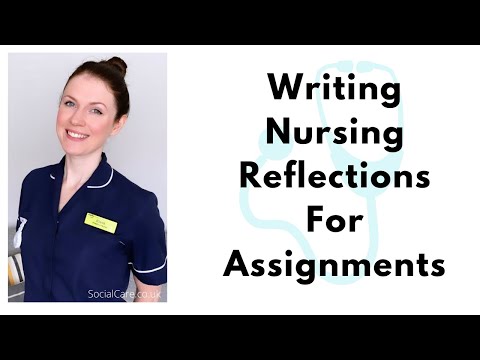
How to write a reflection for an assignment | Nursing UK
Writing Reflections for Assignments
In this video, the speaker provides tips on how to write reflections for assignments. The speaker suggests using a reflective cycle and following a structure of an introduction, main body, and conclusion.
Using a Reflective Cycle
- Use a reflective cycle to help with the structure of your reflection.
- Gibbs is a popular reflective cycle that is easy to follow.
- Driscoll is another reflective cycle that can be used.
- Choose the reflective cycle that suits you best.
Structure of Reflection
- Follow the structure of an introduction, main body, and conclusion.
- The introduction should describe what happened.
- The main body should explain why it's relevant and important according to guidelines and policies.
- The conclusion should focus on how you will improve future practice.
Choosing a Topic
- Reflection topics can be positive or negative experiences.
- Follow the same structure regardless of whether it's positive or negative.
Overall, writing reflections for assignments requires good structure and following a reflective cycle. It's important to choose a topic that suits you best and follow the same structure regardless if it's positive or negative experience.
Using References in Nursing Assignments
In this section, the speaker discusses the importance of using references in nursing assignments and provides tips on how to find relevant articles and resources.
Finding Relevant Articles and Resources
- Use online libraries and search engines to find articles related to your topic.
- Use specific keywords related to your topic when searching for articles.
- Look for articles from reputable sources such as nursing journals or professional organizations like RCN or NMC.
- Use these articles to support your arguments and provide evidence for your claims.
Incorporating References into Your Assignments
- When incorporating references into your assignments, be sure to cite them properly according to the guidelines provided by your institution.
- Use references to back up your own experiences and feelings as a student nurse.
- Use critical analysis when incorporating references by weighing different perspectives on a topic.
- Use references to support your overall conclusion about a topic.
Tips for Writing Reflection Assignments
- Keep reflections confidential by not mentioning specific hospitals or trusts.
- Be concise and organized in writing reflections.
- Focus on what you learned from an experience rather than just describing it.
Overall, using references is important in nursing assignments as they provide evidence for claims made in the assignment. It is important to use reputable sources such as nursing journals or professional organizations like RCN or NMC. When incorporating references, be sure to cite them properly according to institutional guidelines. Additionally, when writing reflection assignments, it is important to focus on what was learned from an experience rather than just describing it.
Confidentiality and Reflection in Nursing
The speaker discusses the importance of maintaining confidentiality in nursing and how to approach reflection assignments.
Confidentiality
- Do not include any names or trust names in assignments or social media posts to maintain confidentiality.
- Only reference a name or trust if it is necessary for a policy or procedure.
Reflection Assignments
- Use "I" for the beginning of your reflection, but switch to third person for the main body and back to first person for the conclusion.
- Check your university's guidelines on whether to use first or third person.
- Go into depth with critical analysis and explain why things are important, how they made you feel, and why you felt that way. Dig deeper by asking yourself "why?" repeatedly.
- Include critical analysis in every paragraph and show wider reading with good quality references such as research papers, articles, journals, NMC codes, government policies, procedures, and guidelines. Use a reference for every 50 words.
Tips for Writing Assignments
In this section, the speaker provides tips on how to write assignments effectively.
Aim for the Top Grade
- Always aim for the top grade possible.
- Marking criteria should guide your writing process.
- Hitting those marks will help you get a better grade.
Critical Analysis Made Simple
- Critical analysis is simply weighing pros and cons.
- Think of it like buying a mobile phone.
- Don't overthink it; just analyze something critically.
Conclusion and Well Wishes
The speaker concludes with some final thoughts and well wishes.
- If there's anything missed or unclear, comment below.
- It's going to be a rough start to the year, but hopefully things will improve by the end of 2021.
- Stay happy, safe, and healthy.