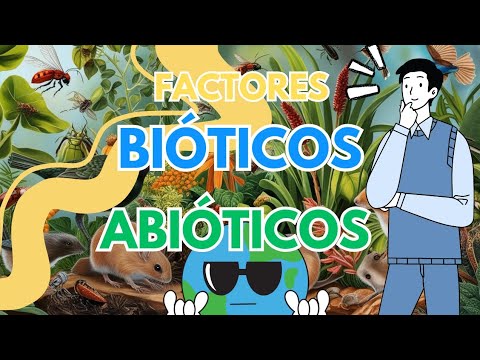
LOS FACTORES BIÓTICOS Y ABIÓTICOS
Exploring Biotic and Abiotic Factors
Understanding Biotic Factors
- Biotic factors are living components of an ecosystem that interact with each other, contributing to the sustenance of life.
- Examples include plants that produce oxygen and food, animals that engage in interactions, and microorganisms like bacteria and fungi that decompose organic matter.
- Essentially, any living organism within an ecosystem qualifies as a biotic factor.
Understanding Abiotic Factors
- Abiotic factors refer to the physical and chemical components of an ecosystem that do not possess life or require living organisms for their functions.
- These factors are crucial for the survival of biological communities; they include sunlight necessary for photosynthesis, water essential for life, temperature affecting climate adaptation, and soil minerals nourishing plants.
Interaction Between Biotic and Abiotic Factors
- The relationship between biotic and abiotic factors is vital as they collectively determine how ecosystems function.
- Non-living elements influence the survival of living beings; for instance, sunlight enables photosynthesis in plants while temperature dictates species habitation (e.g., polar bears in cold climates).
- Conversely, living organisms can modify their non-living environment; trees provide shade altering soil temperature while plant roots prevent erosion.
Consequences of Changes in Abiotic Factors
- Alterations in abiotic factors can significantly impact biodiversity. For example:
- Increased temperatures due to climate change affect many species' habitats.
- Water pollution has detrimental effects on aquatic life such as fish.