Thomas Hellum: The world's most boring television ... and why it's hilariously addictive
Slow TV: The Rise of Boring Television
In this section, the speaker introduces the concept of "Slow TV" and how it originated in Norway.
Slow TV: A New Kind of Reality TV Show
- Slow TV is a new kind of reality TV show that goes against all the rules of TV engagement.
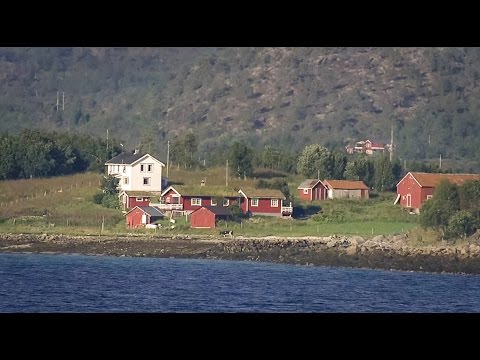
- Norwegians have been watching a cruise ship's journey up the coast for the past two months.
- Marcela Pizarro was sent to Oslo to find out what it is about this TV experiment that has gripped Norwegians.
The Birth of Slow TV
- In 2009, Thomas Hellum and his colleagues came up with an idea to make a radio program marking the day of the German invasion of Norway in 1940.
- They discussed what other stories they could tell as they evolve and one colleague suggested a train ride.
- They pitched their idea to NRK2, who agreed to broadcast their documentary about the Bergen Railway live for seven hours and four minutes.
The Success of Slow TV
- Over 1.2 million Norwegians watched part of the Bergen Railway show, making it far more attractive than anyone had anticipated.
- Social media played a huge role in its success, with thousands discussing the same view on Facebook and Twitter as if they were on the same train together.
- Just a week after broadcasting the Bergen Railway show, NRK2 started planning for their next show - Hurtigruten from Bergen to Kirkenes.
The Birth of Slow TV
In this section, the speaker talks about how they came up with the idea for their next project and how it led to the creation of Slow TV.
Creating a Live Picture
- The speaker and their team wondered if more people would show up if they knew they were on board a train.
- They decided to make their next project live and wanted to have a picture of themselves on the fjord and on the screen at the same time.
NRK's Previous Experience
- NRK had previously been on board a ship in 1964, where they rolled all their equipment onto a ship and transmitted signals back from 200 meters out of shore.
- They had splendid entertainment on deck while technical managers wore suits and ties.
Asking Viewers for Help
- The team asked viewers what they wanted to see, how they wanted it filmed, and whether or not they wanted a website.
- They received answers that helped them build the program.
Setting Sail
- In June 2011, 23 people went aboard Hurtigruten coastal ship for five-and-a-half days.
Memories from Five-and-a-Half Days Aboard Hurtigruten Coastal Ship
In this section, the speaker shares some strong memories from their time aboard Hurtigruten coastal ship during their Slow TV project.
People Make All Stories
- Strong memories include meeting people like Erik Hansen who took a firm grip of our program along with thousands of others along the route who made all stories.
- Karl was one such person who was in ninth grade. He was late for school because he watched the program but didn't get a note from his teacher.
Turning a Conference Room into a TV Control Room
- The team turned a conference room on board the Hurtigruten into a complete TV control room.
- They took along 11 cameras, including one that was normally used for sports and made it possible to take close-up pictures of people 100 kilometers away.
Social Media Success
- The program was successful on social media, with thousands of people waving at them along the route.
- On the last day, they met Her Majesty the Queen of Norway, which Twitter couldn't quite handle.
Slow TV Becomes a Buzzword
In this section, the speaker talks about how Slow TV became a buzzword and how they started looking for other things to make Slow TV about.
Peep Show Project
- The peep show project involved 14 hours of birdwatching on a TV screen and 87 days on the web.
- They also made 18 hours of live salmon fishing and 12 hours of boat ride into the beautiful Telemark Canal.
Conclusion
Slow TV became popular in Norway due to its unique approach to broadcasting. By taking long events or topics and making them into slow-paced programs, viewers were able to experience something new and different.
Our Next Project
In this section, the speaker talks about their next project that gained attention outside Norway.
The Project and its Impact
- The speaker mentions that their next project gained attention outside Norway.
- The speaker does not provide any details about the project but only mentions its impact.
Turn any video into a summary like this
YouTube links, meetings, lectures. With transcripts, search, and chat.