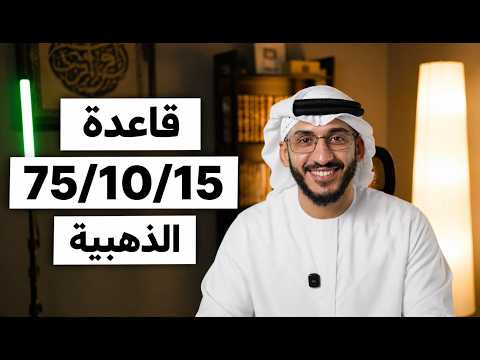
قاعدة 25/50/15/10: النظام المالي الذي يتبعه الأذكياء لبناء الثروة
Understanding Wealth and Financial Management
The Composition of Wealth
- The speaker emphasizes that understanding wealth can change one's financial behavior permanently, highlighting that 75% of the world's wealthy are business owners.
- Only 15% are investors, while a mere 3% are athletes or artists; employees make up 0%, indicating a lack of ownership in wealth creation.
- Employees who do not invest their earnings remain trapped in a cycle of dependency on their salaries, lacking true ownership.
The Importance of Ownership
- To achieve financial success, one must own assets that appreciate over time rather than merely relying on salary income.
- The speaker introduces the "15-25-50-10" rule for managing finances effectively, which applies regardless of income level.
The 15-25-50-10 Rule Explained
Breakdown of the Rule
- 25% should be allocated to growth and building wealth through investments in appreciating assets.
- Most people fail to track their spending after paying bills, leading to financial stagnation; this is perpetuated by a consumer-driven economy.
Investment Examples
- An example illustrates how starting early with investments leads to significantly greater returns due to compound interest.
- Ahmed invested $200 monthly from age 20 and ended up with $1.2 million at age 60 compared to Khaled's $678k despite investing more later.
Steps for Effective Investing
Choosing Investments
- Begin by selecting halal assets ranging from low-risk options like sukuk (Islamic bonds), real estate, high-income skills (like programming), to higher-risk stocks and cryptocurrencies.
Practical Steps for Investment
- Open an investment account with platforms like XTB or Baraka; automate transfers from your bank account into these investment accounts as soon as you receive your salary.
Emergency Fund and Basic Needs
Establishing an Emergency Fund
- Allocate 15% for emergencies; calculate monthly expenses and multiply by three months if living with family or six months if independent.
Essentials Allocation
- 50% should cover basic needs such as housing, food, and utilities. If expenses exceed this percentage relative to income, lifestyle adjustments may be necessary.
Lifestyle Adjustments for Financial Health
Managing Expenses Wisely
- Individuals often overspend due to lifestyle choices; even those earning high incomes can struggle financially if they live beyond their means.
Final Thoughts on Spending Habits
- Avoid speculative investments like CFDs (Contracts for Difference); focus instead on tangible assets that provide real value.
Enjoying Life While Saving
Allocating Discretionary Spending
- Finally, allocate 10% for personal enjoyment—dining out or entertainment—to maintain balance without compromising savings goals.
Turn any video into a summary like this
YouTube links, meetings, lectures. With transcripts, search, and chat.