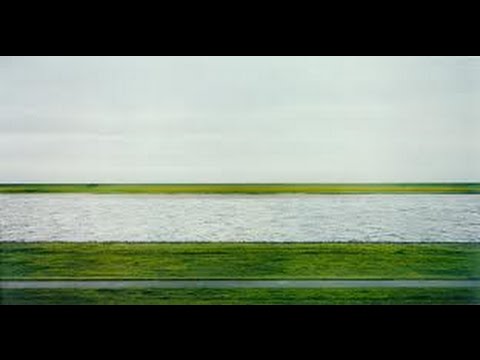
Düsseldorfer Fotoschule - Die neue deutsche Objektivität
Bernt and Hilla Becher: Pioneers of Industrial Photography
Introduction to the Bechers' Work
- The Bechers, Bernt and Hilla, embarked on a project documenting the industrial world in decline, capturing structures that were being demolished.
- Their influence extends across generations of photographers, with notable students including Andreas Gursky.
Context of Industrial Decline
- The late 1960s marked the end of coal and steel industries in Northern Europe, leading to significant societal and landscape changes.
- The Bechers systematically photographed industrial buildings slated for demolition across Belgium, France, and England.
Artistic Approach and Philosophy
- Their photography aimed to reveal the intrinsic beauty of industrial structures rather than their functional purpose.
- They sought to eliminate expressionistic elements from photography, striving for pure documentary objectivity.
Methodology in Photography
- Strict rules governed their photographic process: no distractions or artistic effects allowed; focus remained on central perspectives.
- Photos were taken under specific conditions (e.g., winter light), avoiding shadows that could distort reality.
Influences and Techniques
- The Bechers drew inspiration from American photographer Walker Evans and German photographer August Sander's work on typologies.
- They photographed buildings from multiple angles (eight at 45° intervals), merging them into single images known as "Abwicklung."
Recognition and Legacy
- By the 1960s, their typological works gained recognition; they received the Golden Lion at the Venice Biennale in 1990 for sculptures.
- Bernt became a professor at Kunstakademie Düsseldorf, shaping future generations of photographers within what became known as the Düsseldorf School.
Characteristics of Student Works
- Students exhibited common traits such as objectivity through frontal shots and a cold aesthetic despite color usage.
- Notable student Petra Wunderlich maintained strict adherence to black-and-white photography while exploring urban themes.
This structured summary encapsulates key insights from the transcript regarding Bernt and Hilla Becher's contributions to photography while providing timestamps for easy reference.
The Role of Composition in Photography
Decentralization and Depth
- The placement of the Greater Bibleway Temple at the edge of the composition forces a decentralization, enhancing depth by drawing attention to the street.
- In contrast to the Bechers' focus on external forms, this approach gives more weight to the temple's image within its context.
Architectural Objectivity vs. Subjective Experience
- Candida Höfer applies principles of objectivity from exterior architecture to interior spaces, allowing for a nuanced interaction with space.
- A slight asymmetry in her frontal compositions adds emotional weight, making locations feel more oppressive and intentional.
Light and Atmosphere in Photography
- The interplay of light creates unexpected levity in stark architectural settings, contrasting with harsh lighting that emphasizes structural rigor.
- Thomas Struth’s photographs introduce human presence into empty spaces, creating a dialogue between visitors and artworks through their positioning.
Strategies for Capturing Space
Enhancing Spatial Perception
- In Pergamon Museum, Struth decentralizes his images to amplify spatial awareness while incorporating actors to enhance theatricality.
Manipulation of Reality in Photography
- Andreas Gursky's work exemplifies extreme manipulation; he captures vast structures like Montparnasse by avoiding vertical distortions through strategic angles.
Digital Techniques and Artistic Intent
- Gursky’s digital montages create hyperrealistic visions that challenge perceptions of truth; they blend multiple perspectives into cohesive images.
The Intersection of Nature and Human Presence
Contrasting Scale in Imagery
- Gursky juxtaposes monumental scientific structures against small human figures, emphasizing scale differences through montage techniques.
- His use of clothing as visual elements fills voids within compositions while subtly hinting at worker presence without direct visibility.
Romantic Visions and Manipulated Realities
The Aesthetic of Scale and Spirituality
- Figures in the artwork are significantly reduced in size to enhance the dramatic effect, following techniques used by 19th-century romantic painters.
- The depiction of a cathedral serves as a clear reference to a romanticized vision of the Middle Ages, portraying filmmakers as pilgrims amidst dark crypts illuminated by sunlight filtered through de-saturated windows.
- The actual interior of the cathedral is obscured; columns block views of windows, leading to a curated experience that emphasizes only certain visual elements.
- Gurski's idea likely stemmed from observing how columns and walls could be eliminated to create an impressive wall solely composed of windows, with human figures underscoring their scale.
- Reality becomes raw material for manipulation; Gurski alters images extensively, including adding reflections and digitally redesigning product colors akin to advertising.
Thomas Ruff's Approach to Photography
- Thomas Ruff also manipulates his photographs but is transparent about it; his series "Self-Portrait" (1991) marks him as the sole Düsseldorf School photographer focusing on portraiture.
- His portraits feature young individuals against neutral backgrounds, devoid of expression or personal insight—akin to passport photos—emphasizing surface over depth.
- Ruff’s fascination with scientific curiosities led him to explore image-making tools like a phantom image generator used by police in the 1970s, which he repaired after finding one at a museum.
- By inputting portraits into this machine, he created faces that never existed, exploring themes around identity and representation through his series titled "Other Portraits."
- He later turned his lens towards media representations of war during the Gulf War, capturing night battles via night vision technology.
Voyeurism and Digital Manipulation
- Using night vision equipment allowed Ruff to photograph Düsseldorf at night; these mundane scenes take on an ominous quality due to their greenish tint suggesting hidden narratives or past crimes.
- This new technology transforms viewers into detectives or voyeurs; Ruff delves into virtual imagery circulating online through his series "New Act Photos," reinterpreting pornographic images for canvas display.
- He challenges documentary precision norms by critiquing how such images often lack substantial information while perpetuating degrading portrayals.
- In his series "Jpack," Ruff highlights digital images' pixelation—revealing their constructed nature—as reality cannot be fully captured visually anymore.
- For Bernd and Hilla Becher, photography was inherently documentary; however, technological advancements have shifted this paradigm away from direct reality representation.