INVESTIGACION 2022 CLASE 2
Understanding the Scientific Research Process
Introduction to Scientific Research and Self-Learning Proposals
- The discussion begins with an overview of scientific research themes, characteristics, and self-learning proposals aimed at helping individuals identify differences in their learning processes.
- Emphasis is placed on setting achievable goals that can be reached through scientific inquiry, encouraging viewers to reflect on their current preferences and dislikes.
Confidence and Personal Growth
- The speaker highlights a common educational gap: while many subjects are taught from a young age, self-confidence is often overlooked. This lack of confidence can hinder personal development.
- A call to action is made for individuals to set deadlines for their dreams and actively work towards achieving them.
Comfort Zones vs. Learning Zones
- The concept of the "comfort zone" is introduced as a metaphorical space where individuals feel safe but stagnant. Stepping outside this zone is portrayed as essential for growth.
- Leaving one's comfort zone may evoke fear; however, it also opens up opportunities for significant challenges and learning experiences.
Navigating Emotional Tension in Learning
Emotional and Creative Tension
- The importance of emotional tension in overcoming fears is discussed. Individuals are encouraged to believe in themselves as protagonists of their own lives.
- Reflecting on one’s origins, values, and principles can aid in clarifying personal dreams and objectives.
Setting Achievable Goals
- It’s emphasized that everyone should have clear life objectives that are planned out realistically. Continuous learning is framed as crucial for making dreams a reality.
The Role of Research in Personal Development
Characteristics of Effective Research
- Key elements of scientific research include having a subject, object, medium, and purpose. These components guide the research process effectively.
- Clear research objectives are vital; they provide direction throughout the investigative journey.
Overcoming Limitations Through Knowledge
- Understanding community needs through local governance can lead to better future outcomes. Knowledge generation plays a critical role in addressing contemporary issues like climate change.
Understanding the Scientific Method
The Importance of Definitions and Personal Mission
- Emphasizes the significance of definitions in generating new knowledge and understanding one's personal mission in life.
- Encourages maintaining creative tension and trusting oneself to pursue dreams while recognizing the role of scientific methods in this journey.
Research Preparation and Community Needs
- Highlights the necessity of preparing a research strategy, being persistent, and staying positive to meet community needs effectively.
- Stresses that continuous learning is essential for personal growth and contributing to community well-being.
Exploring Scientific Inquiry
Steps in Scientific Research
- Outlines key steps in scientific inquiry: formulating hypotheses, testing them, concluding results, and sharing findings.
- Discusses how observation leads to challenging questions that can be empirically tested.
The Nature of Knowledge Construction
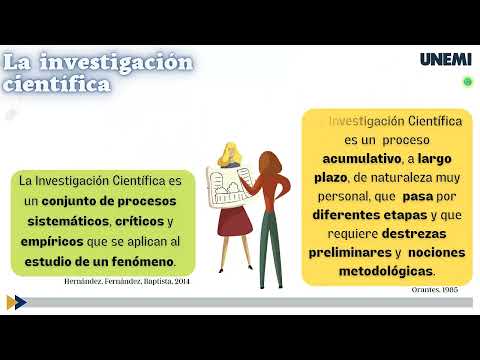
- Describes scientific research as a systematic process aimed at improving theoretical knowledge and technological advancements.
- Explains that prior knowledge is crucial for forming new insights; emphasizes fairness in hypothesis testing.
Causality vs. Correlation
Understanding Relationships Between Variables
- Clarifies that correlation does not imply causation; one must critically analyze data relationships without jumping to conclusions.
- Warns against selective observations which may lead to misleading interpretations about happiness levels among different demographics.
The Role of Hypothesis Testing
- Discusses the importance of rigorous testing conditions when evaluating hypotheses; highlights potential biases from self-reported data on happiness.
Research Methodology and Objectives
Understanding Research Foundations
- The video discusses the importance of starting research with thorough observation and investigation, emphasizing the need for a comprehensive understanding of the specific topic.
- It highlights defining the problem to be investigated, suggesting that this involves formulating a hypothesis that can be tested through questions.
- A sample population is introduced, where 300 women and 300 men are invited to participate in research, raising concerns about their reliability in reporting true happiness levels.
Analyzing Data and Hypothesis Testing
- The discussion shifts to analyzing data collected during research to determine if the initial hypothesis holds true.
- The theoretical framework is crucial as it supports the methodology used in research; it includes reviewing existing literature on relevant topics.
Sharing Results and Continuous Improvement
- Once satisfied with data analysis, researchers should share results. This process encourages ongoing learning and improvement among students involved in research activities.
The Role of Comfort Zones in Learning
Defining Comfort Zones
- The concept of "comfort zone" is introduced as a metaphorical space where individuals feel safe due to familiarity with their habits, routines, skills, and behaviors.
Expanding Horizons Through Learning
- Surrounding the comfort zone is the "learning zone," which represents opportunities for growth through new experiences such as learning languages or traveling.
Overcoming Fear of New Experiences
- Beyond learning lies the "panic zone," often perceived as dangerous by those who fear stepping outside their comfort zones. However, this area can also lead to significant personal growth.
Embracing Challenges for Growth
Understanding Change and Emotional Tension
The Nature of Change
- Change is not merely about loss; it signifies development and growth. It often evokes fear, primarily the fear of losing what one currently possesses or even one's identity.
- Emotional tension arises from two opposing forces: the pull towards comfort zones and the push towards exploration and growth.
Motivation in the Face of Change
- To progress, one must harness motivation effectively, balancing between comfort and creative tension.
Research Process Overview
Key Components of Research
- Understanding research involves recognizing its foundational elements: background knowledge, conceptual definitions, hypotheses, and variables.
- Acknowledging fears such as failure or embarrassment is crucial for personal growth in research endeavors.
Adapting Research Processes
- The research process can be tailored to meet specific needs by clarifying objectives and formulating relevant research questions.
Theoretical Framework in Research
Importance of Literature Review
- Reviewing existing literature helps establish a theoretical framework that informs the direction of new research.
- Reflecting on personal values and principles is essential when deciding on the type of research (descriptive, experimental, correlational).
Becoming an Effective Researcher
Steps to Conduct Research
- Essential steps include selecting a sample, collecting data, analyzing results, and understanding how to become competent researchers.
- Embracing vulnerability is part of becoming a researcher; confidence can be regained through preparation and self-belief.
Continuous Learning in Research
Mastery Through Study
- Mastery over a subject requires ongoing learning through reading and investigation to solve community problems effectively.
Characteristics of Scientific Inquiry
- Scientific inquiry involves asking fundamental questions about phenomena (e.g., vaccine development for COVID), emphasizing problem-solving approaches.
The Essence of Investigation
Defining Investigation
- Investigating entails questioning reality with an open mind while maintaining prudence. Continuous questioning leads to hypothesis formation and knowledge generation.
Research Methodology Evolution
Adaptability in Research
- The methodology used should evolve based on new findings; science is dynamic, allowing for continuous opportunities for learning and discovery.
Summary of Scientific Research Process
Systematic Approach
- The scientific research process consists of systematic steps aimed at generating knowledge. Each step builds upon previous findings to enhance understanding.
Long-term Nature of Knowledge Acquisition
Cumulative Learning
Scientific Method and Research Process
Understanding the Scientific Method
- The scientific method involves applying a systematic approach to research, documenting each step for clarity and understanding. It is essential for researchers to identify whether they can effectively implement this process.
- Research begins with prior knowledge, which informs the elements of the investigation. Key components include the subject (individuals or teams), methodology, and clear objectives that guide the research direction.
- Clear research objectives are crucial as they dictate the methods and strategies employed to achieve desired outcomes. These objectives serve as a roadmap throughout the research process.
Characteristics of Scientific Research
- Scientific research must be original; it cannot simply replicate existing work. This originality is vital for contributing new insights to the field.
- Objectivity is another cornerstone of scientific inquiry, ensuring that findings are based on facts rather than personal biases. Additionally, research should be verifiable, allowing others to confirm results through replication.
- Knowledge in science builds cumulatively upon previous discoveries. A solid theoretical framework is necessary for generating new knowledge and addressing community needs effectively.
Steps in Conducting Scientific Research
- The scientific method consists of several steps: observing and questioning phenomena, conducting investigations, formulating hypotheses, testing these hypotheses, concluding findings, and sharing results with others.
- Historical context highlights Iben Alhaitham's contributions in the 11th century as a foundational figure in optics and scientific methodology. His recognition underscores the importance of structured inquiry in understanding natural phenomena.
Practical Application of Hypothesis Testing
- The first step involves observation leading to questions that can be tested scientifically. For example: "Why do women laugh more than men?" This question sets up a focused line of investigation.
- Investigating existing literature helps refine questions by identifying similar studies or analyses related to one's topic of interest—this could involve searching terms like "study" or "meta-analysis."
- Formulating a hypothesis allows researchers to propose testable theories based on observations made during initial inquiries. An example hypothesis might state that women laugh more frequently due to higher happiness levels compared to men.
Scientific Method: Steps and Considerations
Understanding Variables in Experiments
- The importance of considering the interviewer's gender and its potential influence on responses, highlighting that context matters in data collection.
- Emphasizes the need to analyze data carefully after conducting experiments, allowing for adjustments to hypotheses based on findings.
Sharing Results and Scientific Integrity
- Stresses the necessity of detailing methods when reporting results to enable peer review, which is crucial for scientific publication.
- Discusses the concept of falsifiability in scientific theories; a theory must be testable and cannot be proven 100% correct.
Correlation vs. Causation
- Highlights the distinction between correlation and causation using examples like church attendance versus bar presence, urging caution in drawing conclusions from data.
- Warns against selective reporting of facts, illustrated by Colgate's misleading advertising practices that led to legal consequences.
Practical Application of Scientific Method
- Engages viewers with an example involving coins to illustrate how size does not always correlate with value, prompting critical thinking about sample sizes before reporting results.
Overview of Research Process
- Outlines the generic steps involved in scientific research: observation, hypothesis formulation, experimentation, analysis, and conclusion.
Research Process Overview
Stages of the Scientific Research Process
- The research process can be adapted based on specific needs and researcher profiles, starting from a generic framework to develop a comprehensive investigation.
- Initial steps include conceiving an idea, defining the problem, setting objectives, formulating research questions, and analyzing feasibility.
- Researchers must select an appropriate methodology (descriptive, experimental, correlational), define hypotheses and variables, choose samples, collect data, analyze results, and present findings.
Becoming an Effective Researcher
- To become researchers, students should generate new knowledge by solving community problems through continuous learning and inquiry.
- Mastery of the study topic is essential; this involves extensive reading and engaging with various educational resources like documentaries and webinars.
Developing Research Skills
- Curiosity drives effective research; one should constantly seek information across digital platforms while being open-minded in hypothesis formulation.
- Research is accessible to everyone; identifying suitable methodologies allows for effective execution of the research process.
Summary of Key Concepts
- The essence of scientific research involves addressing a problematic situation followed by objective setting and theoretical framework selection before applying methodology for data collection and analysis.
- Adaptations may be necessary depending on project requirements or international calls for proposals.
Self-Learning Proposal: Applying the Scientific Method
Experimentation Challenge
- A self-learning proposal encourages documenting an experiment that applies the scientific method effectively within one's environment.
What is Your Research Process?
Motivation in Research
- The speaker emphasizes the importance of perseverance in research, stating that "it always seems impossible until it is done," which serves as a motivational reminder to continue learning and striving for success.
Importance of Documentaries
- A recommendation is made for a documentary from DW Documentaries, highlighting its relevance and interest in the context of research processes.
Social Media Safety: Protecting Children and Adolescents
Understanding Social Media Risks
- The discussion shifts to the dangers present on social media platforms, particularly concerning children and adolescents. The speaker stresses the necessity of being aware of these risks.
Recommended Viewing
- A specific video or documentary is suggested for viewers to gain insights into protecting young users online. This resource aims to educate about potential threats associated with social media usage.
Accessing Educational Resources
How to Access the Documentary
- Viewers are instructed on how to access the recommended documentary via a QR code or by entering a provided link directly into their browser, ensuring they can easily find this valuable information.
Alternative Search Methods
Turn any video into a summary like this
YouTube links, meetings, lectures. With transcripts, search, and chat.