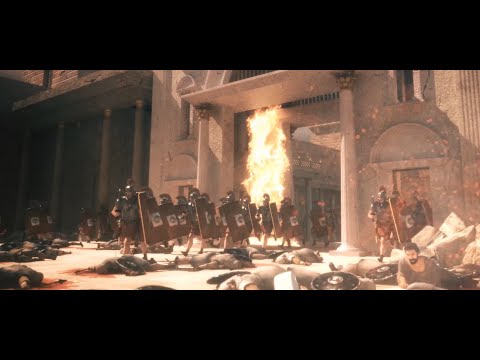
מקדש בלהבות -הקרב האחרון על ירושלים וחורבן הבית השני
The Siege of Jerusalem: A Historical Overview
The Context of the Roman Campaign
- In 70 AD, Titus leads his legions from the coastal plain to Jerusalem, frustrated after four years of failed attempts by the Roman army to suppress a fierce rebellion in Judea.
- The Jewish fighters are engaged in a desperate struggle for every piece of land, showcasing their determination and resilience against overwhelming odds.
- Even the esteemed commander Vespasian, father of Titus, could not subdue them, highlighting the strength and tenacity of the Jewish resistance.
The Beginning of the Siege
- Now it is Titus's turn to conduct military operations with one of the most powerful war machines in history at his disposal.
- He commands seasoned legionaries equipped with advanced weaponry and artillery capable of devastating attacks.
- Against this formidable Roman army stands a small group of warriors willing to fight for their freedom until their last drop of blood.
Initial Assault on Jerusalem
- The campaign marks a significant phase in the Great Jewish Revolt against Rome; it promises to be an unforgettable battle.
- Under cover of night, Titus positions his soldiers around Jerusalem from three directions.
- As dawn breaks over Judea, residents awaken to a scene filled with bloodshed as 60,000 Roman soldiers encircle the city.
Destruction and Chaos
- The Romans begin their assault amidst chaos caused by previous conflicts that had already devastated parts of Jerusalem.
- They destroy essential storage facilities that could have provided vital food supplies during the siege.
- With resources dwindling and morale low among defenders due to lack of weapons and soldiers, they resolve to compensate through bravery and strategic maneuvers.
Counterattacks by Jewish Defenders
- The Jews take initiative into their own hands by launching surprise attacks on Romans before they can fully establish themselves.
- These unexpected assaults cause confusion among Roman troops who scatter under pressure.
- However, once Romans regrouped successfully behind fortified walls, Jewish fighters retreat back into Jerusalem’s stronghold.
Fortifications and Tactical Challenges
- Jerusalem is situated on a hill surrounded by three fortified walls; each wall is stronger than its predecessor.
- To breach such defenses, Titus must construct siege ramps high enough to deploy siege towers capable of overcoming these barriers.
Archaeological Evidence
- Excavations around Jerusalem reveal remnants indicating existence and structure of its third wall—the outermost fortification—during this tumultuous period.
- Artifacts found include ballista stones used in warfare which provide evidence for intense battles fought here.
Breaching Walls: A Turning Point
- When heavy artillery strikes hit these walls directly,
- it becomes increasingly dangerous for defenders as they face relentless bombardment leading up to eventual breaches.
Fall into Chaos: Aftermath Inside City Walls
- Once inside Zeta neighborhood,
- Roman soldiers commit atrocities against civilians while setting entire areas ablaze.
Shift in Power Dynamics
- Within days following initial incursions,
- internal structures collapse as resistance weakens significantly under sustained pressure from invading forces.
Strategic Moves Towards Antonia Fortress
- Titus directs efforts towards capturing Antonia Fortress—the strongest bastion within city limits—by undermining its foundations for collapse upon enemy troops stationed there.
Change in Tactics Amidst Setbacks
- Faced with setbacks during direct assaults,
- Titus decides instead on surrounding city completely using siege works designed specifically for blockade purposes aimed at starving inhabitants into submission.
Starvation Tactics Take Effect
- Within just three days,
- he erecting massive barricades effectively cutting off all supply routes leading into besieged territory resulting starvation conditions worsening rapidly amongst populace trapped within confines.
Human Suffering During Siege
- People resorting desperately scavenging through refuse seeking scraps left behind;
- children seen wandering streets emaciated searching hopelessly for morsels amid dire circumstances created by prolonged conflict escalating further daily without resolution insight ahead .
Final Assault Preparations
-[] (T=t451)s As hunger ravages remaining defenders’ spirits ,
-[] (T=t467)s focus shifts towards preventing capture key strongholds like Antonia while sabotaging enemy efforts constructing additional siege equipment .
Climax Leading Up To Destruction
-(T=t520)s After fierce confrontations ,Roman forces finally seize control over Antonia fortress marking pivotal moment shifting balance power decisively favoring invaders .
The Siege of the Temple: A Historical Account
The Roman Assault Begins
- The Roman forces breach the western wall of the Temple, with ladders placed against the remnants of the wall as soldiers flood into the expansive area surrounding the Temple.
- The unfolding events are described as unprecedented and shocking in their brutality.
Jewish Resistance
- As Jews realize that their sacred Temple is in imminent danger, they shake off feelings of hunger and weakness, rallying for a desperate defense.
- On the night of Tisha B'Av, there is a significant mobilization at the gates surrounding the Temple Mount.
Chaos and Carnage
- Romans forcefully enter the Temple grounds, killing and trampling anyone who stands in their way.
- Blood floods over the colorful stone pavement of the Temple complex, highlighting the violence occurring within its sacred space.
Final Moments Before Destruction
- Just before setting fire to the Temple, Titus convenes commanders for a final discussion that will determine its fate.
- Josephus recounts how Titus was struck by awe at seeing such a monumental creation being destroyed.
The Fire and Its Aftermath
- According to Josephus, chaos ensues due to Roman soldiers disobeying orders amidst widespread destruction.
- On Tisha B'Av evening, Titus gives orders that lead to his soldiers igniting flames within the Holy Sanctuary.
Symbolism of Loss
- The once-inspiring site for Jews now burns; it had been a source of inspiration and justice for both Jews and humanity but is reduced to ashes.
- The pain felt by Jews during this destruction resonates deeply, reaching metaphorical heights as they mourn their loss.
Continued Resistance
- In higher areas of Jerusalem, rebels continue fighting stubbornly for another month until Roman control is fully established.
Evidence of Destruction
- Archaeological findings reveal signs of fire and devastation; what was once an affluent neighborhood now lies in ruins after Jerusalem's complete destruction.
Gripping Testimonies
- Haunting evidence from Jerusalem's last moments includes remains found among layers of ash—specifically a severed arm belonging to a young woman alongside her spear.
Final Days in Hiding
- It appears she did not manage to escape to safety during those chaotic times; many sought refuge underground but were ultimately discovered by Romans.
Harsh Realities Post-Siege
- Those captured faced dire fates—either sold into slavery or forced into brutal gladiatorial games against wild beasts.
Triumph Celebrated in Rome
- Jewish captives paraded through Rome’s streets while treasures looted from Jerusalem were displayed prominently during grand victory celebrations honoring Rome's conquest over Judea.
Conclusion on Mourning
- Jerusalem lies devastated under layers of ash—a poignant reminder of its tragic fall amid celebration elsewhere.