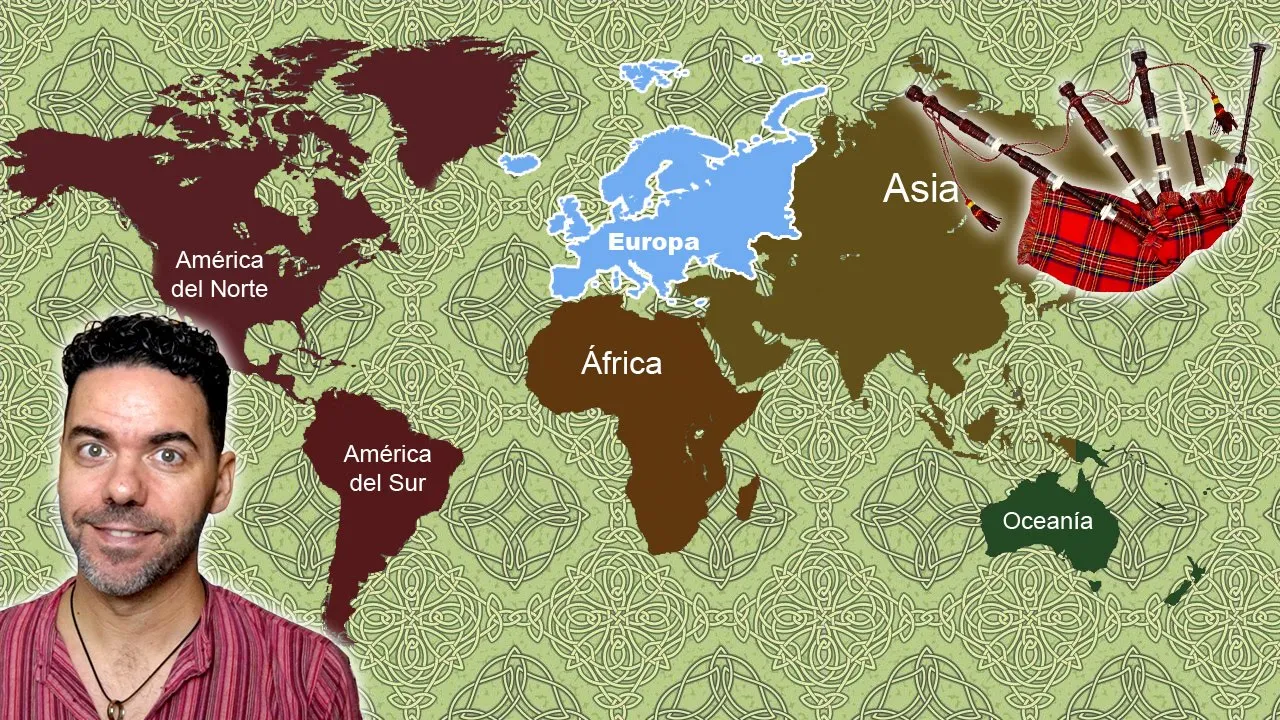
Músicas del mundo: EUROPA
Music Traditions of Europe
The final video in the series explores the music traditions of Europe, focusing on regions like Scandinavia, the Balkans, and areas influenced by Celtic culture.
Music Diversity in Europe
- European music can seem strange as we move away from familiar borders, with countries like Sweden, Finland, Norway, Romania, Bulgaria, and the Balkans having unique musical traditions distinct from mainstream European music.
- While Asia is known for melodic development and Africa for rhythmic development, a common feature across most European countries is their harmonic development.
- The term "Celtic" refers to peoples who spoke the same language during the Iron Age and spread across Western Europe. Each territory developed its version of Celtic culture with unique instruments like bagpipes, harps, violins, tin whistles, and bodhráns.
Characteristics of Celtic Music
- Instruments such as bagpipes and harps are common in Celtic music. The use of instruments like tin whistles and bodhráns adds distinctive sounds to this genre.
- Celtic instrumental music often features variations on themes creating ornate melodies without a clear end point. Improvisation plays a significant role in Celtic music both instrumentally and vocally.
Nordic Music Traditions
- Vocal similarities are challenging due to different languages spoken in regions like Wales (Welsh), Brittany (French), and Ireland (Irish). However, songs serve specific purposes such as lullabies or work songs with defined rhythms based on the type of work being done.
- Scandinavian traditional music encompasses Baltic cultures (Estonia, Lithuania, Latvia) contrasting with Scandinavian cultures (Denmark, Sweden, Norway). Instruments used date back to Viking times including horns made from animal horns or drums with reindeer skin membranes.
Influences on Eastern European Music
Eastern European music reflects influences from various conquerors throughout history including Greeks, Romans,Mongols,Turks,and Russians,resulting in diverse musical styles incorporating instruments like clarinets,vioilins,and tubas alongside ethnic instruments such as gadulka,tambura,tarambuka,and duduk.
Musical Influences in Eastern Europe
- Various conquerors have left their mark on Eastern European territories leading to a blend of musical styles. Instruments range from Western ones like clarinets and violins to ethnic instruments such as gadulka,rabel,tambura,tarambuka,and duduk.
Music Traditions in Eastern Europe
The transcript discusses the music traditions in Eastern Europe, focusing on the popularity of East Gypsy bands and the unique Bulgarian folklore.
Popularization of East Gypsy Bands
- Goran Bregovic's soundtracks in Emir Kusturica's films have contributed to the popularization of East Gypsy bands from the east.
Unique Bulgarian Folklore
- Bulgaria stands out for its distinct musical tradition within the Balkan countries, showcasing a rich and personal folklore.