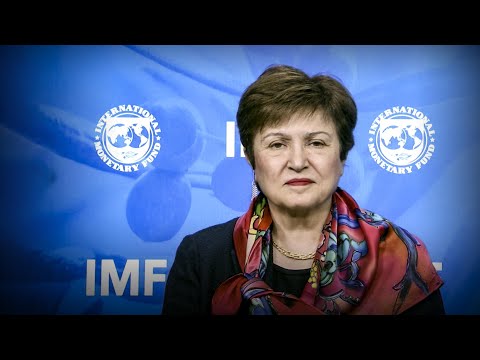
How to rebuild the global economy | Kristalina Georgieva
Introduction
Chris Anderson introduces Kristalina Georgieva, the head of the International Monetary Fund (IMF), and discusses her role in helping navigate the current global crisis.
Introduction to Kristalina Georgieva
- Chris Anderson introduces Kristalina Georgieva as one of the most powerful women in the world.
- She is seen as playing a major part in helping us escape from the current mess we are in.
- Kristalina Georgieva took on her role at the IMF late last year, just before the COVID-19 pandemic hit.
The Impact of COVID-19
Kristalina Georgieva describes how the COVID-19 pandemic is a crisis like no other and highlights its unique characteristics.
Unprecedented Crisis
- The COVID-19 pandemic is described as a crisis like no other.
- It involves consciously inflicting economic pain to fight a virus and save lives.
- Businesses are asked not to produce and consumers are asked not to consume, resulting in what is called "the Great Lockdown."
Rapid Change of Fortunes
- There has been an unprecedented rapid change of fortunes for practically everybody around the world.
- Growth projections have shifted dramatically from positive to negative income per capita growth for many countries.
Uncertainty
- The uncertainty surrounding this crisis is due to dealing with a novel coronavirus that policymakers have to integrate into their decision-making process.
- The IMF combines epidemiological projections with traditional macroeconomic modeling to navigate through this uncertainty.
Economic Stimulus
The discussion focuses on massive economic stimulus measures implemented by rich countries and their effectiveness.
Massive Economic Stimulus
- Rich countries have implemented massive economic stimulus measures amounting to trillions of dollars.
- This fiscal injection is necessary because without it, firms would go bankrupt, unemployment would rise, and the economy would be severely impacted.
- The IMF advises countries to spend as much as they can but emphasizes the importance of accountability to citizens and taxpayers.
Scarring and Recovery
- Without fiscal stimulus, the scarring caused by the crisis will make the recovery more difficult.
- Central banks in major economies have acted in a synchronized manner to provide monetary policy stimulus.
- The fast implementation of fiscal stimulus measures has helped people navigate through this tough time.
Concerns and Future Outlook
Kristalina Georgieva addresses concerns about the sustainability of economic stimulus measures and expresses hope for breakthroughs and a better future.
Limitations of Economic Stimulus
- It is acknowledged that economic stimulus measures cannot go on forever.
- There is trust in scientists for breakthroughs in fighting the virus, as well as people and businesses adapting to social distancing measures.
- Massive injections in health systems have been made to ensure proper treatment for those seeking help.
Hope for Transformation
- Kristalina Georgieva expresses hope that after recovering from this crisis, there can be a "Great Transformation" to make the world a better place.
Timestamps are provided at appropriate points throughout the summary.
New Section
In this section, the speaker discusses the projected reopening of countries and the expected partial recovery in 2021. The role of low interest rates in sustaining fiscal measures and liquidity is also highlighted.
Projected Reopening and Partial Recovery
- The speaker projects a gradual reopening of countries, which is already happening in some nations.
- For 2021, a partial recovery is expected, although not a full recovery.
Low Interest Rates and Fiscal Measures
- Low interest rates, including negative rates in some cases, allow for sustained injection of fiscal measures and liquidity over several years.
- There are no indications of an increase in interest rates on the horizon.
- The current environment of low interest rates is considered helpful.
New Section
In this section, the discussion revolves around lessons learned from the 2008 financial crisis and how they have contributed to resilience during the current crisis.
Lessons Learned from 2008 Financial Crisis
- The financial system needed to be tested and strengthened to withstand shocks. This learning has been beneficial during the current crisis.
- Both banking and nonbanking financial institutions have focused on building resilience to avoid running into trouble.
- Building resilience to shocks has been identified as a crucial lesson from the previous crisis. Countries that implemented this lesson cope better now.
- It is hoped that this crisis will spread awareness about resilience beyond just the banking system, considering future shock-prone scenarios due to climate change and economic density.
New Section
This section focuses on the challenges faced by developing countries and the measures taken to support them during the crisis.
Challenges Faced by Developing Countries
- Developing countries with weak health systems have been hit hard by the coronavirus.
- High levels of pre-existing indebtedness make it more difficult for these countries to navigate the crisis.
- Commodity-exporting countries have been severely affected by dramatic declines in commodity prices, particularly oil.
- Remittances, a significant source of income for many countries, have shrunk by 20 to 30 percent.
- Tourism-dependent economies are among the hardest hit due to travel restrictions and reduced tourism activity.
Support Measures for Developing Countries
- International institutions like the IMF, World Bank, and regional development banks are working closely together to address these challenges.
- The IMF has significantly increased its lending capacity from 250 billion to one trillion dollars, providing funds to countries in need.
- A debt moratorium has been called for the poorest countries, relieving them from paying their debts while their economies are stagnant. This initiative has received support from various entities such as the G20 and China.
New Section
This section explores the dilemma faced by leaders of developing countries when deciding between implementing strict lockdown policies or risking people's lives due to hunger.
Dilemma Faced by Leaders
- Leaders of some developing countries face a heartbreaking choice between people dying from the virus or dying from hunger.
The Impact of Lockdowns on Informal Economies
In this section, the speaker discusses the challenges faced by countries with large informal economies during lockdowns and highlights the importance of social distancing measures.
Challenges for Informal Economies
- Many countries have a significant portion of their economy operating informally.
- People in these economies live hand-to-mouth and face difficulties during lockdowns.
- Lockdown measures implemented in advanced economies may not be applicable to these countries.
- However, countries are still making efforts to practice social distancing as much as possible.
Learning from Past Crises
- African countries have been proactive in implementing preventive measures due to lessons learned from previous crises like Ebola.
- Hygiene practices and any available preventive measures are crucial in combating the current crisis.
- Solidarity with these countries is essential, and timely support from institutions like the IMF is vital.
Prospects for Inflation from Stimulus Packages
This section addresses concerns about inflation resulting from large stimulus packages.
Inflation Concerns
- In advanced economies and most emerging market economies, there is currently no worry about inflation.
- Countries with weak fundamentals and limited access to foreign exchange may experience inflation if they rely on printing more money to address the crisis.
- Advanced economies that have stable currencies are injecting liquidity without seeing a significant expansion of demand or price increases.
Factors Preventing Inflation
- Demand is not strong in these countries, as consumers are not consuming aggressively.
- These societies exercise maturity in their policy options, preventing a sudden surge in inflation similar to post-WWII scenarios.
Risk for Poor Countries
- Poor countries without access to markets or hard currency may resort to increasing money supply out of desperation, leading to inflation.
- Zimbabwe serves as an extreme example, and there is concern that other countries may face similar challenges.
- Early engagement and support are crucial for these countries, including debt restructuring for high-debt nations.
Citizen Engagement in Renewal and Recovery
This section explores the role of citizens in contributing to renewal and recovery efforts.
Solidarity in Crisis
- It is essential for citizens to bring a sense of solidarity during times of crisis.
- The head of the IMF emphasizes the importance of global citizens fostering a collective mindset.
- The notion of "we are in this together" should be promoted.
Speaking Up
- Crisis situations reveal that the majority of people are positive and good-hearted.
- It is crucial for good people to speak up and spread the message of unity and resilience.
- By leaning on each other, societies can overcome challenges more effectively.
Leadership in Times of Crisis
This section discusses leadership during crises, highlighting examples from different countries.
Performance During Pandemic
- Countries like Germany, New Zealand, South Korea, Taiwan, Denmark, and Norway are often cited as performing well during the current pandemic.
- Conversely, Spain, Italy, UK, Belgium, Sweden, Iran, Brazil, Russia, and the United States are seen as having performed poorly.
Gender Perspective
- Notably, all but one country from the first group (performing well) have female leaders.
- In contrast, all countries from the second group (performing poorly) have male leaders.
Women's Leadership Qualities
- Subjectively speaking as a woman herself,
the speaker believes that women excel at leading during crises.
- Women tend to show empathy towards vulnerable populations and effectively communicate their concerns.
- Decisiveness is another quality attributed to women leaders who derive energy from taking action.
The transcript is already in English, so there is no need to respond in a different language.
New Section
In this section, the value of gender equality for the future is discussed, along with the importance of embracing nuance and handling complexity.
The Value of Gender Equality
- There is a recognition of the value of gender equality for the future.
- Bringing more women into decision-making roles can be beneficial in navigating future crises.
- Women may have a greater inclination towards embracing nuance and finding pathways to compromise.
- Handling complex situations, like the current pandemic, requires turning multiple dials and considering probabilities. Women may excel at handling such nuances.
New Section
This section focuses on leadership qualities and lessons learned from past experiences that can be applied in times of crisis.
Leadership Qualities and Lessons Learned
- Different perspectives are valuable in decision-making processes, leading to better outcomes.
- Women are often more willing to find compromise and accept correction when wrong, which is advantageous in uncertain situations.
- The speaker highlights three important lessons from her past experiences:
- The critical importance of preparing for a crisis and acting with foresight.
- The power of collective action and working together.
- The discovery of internal strength and resilience when faced with challenges.
New Section
This section explores how past experiences can inform leadership during times of crisis.
Lessons from Past Experiences
- Having multiple experiences prior to assuming a leadership role provides valuable insights for dealing with crises.
- Three key lessons learned:
- The importance of crisis preparedness and prevention.
- The significance of collective action and working together.
- The discovery of internal strength and resilience when faced with challenges.
New Section
This section focuses on the role of the IMF in helping countries recover from crises.
Role of the IMF in Recovery
- The IMF has three unique roles during times of crisis:
- Providing a diagnostic assessment to understand the situation and determine the way forward.
- Acting as a financial first responder with significant financial firepower to support countries in need.
- Assisting countries in developing good policies for effective management, transparency, and accountability.
New Section
This section discusses the professionalism and commitment of the IMF during the global crisis, as well as the importance of global cooperation.
Highly professional, incredibly committed.
- The IMF is described as highly professional and incredibly committed to addressing the global crisis.
"All hands on deck" mentality.
- The IMF embodies the expression "all hands on deck" in their approach to tackling the crisis.
Emphasis on digital solutions.
- The IMF recognizes the importance of digital solutions in today's world and utilizes them in their operations.
Global Cooperation and Membership Response
This section focuses on concerns about global cooperation during this crisis and highlights the responsiveness of IMF membership.
Global cooperation compared to 2008 crisis.
- There are worries that there may be less global cooperation compared to the 2008 financial crisis.
Importance of global cooperation.
- The interviewer asks about the crucial role of global cooperation in overcoming this crisis.
Impressive responsiveness from IMF membership.
- The Managing Director emphasizes that bringing together all 189 member countries has been a priority.
- The membership has been responsive to measures proposed by the IMF, such as doubling emergency financing and tripling concessionary financing.
- Grants for debt relief have also been obtained through member support.
IMF Financing and Special Drawing Rights
This section discusses IMF financing, including raising funds through Special Drawing Rights (SDRs), and addresses concerns regarding consensus among members.
Funding sources for one trillion dollars.
- The IMF aims to make one trillion dollars available to nations in need.
- This funding comes from quotas and the ability to transfer funds from well-to-do members to lend at low or zero interest rates.
Support for IMF in US stimulus package.
- The US included support for the IMF in their two trillion dollars stimulus package.
Special Drawing Rights and consensus.
- The issuance of Special Drawing Rights (SDRs) requires consensus among IMF members.
- While there is no current consensus, there are voices advocating for their use as a means of providing liquidity during the crisis.
Resilience and Opportunities
This section explores factors contributing to resilience during the crisis and highlights opportunities for digital transformation, climate resilience, and a fairer economy.
Resilience factors: fundamentals and leadership.
- Countries with strong fundamentals experience less trauma during the crisis.
- Leadership plays a crucial role in mobilizing countries for action.
Winners on the other side of the crisis.
- Those who view this crisis as an opportunity will likely emerge as winners.
- Digital transformation presents significant opportunities, such as e-learning, e-government, e-payments, e-commerce, and linking SMEs digitally to consumers.
- A low carbon footprint and climate-resilient economy are desirable outcomes.
- Countries focusing on creating a fairer economy will also be positioned favorably.
Conclusion
This section emphasizes the importance of addressing inequality and ongoing climate crises alongside the current global pandemic.
Addressing inequality before and after the crisis.
- Inequality has been building up even before this crisis.
Climate crisis reminder.
- The ongoing climate crisis should not be forgotten amidst the current pandemic.
- The importance of addressing the climate crisis is highlighted, as it poses significant risks to the world.
Timestamps are approximate and may vary slightly.
New Section
In this section, Kristalina Georgieva discusses the impact of inequality on societies and the desire for a simpler, fairer, and more sustainable world.
Focusing on Inequality (0:34:57 - 0:35:27)
- Georgieva emphasizes the importance of not letting inequality increase after the crisis.
- She believes that a simpler, fairer, and more equitable world is what hundreds of millions of people would prefer.
New Section
In this section, Kristalina Georgieva talks about potential positive shifts and changes in the world as a result of the pandemic.
Potential Positive Shifts (0:35:27 - 0:37:56)
- Georgieva hopes to see fiscal policy geared towards green recovery and more equitable recovery.
- She highlights the importance of integrating lessons learned from the crisis into future practices.
- The IMF can significantly reduce its carbon footprint by sustaining current practices.
- Georgieva emphasizes the need for universal access to health and strong social safety nets.
- Investing in people is seen as a crucial investment for building a better future.
New Section
In this section, Kristalina Georgieva discusses her belief in the potential for a great transformation resulting from this crisis.
A Great Transformation (0:38:06 - 0:40:16)
- Despite acknowledging that transitions are tough and take time, Georgieva believes that people demand safety, security, and unity in society.
- She compares post-war scenarios where countries come together to build a better world with the possibility after a pandemic.
- While mistakes may be made along the way, there is an obligation to strive for positive change.
New Section
In this section, Kristalina Georgieva emphasizes the importance of optimism and building a better world.
Injecting Optimism (0:40:38 - 0:41:40)
- Georgieva recommends optimism as an idea to inject into everyone's minds.
- Building a better world is not only possible but also desirable.
- Chris questions whether this crisis can lead to a great transformation, and Georgieva expresses her determination to make it happen.
The transcript ends with a reference to the movie "Bridge of Spies" and a dialogue about worry and its usefulness.
Positive Action and Determined Optimism
In this section, Kristalina Georgieva delivers a message of positivity and emphasizes the importance of staying positive in challenging times.
Positive Action and Staying Positive
- Georgieva encourages positive action and urges everyone to stay positive amidst difficulties.
Inspiring Energy and Determined Optimism
In this section, the interviewer expresses gratitude for Georgieva's inspiring energy and determined optimism. They acknowledge her efforts to use her position to help overcome challenges.
Gratitude for Inspiring Energy
- The interviewer expresses gratitude for Georgieva's inspiring energy.
Using Position to Overcome Challenges
- The interviewer acknowledges Georgieva's determination to use her position to help navigate through difficult times.
Conclusion
The transcript concludes with a thank you message to Kristalina Georgieva for sharing her insights and spending time at TED.
Turn any video into a summary like this
YouTube links, meetings, lectures. With transcripts, search, and chat.