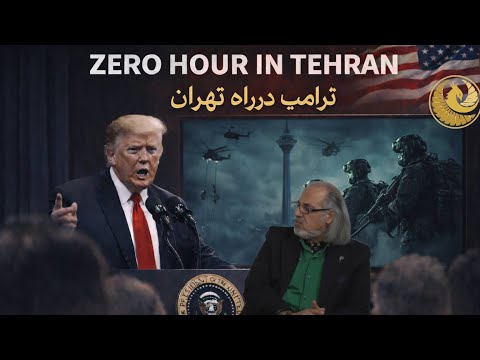
استراتژی ترامپ:هیبریدی از حضور خیابانی مردم و عملیات محدود زمینی توسط نیروهای دلتا(خلاصه لایو آخر)
Negotiations and Power Dynamics in Iran
Current State of Negotiations
- The speaker emphasizes that there is no active negotiation between Tehran and Washington, but rather a positioning regarding Iran's future in the new global order.
- It is suggested that while Iran has two potential paths forward, choosing the first path would incur fewer costs for Tehran.
Concerns Over Nuclear Weapons
- A question arises about whether the U.S. genuinely fears a nuclear bomb from Tehran, given North Korea's past actions and current status.
- The speaker draws parallels with North Korea, indicating that once issues with Iran are resolved, the U.S. will turn its attention to North Korea.
Decision-Making Timeline
- Important decisions regarding Tehran's situation are approaching; significant events are expected by March of the current year.
- Future events will influence perceptions and actions significantly, as various factors contribute to shaping outcomes.
Impact of Recent Developments
- The speaker notes that Trump's statements reflect ongoing trends influenced by historical narratives and current actions.
- There has been an increase in military presence in the region following negotiations in Geneva, indicating a lack of progress towards peace talks.
Escalation of Tensions
- Despite claims of negotiations for peace, there is a strong inclination towards conflict; references to military threats highlight this tension.
- Key decision-makers include Ayatollah Ali Khamenei in Tehran and Donald Trump in Washington; neither side appears willing to back down.
Market Reactions and Military Preparations
- Oil markets react to escalating tensions with price increases; this reflects broader economic implications tied to geopolitical conflicts.
- Recent military movements suggest heightened readiness for conflict; comparisons are made to previous wars involving Iraq.
Historical Context and Predictions
- The speaker recalls past predictions about regional conflicts based on historical patterns observed during earlier U.S. interventions.
- Current developments mirror past situations where escalation was anticipated due to similar geopolitical dynamics.
Strategic Considerations Moving Forward
- The U.S. is cautious yet prepared for powerful maneuvers against Iran based on lessons learned from Iraq and Libya experiences.
- An urgent need for military display follows threats made previously; rapid changes indicate a shift toward more aggressive posturing.
What Future Military Actions Could Arise from Current U.S.-Iran Tensions?
Overview of Military Dynamics
- The discussion begins with the significant military hardware entering the region and the positioning of both sides, particularly the U.S. and its allies around Trump.
- The Iranian nuclear issue has become a focal point for U.S. strategy since the 1980s, aiming to exert pressure on Tehran.
- Iran's geopolitical significance is emphasized; it has transitioned from being a bridge between North and South to one between East and West in global power dynamics.
Iran's Strategic Importance
- Iran is portrayed as a powerful player that cannot be overlooked, challenging assumptions about its role in international relations.
- The unique nature of Iran's government complicates interactions with international norms, making it a target for U.S. strategies aimed at regional dominance.
Paradoxes in U.S. Strategy
- The U.S. faces contradictions: while seeking regime change in Iran post-2018, it also aims to maintain a stable Iranian state as part of its broader strategic goals.
- This duality creates challenges for American policymakers who must balance their objectives without destabilizing the region further.
Energy Infrastructure Considerations
- There is an assertion that any military action will likely avoid targeting critical energy infrastructure directly to prevent long-term damage.
- New technologies are introduced into military operations, suggesting that they are designed more for disruption than outright destruction.
Perspectives on Fragmentation and Alliances
- The speaker argues against claims that the U.S. seeks to fragment Iran, asserting instead that maintaining unity serves American interests better.
- Acknowledgment of radical elements within various countries (including parts of America and Israel), which complicate perceptions of foreign policy intentions.
Negotiation Stance and Leadership Dynamics
- The necessity for negotiations is highlighted; however, there’s skepticism regarding whether Tehran will concede under pressure from Washington.
- Supreme Leader Khamenei’s approach reflects a calculated stance where he maintains an image of strength while navigating complex diplomatic waters.
Historical Context and Future Implications
- Khamenei’s historical positions create high stakes; any retreat could undermine decades of political capital built over 40 years.
- Discussion concludes with reflections on how different approaches have led other nations closer to power relative to the United States compared to Iran's costly methods over time.
Discussion on Nuclear Energy and Negotiations
The Cost of Nuclear Energy Development
- The speaker questions the rationale behind halting uranium enrichment after significant investments in nuclear energy, highlighting public discontent and rising costs.
Insights on Negotiation Dynamics
- Experts understand that negotiations are limited; current discussions seem to be more about preparing for conflict rather than achieving peace.
Historical Context of Leadership Decisions
- The speaker reflects on past leadership decisions regarding negotiations, suggesting that reluctance to engage has led to a loss of power for future leaders.
Revolutionary Discourse and Its Implications
- The focus is not just on the survival of the Islamic Republic but also on maintaining revolutionary discourse within Iran and its implications for regional dynamics.
Identity Crisis in Negotiation Strategies
- Engaging in negotiations may lead to a loss of identity; the speaker emphasizes that ongoing talks could undermine their narrative against war.
The Nature of Warfare and Military Strategy
Consequences of Failed Narratives
- When narratives fail, they can lead to a crisis in identity; engaging in negotiations while losing battles can weaken one's position significantly.
Military Legitimacy and Structural Change
- The use of military force becomes legitimate when it aligns with structural changes resulting from failed negotiation attempts.
U.S. Interests in Regime Change
- There is speculation about whether the U.S. aims for regime change through support for opposition forces amidst civil unrest.
Geopolitical Considerations
Hybrid Approaches to Conflict Resolution
- A hybrid strategy involving both military action and diplomatic efforts is suggested as a potential U.S. approach towards Iran's political landscape.
Unique Geopolitical Landscape of Iran
- Iran's geopolitical context differs significantly from Iraq or Libya, which influences U.S. strategies regarding intervention or regime change.
U.S.-Iran Relations: Future Prospects
Aligning Interests Between Nations
- Current U.S. interests may align with those of Iran, particularly concerning stability in the region, which could influence future relations positively.
Iron Shield Concept Against China
- The metaphorical "iron shield" represents America's strategic positioning against China, emphasizing Iran's role as a critical ally in this geopolitical framework.
Challenges Facing Diplomatic Engagement
Trust Issues with Iranian Leadership
- Due to historical grievances over nuclear negotiations, there is skepticism about whether any agreements would be trustworthy or sustainable moving forward.
Broader Implications Beyond Nuclear Issues
- Discussions around human rights and proxy conflicts are intertwined with nuclear negotiations, complicating diplomatic efforts further.
Military Presence and Strategic Movements in the Region
U.S. Military Operations and Intentions
- The discussion highlights the potential for limited ground forces to be deployed in Iran, questioning the motives behind Delta Force's presence in the region.
- Emphasizes that U.S. forces are not on vacation but are strategically positioned, contrasting their activities with typical tourist behavior of Iranians during winter holidays.
Delta Force Locations and Capabilities
- Mentions that Delta Force is currently active at three strategic points: Turkmenistan, Erbil (Iraq), and Khorasan, indicating a focused military strategy.
- Discusses concerns about air operations and the effectiveness of protective measures against various threats, referencing historical figures like Hassan Nasrallah as significant players in regional dynamics.
Historical Context of Military Strategy
- Points out past instances where U.S. interventions were based on intelligence assessments regarding political leaders' movements, stressing the importance of understanding these patterns.
- Reflects on historical coups (e.g., in Nicaragua and Panama), suggesting that lessons learned from previous conflicts inform current strategies to avoid repeating mistakes.
Lessons from Vietnam War
- Argues that failures in Vietnam provided critical insights for future military engagements, particularly regarding strategic planning and execution.
- Notes that despite tactical errors made during operations in Iraq, there is an unwillingness to acknowledge or learn from these mistakes moving forward.
Current Tensions with Iran
- Highlights recent statements by Iranian leader Ali Khamenei warning of potential consequences for adversaries, indicating a serious escalation in rhetoric.
- Observes an increase in military hardware entering the region following Khamenei's remarks, suggesting preparations for possible conflict scenarios.
Diplomatic Strategies and Military Doctrine
- Discusses Trump's approach combining diplomatic pressure with military readiness as part of a broader strategy against Iran since 2015.
- Critiques how past agreements like the JCPOA (Joint Comprehensive Plan of Action) were perceived as failures impacting national prestige and security posture.
Human Resource Management within Military Strategy
- Explores how human resource management becomes crucial under competitive conditions; emphasizes strategic patience when designing military policies.
- Suggests that effective strategy requires foresight into future actions while learning from historical precedents to enhance operational effectiveness.
Ongoing Conflicts and Public Sentiment
- References failed assassination attempts against key figures like Hassan Nasrallah as indicative of ongoing tensions within regional power struggles.
- Conveys public uncertainty regarding travel plans amidst escalating geopolitical tensions; reflects societal anxiety over potential conflicts affecting daily life.
Conclusion: The Complexity of Modern Warfare
- Concludes by emphasizing that modern warfare involves multifaceted strategies where traditional definitions may not apply; stresses interconnectedness between various forms of conflict.
The Impact of December Events on Iranian Society
The State of Decision-Making in Iran
- The current situation has left decision-makers in a state of confusion, making it difficult for them to make effective choices.
- The events of December have significantly influenced the internal dynamics in Iran, shifting from a state of anticipation to revolutionary action within political discourse.
Historical Context and External Influences
- Throughout history, external forces have played roles in revolutions; this is evident in various historical contexts including the French and Cuban revolutions.
- Notable Iranian intellectuals like Allameh Tabatabai and Motahhari emphasized anti-superstition movements, which are now being challenged by contemporary beliefs.
Symbolism and National Identity
- The symbolism surrounding national identity has evolved; references to traditional sites like Kaba or Karbala are being replaced with modern symbols representing national pride.
- Emphasizing patriotism over nationalism can help avoid associations with racial superiority often linked to nationalist rhetoric.
Consequences of December Events
- The aftermath of the December events revealed significant public dissatisfaction with the government, prompting strategic responses from authorities.
- These events have fostered unity among Iranians abroad, countering narratives that promote division within society.
Central Figures and Their Influence
- Key figures such as Ayatollah Khomeini became unifying symbols during revolutionary times, demonstrating how leadership can consolidate diverse groups around a common cause.
- The centrality of symbolic representation highlights its sociological significance in driving societal change.
Societal Readiness for Change
- Despite ongoing challenges, there remains an underlying readiness among citizens for potential upheaval or transformation within society.
Preparedness Amidst Uncertainty
- Ordinary citizens are advised to prepare for possible disruptions due to global changes affecting Iran's stability.
- Caution is recommended as people navigate uncertainties regarding essential services amidst evolving political landscapes.
Exploitation of National Sentiment by Authorities
- There is skepticism about whether authorities can effectively manipulate nationalistic sentiments as they did previously; recent trends suggest a shift away from such tactics.
Long-term Implications on Governance
- Observations indicate that discontent rooted since 2016 continues to affect governance dynamics under President Raisi’s administration.
This structured summary encapsulates key discussions from the transcript while providing timestamps for easy reference.
Discussion on Leadership and Regional Dynamics
The Potential Leadership of Sayyid Hassan Nasrallah
- A conversation reveals that a prominent figure believes Sayyid Hassan Nasrallah should be the next leader of Iran, despite him not being Iranian. The rationale is based on his Islamic ideology.
Concerns Over Current Political Climate
- The speaker expresses concerns about the precarious state of affairs, emphasizing that these thoughts cannot be ignored as events unfold.
Tactical Military Strategies
- A question arises regarding the use of tactical strikes against missile cities, suggesting that such actions could be effective in military strategy.
Role of China and Russia in Regional Conflicts
- The discussion shifts to the involvement of China and Russia, indicating they act primarily in their own interests rather than for Iran's benefit. Their support is limited and conditional.
Possible Consequences of Government Collapse
- Speculation occurs about whether remnants of Iran's missile capabilities might be used against regional adversaries if the government feels threatened or collapses.
Geopolitical Alliances and Military Strategy
Arab Nations' Response to Iranian Threats
- An alliance among Arab nations is forming in response to perceived threats from Iran, with negotiations taking place to mitigate risks associated with oil fields and security.
Understanding Power Dynamics
- The speaker emphasizes that while initiating conflict may seem straightforward, understanding the repercussions and potential retaliatory actions is crucial for strategic planning.
Implications of Ideological Stance on Warfare
Ideology Influencing Conflict Expectations
- Questions arise regarding how Ayatollah Khamenei’s anti-Israel and anti-American stance shapes expectations for an impending comprehensive war.
U.S. Perception of Power Tests
- It’s suggested that if the U.S. fails to navigate its relationship with Iran effectively, it could lead to significant geopolitical consequences for America.
The Nature of American Power
Historical Context and Future Implications
- Discussion centers around America's historical rise as a superpower and how mismanagement in dealing with Iran could signal a decline in its global standing.
Recognition Among U.S. Politicians
- There’s acknowledgment among U.S. senators across party lines about the importance of addressing issues related to Iran effectively.
Cultural Identity vs Political Regime
Distinction Between Nationhood and Governance
- The speaker argues that contemporary discussions often conflate Iran as a nation with its current political regime, highlighting historical complexities within Iranian governance structures.
Power Dynamics Within Global Context
Energy Dynamics Affecting Thought Processes
- Insights are shared on how energy dynamics influence cognitive processes within societies, particularly relating to national identity and resilience amidst challenges faced by Iranians today.
This structured summary encapsulates key themes discussed throughout the transcript while providing timestamps for easy reference back to specific points made during the conversation.
Understanding Iran's Position in Global Politics
The Role of Ideology and Power Dynamics
- The speaker emphasizes the importance of understanding the ideological framework behind Iran's political stance, suggesting that it is not merely about a single leader or event but rather a broader system of thought that has historical roots.
- There is a warning against underestimating the impact of U.S. actions on Iranian society; if the U.S. fails to recognize Iran's significance, it risks damaging its own standing among Iranians.
- The discussion highlights that maintaining Iran’s integrity is crucial; even if external factors seem stable, internal corruption can undermine national strength.
Strategic Importance of Iran
- The speaker argues that the U.S. must acknowledge Iran's strategic weight in global politics, particularly in relation to its partnerships and influence within 21st-century geopolitical frameworks.
- A cautionary note is made regarding potential miscalculations by the U.S.; failing to respect Iran’s position could lead to significant repercussions for American interests globally.