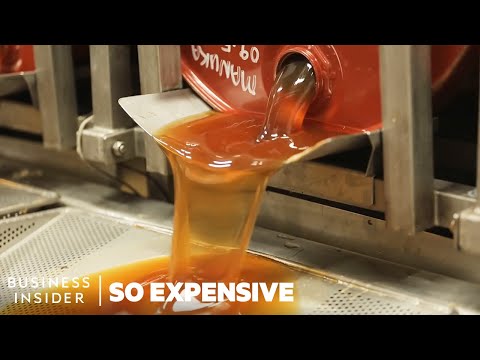
Why Mānuka Honey Is So Expensive | So Expensive
What Makes Manuka Honey So Expensive?
Unique Characteristics of Manuka Honey
- Manuka honey is distinct from regular honey, known for its earthier, richer flavor and thicker viscosity. It originates from the nectar of the Leptospermum scoparium flower, native to New Zealand.
- The exclusivity of Manuka honey stems from its geographical origin in New Zealand, where bees travel up to six kilometers to collect nectar, making it representative of the local environment.
Harvesting Challenges
- The harvesting period for Manuka honey is limited to two to six weeks when flowers bloom for only 12 days. Weather conditions like wind and rain complicate collection efforts.
- New Zealand produces nearly all of the world's Manuka honey, with exports valued at $204 million and projected to reach $800 million by 2028.
Quality Standards and Fraud Prevention
- Due to high demand and potential fraud, a quality standard has been established by the New Zealand government to protect the unique properties of Manuka honey.
- Dr. Adrian Charlton explains that testing involves identifying three key compounds: dihydroxyacetone (DHA), methylglyoxal (MGO), and hydroxy methylferol (HMF), which are essential for confirming antimicrobial characteristics.
Testing Methods
- UV light is used in laboratories to measure concentrations of these compounds; each compound has different properties relevant for authenticity checks.
- Additional tests include checking for leptosperin, a marker specific to Leptospermum scoparium nectar, allowing traceability back to its botanical source.
Market Demand and Health Benefits
- The rising popularity of Manuka honey extends beyond culinary uses; it's increasingly incorporated into health and beauty products due to its antibacterial properties.
- While laboratory studies confirm antimicrobial activity in Manuka honey, long-term clinical trials on health benefits remain unproven. Despite this uncertainty, consumer demand continues unabated.
Economic Impact and Theft Issues
- High prices have led to increased theft reports involving beehives or stolen honey in New Zealand. There are even instances of bees being poisoned due to competition over this lucrative product.
Taste Profile Comparison